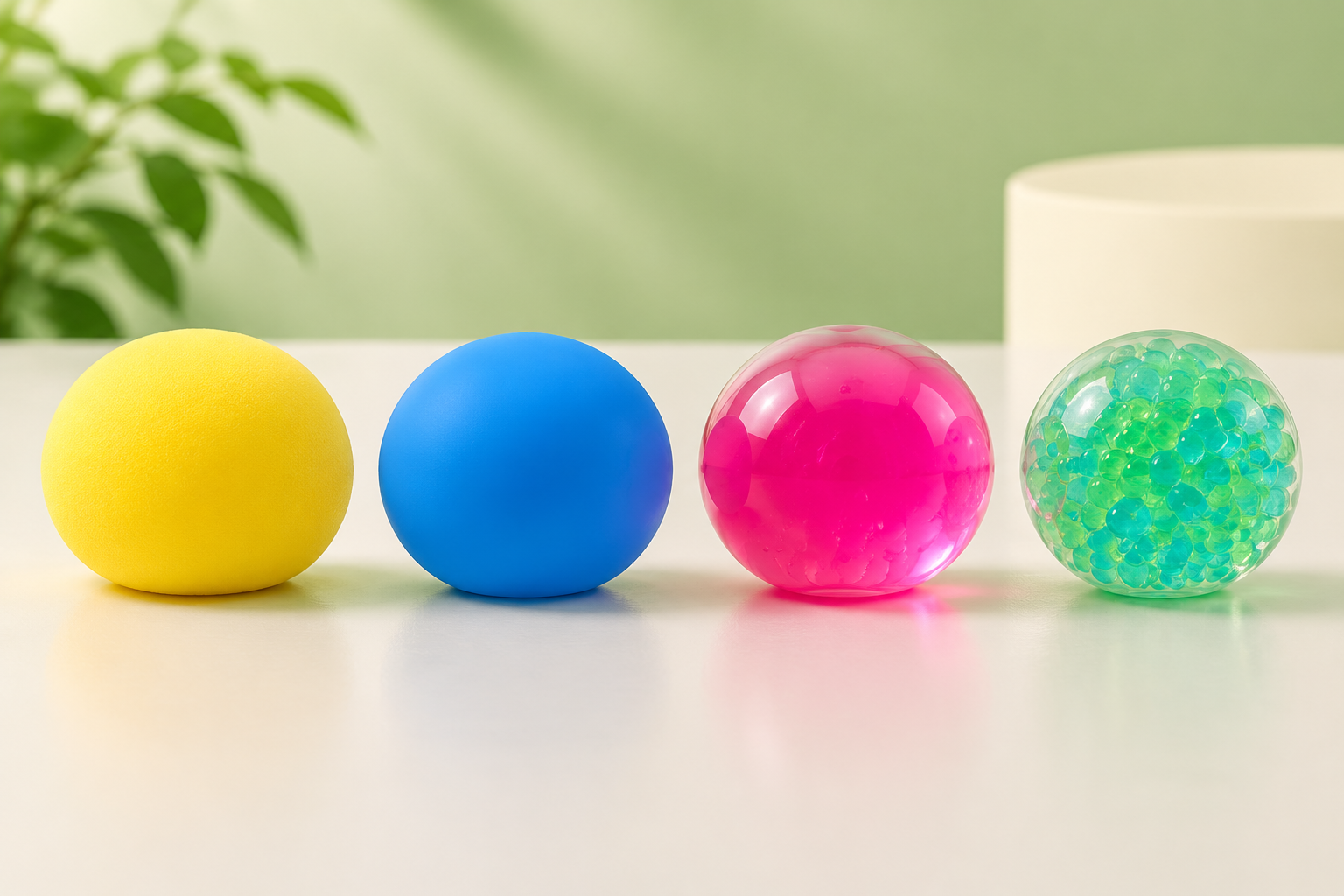
For a 2027 wholesale order, first decide what is inside the squishy toy and who will use it. A water-bead-filled toy and a solid silicone stress ball may look similar, but they bring different safety questions. Your material, intended age group, and selling market also shape the test plan and the supplier’s MOQ. Get those details in writing before comparing prices.
This guide walks you through the four common material paths, safety documents for the US, EU, UK, and Australia, and the questions that reveal what an MOQ quote actually includes. You will also see how to approve samples, inspect production, and compare the cost of getting sellable goods to your warehouse.
Key Takeaways
- “Squishy” describes a feel, not one material or safety classification.
- For EU sales in 2027, the European Commission says the existing Toy Safety Directive applies during the transition to Regulation (EU) 2025/2509, which starts applying on August 1, 2030.
- Request MOQ per SKU, color, mold, and package. Compare the full landed cost, then approve a production sample and inspection plan.
Why did squishy toys draw closer scrutiny in 2026?
Recent product-safety guidance makes the filling and shell worth checking early. Water beads can expand after ingestion; weak seams can release a toy’s contents. Chemical concerns depend on the exact formula and surface finish. A shipment may also be held when required labels or documents are missing. Each problem calls for a different check, so ask your supplier for the finished product specification before requesting a test quote.
| Market | What to check in 2027 | Primary authority |
|---|---|---|
| US | Children’s toy rules, water-bead hazards, certification and import records | Consumer Product Safety Commission (CPSC) |
| EU | Current Toy Safety Directive, CE file, and transition to the 2030 regulation | European Commission |
| UK | Great Britain and Northern Ireland toy guidance and markings | Office for Product Safety and Standards |
| Australia | Applicable toy mandatory standards, age grading, and product-safety alerts | Australian Competition and Consumer Commission (ACCC) |
The ACCC squishy-toy guide warns that heating a squishy can make it burst or leak hot contents and cause serious burns. Keep heating and microwave use out of product demonstrations and review foreseeable misuse with your lab. When a safety alert names a specific squishy, match its material and batch before applying that finding to another design. Greentime’s toy sourcing guides cover related buying decisions.
How does positioning change your compliance route?
Decide whether you are selling a child’s toy or an adult desk product before testing or artwork. Under the EU toy definition, a toy is a product designed or intended for use in play by children under 14. Age labels matter, but appearance, play function, images, store placement, and advertising also inform intended use. A 14+ declaration does not automatically override a child-directed design.
| Positioning | Likely compliance work | Cost and channel implication |
|---|---|---|
| Child’s play toy | Market-specific toy safety assessment, testing, labels, and technical file | Budget for toy testing and documentation; children’s retail channels |
| Adult desk or stress item | Documented classification plus applicable general product and chemical rules | Ask a specialist for a quote; marketing and sales channels must support adult positioning |
| Borderline design | Written classification review before ordering | Budget and channel remain uncertain until the review is complete |
Testing costs cannot be estimated responsibly from the age label alone. Send your lab the final design, package, listing images, and target markets. Ask the importer to approve the classification in writing. This point needs confirmation with your laboratory and importer for each SKU.
Which squishy-toy materials carry the most risk?
Start with construction, not the catalog name. Slow-rising PU foam, TPR or TPU gel-filled shells, solid silicone, and water-bead or slime-filled shells can all be sold as “squishies.” Each has a different feel, failure mode, and test plan. A supplier quotation is needed for a defensible unit-price range; there is no single material price that includes shape, size, finish, pack, and order volume.
| Material path | Feel and main risk | Testing and QC focus |
|---|---|---|
| PU slow-rising foam | Soft, delayed recovery; tears, odor, coating transfer | Applicable chemical, mechanical, flammability and coating checks; recovery consistency |
| TPR / TPU gel-filled shell | Elastic squeeze; seams can leak or split | Shell and fill chemistry, seam strength, leakage and released contents |
| Solid silicone | Elastic, usually quick recovery; small molded details can detach | Material declaration, small parts, tearing, color transfer |
| Water-bead or slime fill | Moving fill; release, ingestion, expansion or chemical concerns | Specialist hazard review before order; fill identity and containment |
Send each supplier a product card with material, dimensions, weight, finish, color, scent, fill, packaging, intended users, and destination market. Include clear photos of both the front and seams. If a supplier proposes a substitute material, require a new sample and a fresh review of the test plan. A report for a foam SKU does not establish the safety of a filled version.
If you plan to sell an adult stress toy, review its design, packaging, listing images, and sales channel together. The word adult on a label does not settle classification when the item is presented for children’s play. Get a market-specific classification review for a borderline design, then write a separate specification for each SKU.
For a solid squeeze product, compare the construction of stress balls and desk toys. Ask for a report that identifies the tested formula and finish. A report for another color, coating, or filling may not cover your finished SKU.
Which tests does each market require?
The destination market and the exact toy decide the compliance route. For US children’s toys, check the Consumer Product Safety Commission (CPSC) rules, including applicable ASTM F963 provisions, children’s product testing and certification, tracking labels, and any small-parts, lead, or phthalates rules that apply. The importer should confirm the correct Children’s Product Certificate and supporting test results for the finished SKU.
For the EU, the European Commission’s toy safety guidance states that toys sold in the EU must carry CE marking and that the manufacturer must show conformity with applicable safety requirements. For 2027 planning, the Commission says Regulation (EU) 2025/2509 entered into force on January 1, 2026, but starts applying on August 1, 2030, after a transition period. Check the live legal text before publication or shipment. Do not treat the future digital product passport as a blanket 2027 requirement.
For Great Britain and Northern Ireland, use the relevant GOV.UK Toys (Safety) Regulations 2011 guidance. The two markets can have different marking and responsible-person details. Check the current guidance for your route and product rather than copying an EU label onto every UK order.
For Australia, the ACCC guide describes a permanent ban on certain DEHP-containing products and tells buyers to watch for weak seams, loose beads, leaks, and strong chemical smells. Ask your Australian importer which chemical and toy standards apply to the finished product. For the US, have your lab map the product to 16 CFR part 1250, the applicable ASTM F963-23 provisions, and other CPSIA requirements. Keep the Children’s Product Certificate and tracking-label work on the order checklist. For the EU, the applicable parts of EN 71-1, -2, and -3 depend on the toy; ask your lab to confirm the full test plan. The newer EU regulation introduces a digital product passport and tighter chemical controls when it starts applying in 2030. Confirm the transition and any exceptions before ordering for that market.
| Market | Evidence to request and check | Who must confirm it |
|---|---|---|
| United States | Applicable toy and chemical test reports; Children’s Product Certificate; tracking and warning labels where required | US importer with qualified lab and compliance support |
| European Union | Applicable EN 71 and other test evidence; technical documentation; EU Declaration of Conformity; CE and traceability labels | Manufacturer and relevant EU economic operators |
| Great Britain / Northern Ireland | Applicable test evidence, declaration, markings, importer details, and warnings for the specific market | Relevant UK economic operators |
Ask the lab to map each test to the product’s material, age group, and claims. “EN 71 passed” is too broad: the relevant parts and other requirements depend on the toy. Likewise, a supplier’s old report may cover a different coating, scent, fill, or size. Match the model number, photos, bill of materials, and report date to your purchase order before accepting it.
What is a realistic MOQ for wholesale and custom squishies?
There is no single MOQ for squishy toys wholesale from China. A catalog design can use existing tooling, while a custom shape, scent, color, print, or retail pack may need a separate production run. Ask each supplier whether its minimum applies per design, color, size, carton, or whole order. Two quotes that both say “MOQ 500” may describe very different buying commitments.
Request prices at two or three quantities you could actually order, such as a pilot quantity and a repeat-order quantity. For each tier, ask for the unit price, mold or setup fee, sample fee, retail-pack cost, lead time, and payment terms. Check whether mixed colors can share one minimum and whether the supplier will keep or release the mold. A change in scent, coating, or filling may need new testing and a new quote.
| Quote item | Supplier A | Supplier B | Supplier C |
|---|---|---|---|
| Material and exact SKU | Fill in | Fill in | Fill in |
| MOQ basis: design / color / size / order | Fill in | Fill in | Fill in |
| Unit price at your order quantity | Fill in | Fill in | Fill in |
| Tooling, samples, print, and packaging | Fill in | Fill in | Fill in |
| Testing responsibility and cost | Fill in | Fill in | Fill in |
| Lead time and trade term | Fill in | Fill in | Fill in |
Compare quotes on the same specification. If one supplier excludes tooling, testing, stronger seams, or retail packaging, its lower unit price may produce a higher final cost. Record each excluded item next to the price and calculate the cost per sellable unit before choosing a supplier.
Which six questions should you ask a supplier?
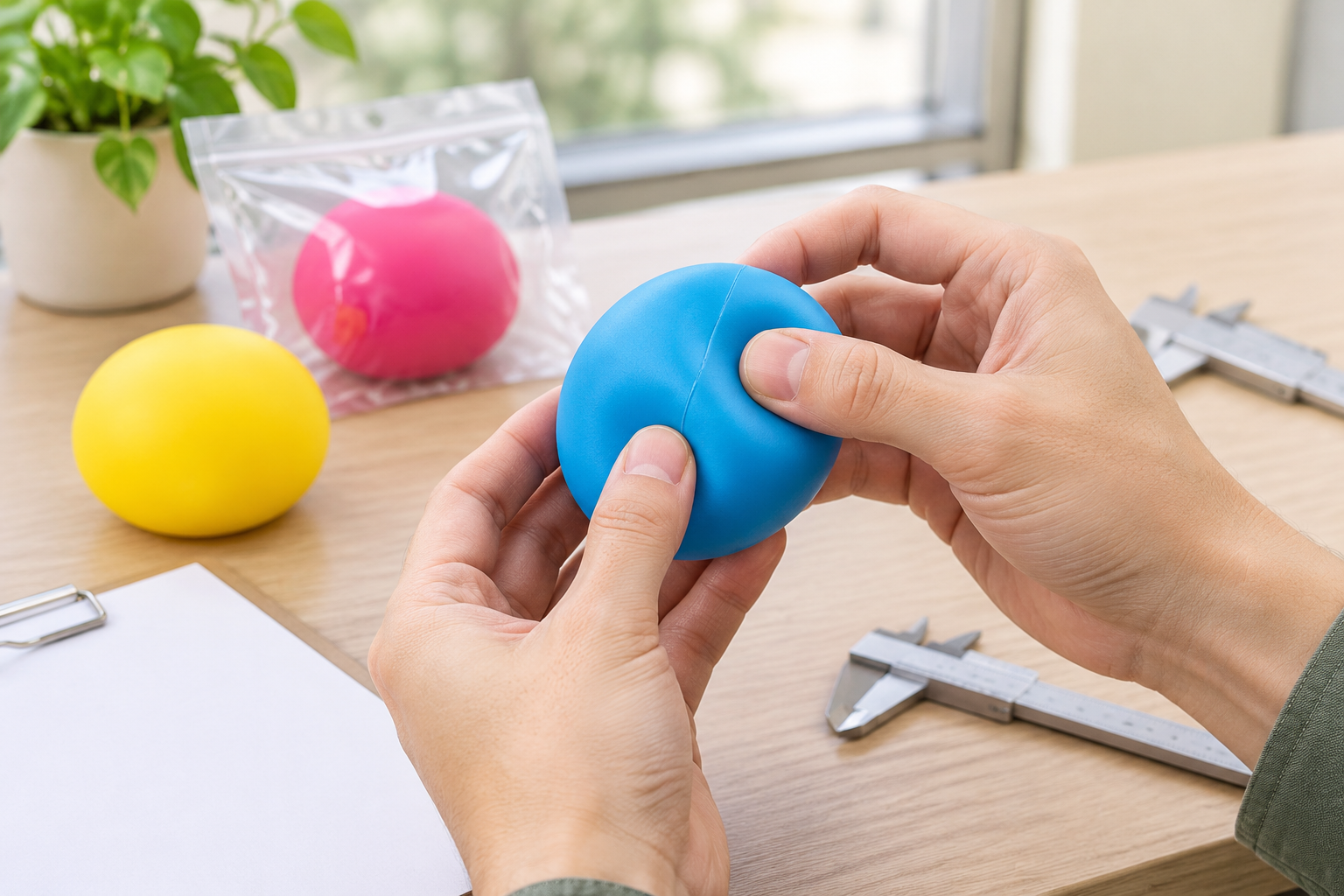
Send the same request for quotation to at least three plausible suppliers. Include your specification card, target market, estimated volume, package artwork, and requested trade term. A photo alone cannot support a meaningful compliance or MOQ answer.
Ask six practical questions: Who owns and runs the foaming or molding line? Does the test report match the current formula? Does a freshly opened sample have a strong chemical smell? What happens to the seam and recovery after repeated squeezing? Does the print transfer when rubbed with a dry or damp cloth? How long does the toy rest before packing? These checks help you compare suppliers; they do not replace laboratory tests.
- Confirm the legal company name, factory address, and whether the seller manufactures the toy or trades it.
- Request material declarations and reports that match the proposed SKU, color, coating, scent, and fill.
- Compare samples for weight, size, recovery feel, seams, surface finish, and package quality.
- Ask who pays for tooling, testing, retesting, and rejected goods.
- Record the production schedule and inspection access in the purchase order.
Approve a signed and dated “golden sample” only after the design, label, and test plan are settled. Keep one with your team and one with the factory if practical. The sample is a production reference, not a certificate. If bulk goods differ from it, stop and investigate before shipment. See Greentime’s product sourcing service for help finding and comparing factories.
What should a pre-shipment inspection check?
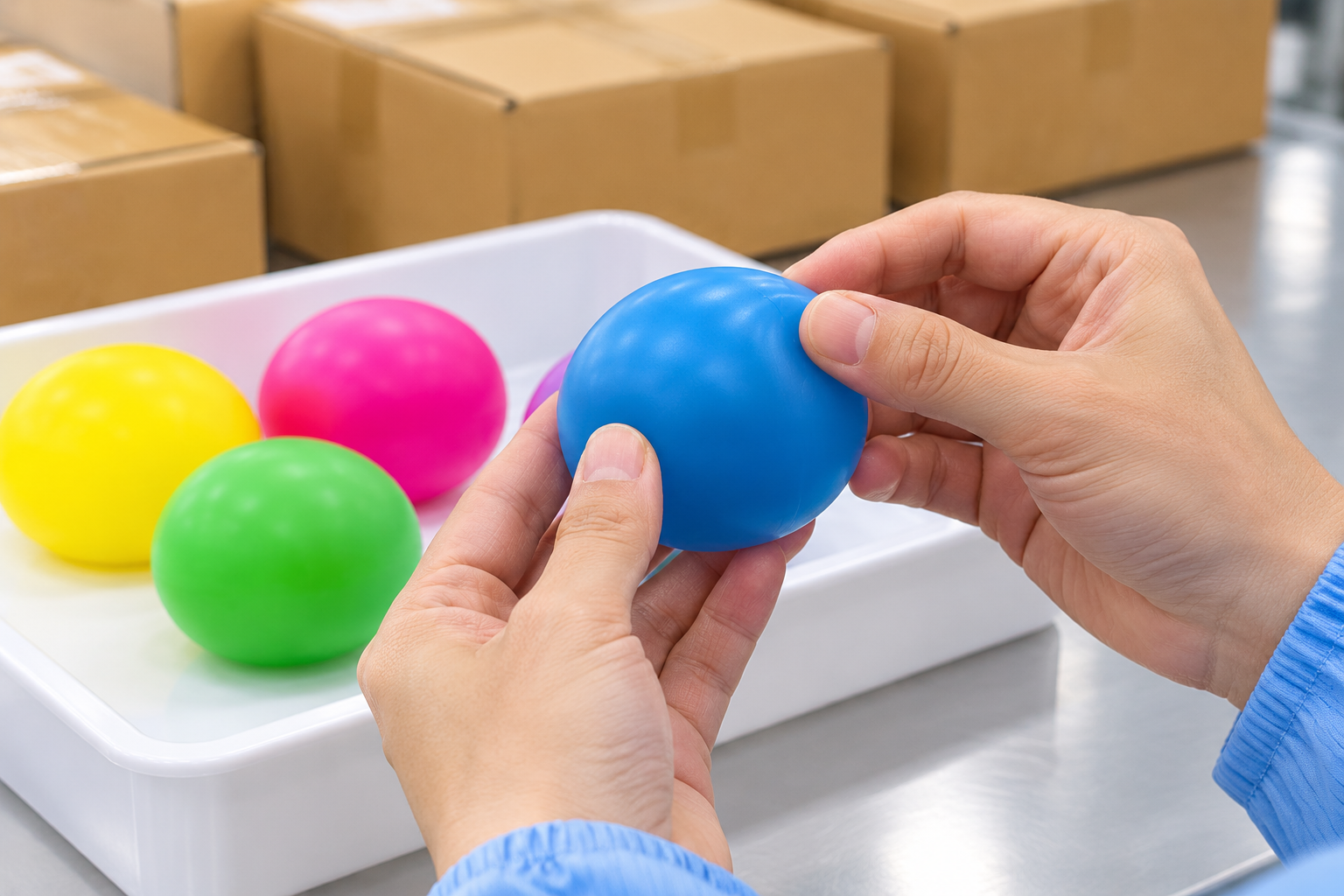
Inspect the finished lot against the purchase order, approved sample, and agreed defect criteria. The inspector should verify the right SKUs and carton counts first. Then check dimensions, weight, color, print, recovery feel, seams, visible leaks, surface finish, odor, labels, warnings, barcode, and shipping marks. For filled toys, the seal and any released contents deserve extra attention. The ACCC water-bead guide explains that water-absorbing beads can expand inside a child’s body and cause severe injury.
Set the sampling method and pass criteria before production ends. AQL can organize cosmetic and functional sampling, but a passing AQL result does not replace mandatory lab testing or resolve a safety defect. If samples show a choking hazard, chemical concern, or repeated leakage, hold the lot and obtain expert advice before release.
Ask for a report with dated photos, sample count, defect categories, test method, carton marks, and corrective action. If the factory reworks the lot, reinspect the affected points. Greentime’s quality inspection service can use the approved sample and written checklist as the inspection reference.
Why can the cheapest squishy-toy quote cost more?
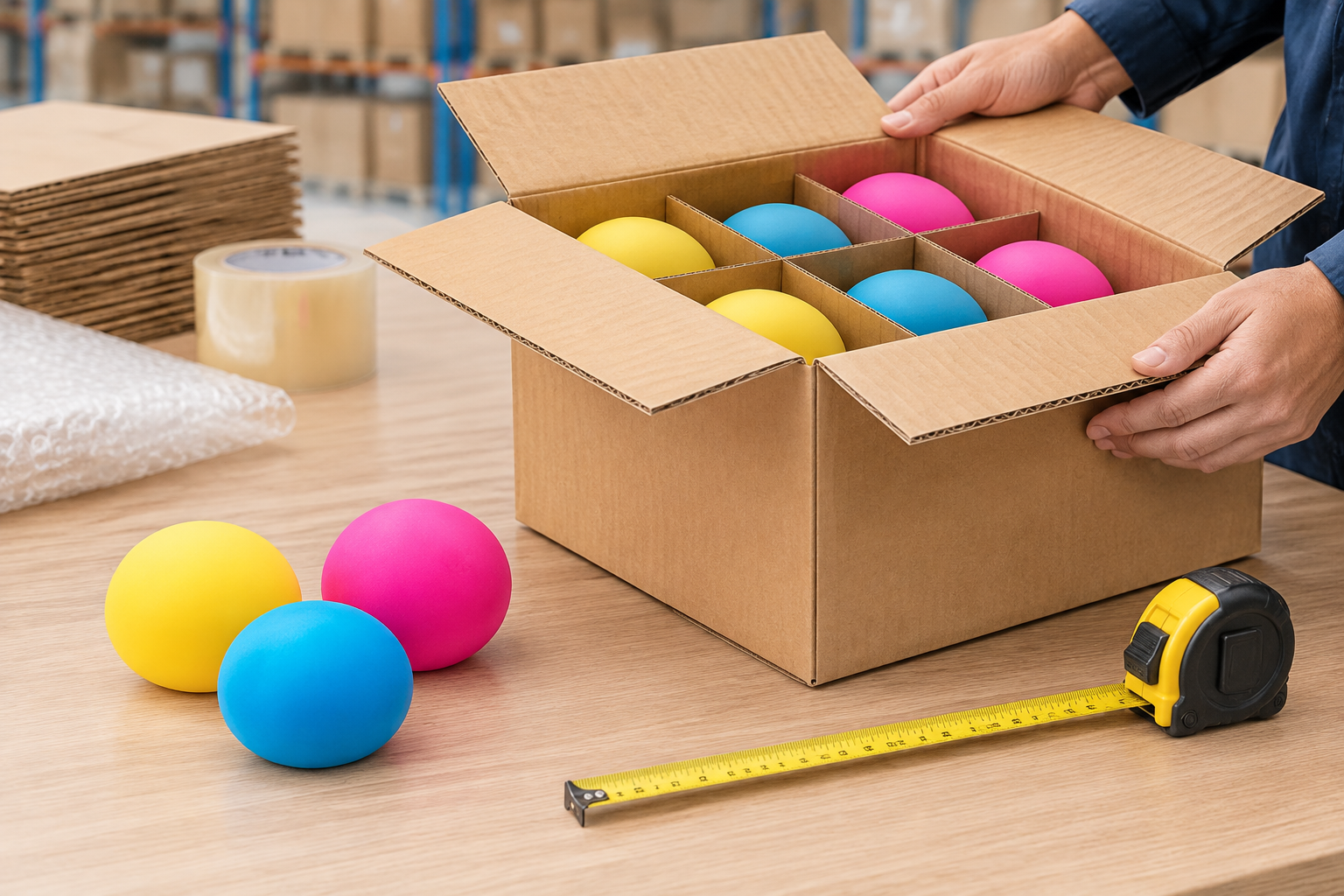
Compare landed cost, not just the ex-factory unit price. Add tooling, samples, testing, inspection, retail and export packaging, China inland transport, international freight, insurance, duties, taxes, and a realistic allowance for damage or returns. Confirm the final HS classification with your customs adviser; it affects duty and import treatment.
Put the Incoterm and named place in writing. For example, “FOB Ningbo” still needs a named port and an agreed version of the Incoterms rules. Identify who will be importer of record and who pays for compliance work. Greentime’s shipping and freight forwarding service can help you compare transport options once carton dimensions and quantities are fixed.
Foam squishies can occupy much more carton space than their weight suggests. Request carton dimensions and gross weight so your forwarder can check chargeable volume. Compare FOB and DDP offers using the same destination and scope; Greentime’s FOB vs DDP Incoterms guide explains the handoff. Add possible destination inspection, storage, and return costs to your scenario rather than hiding them in the unit price.
A pilot order can reveal packaging and sell-through problems before you scale, provided it meets applicable safety rules. Keep records of the approved sample, test reports, purchase order, batch number, and inspection. Those records make the next order easier to quote and easier to trace.
Where in China should you source squishy toys?
Shantou’s Chenghai district is a major toy sourcing area; use the Shantou toys market guide to plan a supplier visit. Dongguan and Shenzhen are useful places to compare silicone, TPR, and precision molding capabilities. Yiwu offers market stock and mixed-SKU sourcing. Location alone proves neither factory ownership nor compliance: inspect the actual production site and match its process to your SKU. Greentime’s China toy wholesale supplier page is a starting point for the category.
When should you start a 2027 squishy-toy order?
For a midyear 2027 launch, aim to settle specifications and samples in January–February, complete the test and approval work before production in March–April, and plan freight after agreeing on an inspection date. Treat a May departure as a planning example, not a promised schedule. Work backward from your own sales window and allow time for retesting, rework, customs, and delivery.
Frequently asked questions
Can water beads be used in squishy toys?
Only after a specialist reviews the exact design and market. Released beads can pose ingestion and expansion hazards, especially for children. Ask your lab and importer to assess the fill, shell, seals, age grade, and applicable rules before approving a sample or order.
Do suppliers charge for samples?
Many do, but terms depend on tooling, materials, and shipping. Ask for the sample fee, freight charge, payment terms, and whether any amount is credited against the production order. A paid sample still needs written specifications and approval criteria.
Can I order a custom shape?
Yes, if the factory can make and maintain the mold. Ask for the drawing, prototype, mold fee, ownership terms, MOQ, and approval steps. A new shape can change small-parts, seam, or packaging risks, so have the lab review it.
What is the minimum order for a custom mold?
It depends on the supplier’s process, material, tooling cost, and your design. Request the mold fee, ownership terms, MOQ per design and color, and unit prices at several quantities. A category average cannot replace a quote for your exact SKU. See the guide to sourcing toys from China for broader supplier checks.
How long do samples and production take?
Ask for a dated sample and production schedule on the exact specification. Tooling, packaging, testing, holidays, and order size change the timeline. Treat a generic lead-time claim as a quote to verify, not a delivery promise.
Why can squishy toys be held at customs?
Possible reasons include missing or mismatched conformity records, labels, declared product details, or a safety concern found during inspection. Ask the importer and customs broker which issue applies to the actual shipment. A recall notice and a customs detention are different events.
Who should issue and retain the test report?
An appropriate laboratory issues the test report for the submitted samples. The supplier, importer, and other responsible parties should agree who orders testing, holds the technical file, and provides documents to regulators. Check that the report identifies the final SKU and materials.
Can an adult fidget product skip toy rules?
Do not rely on an “adult” label alone. Design, play value, intended user, sales channel, and marketing may affect classification. Ask a market-specific compliance specialist to assess borderline items. Other consumer-product rules can still apply even if the item is not classified as a toy.
Order with a specification you can verify
Start with a material and filling specification, intended age group, and destination market. Use those details to request the right safety evidence and comparable MOQ quotes. Approve a sample before production and inspect the finished lot against it. If you need help reviewing a supplier’s report and quote, send the Greentime team your product brief, target market, and order quantity.

Gong Zheng is a blog editor for Greentime, focusing on global sourcing, wholesale market trends, and practical advice for international buyers. Drawing on extensive experience in digital marketing and cross-border trade, he shares expert insights to help small and medium-sized enterprises source products more efficiently and avoid common pitfalls. Passionate about connecting buyers with reliable suppliers, he writes in a clear, approachable style that makes complex topics easy to understand.