
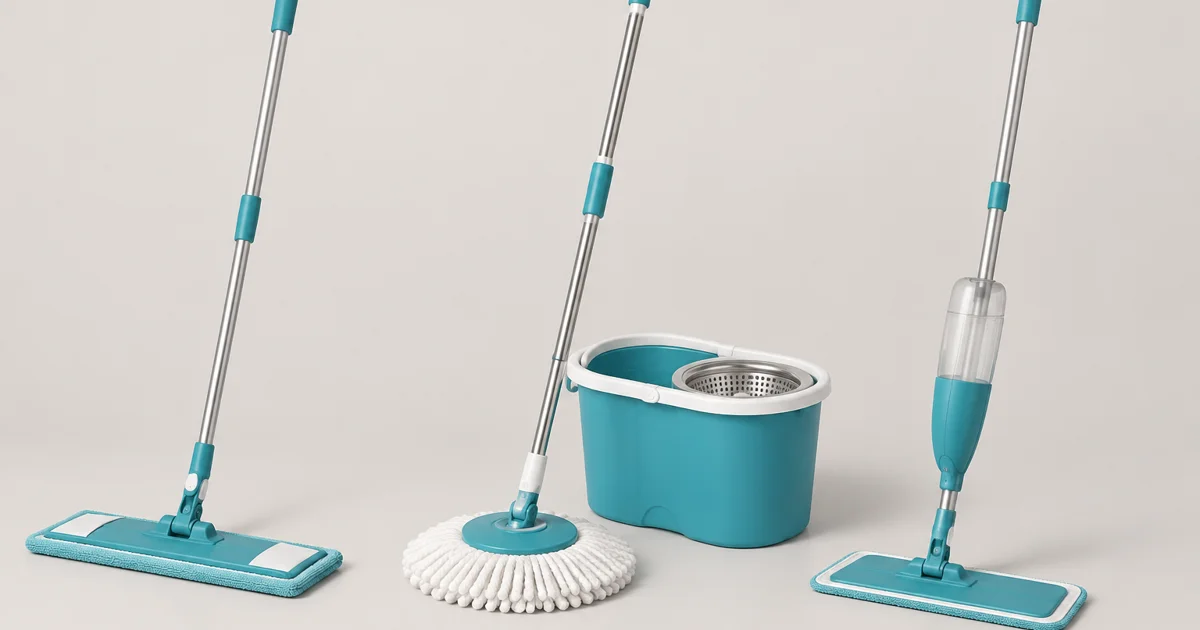
Flat Mop, Spin Mop & Spray Mop Wholesale from China: Sourcing Guide for Importers (2027)
For importers buying mops wholesale from China, the choice starts with the cleaning task and the replacement system. Flat mops suit compact kits and washable pad programs. Spin mops combine a round head with a bucket-based wringing mechanism. Spray mops offer an integrated reservoir for routine spot cleaning. Each design brings different quality risks, packaging requirements and after-sales needs. This 2027 sourcing guide compares the three systems and explains how to specify, sample, inspect and order them. It is a purchasing framework prepared in November 2026, rather than a forecast of 2027 prices or demand. Start with your target customer and destination market, then compare suppliers against one written specification. Explore the wider Greentime cleaning-items range when planning complementary products. Key takeaways Compare flat, spin and spray mops by use case, replacement availability and packed volume. Approve the complete system: handle, head, pad, mechanism and packaging. Request product-specific evidence and
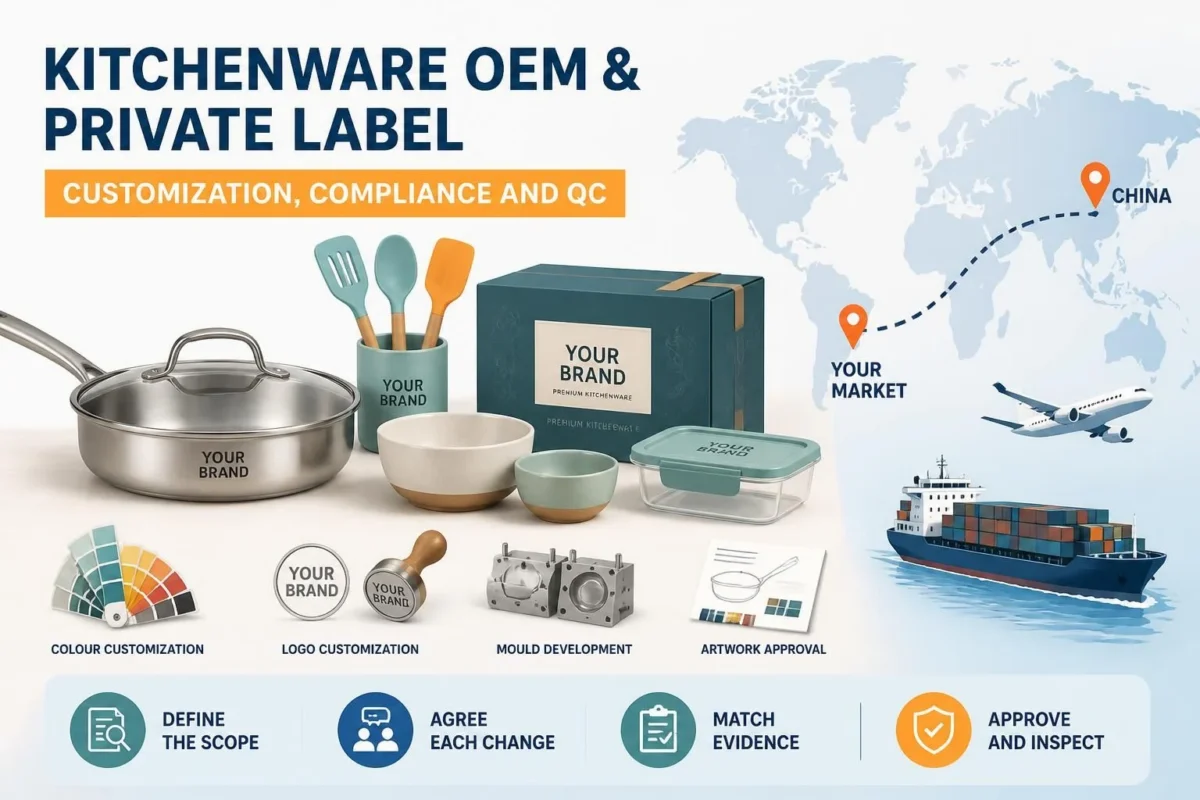
Kitchenware OEM and Private Label: Customization, Compliance, and QC
A kitchenware OEM order can mean anything from adding your logo to an existing utensil to changing its material, parts, or tooling. Before you place an order, define the product and destination market, agree each customization, check the relevant compliance evidence, approve a written sample, and set production QC criteria. This process helps you compare supplier quotes on the same basis and catch changes before they reach a shipment. Start with the product you want to sell, then work through its specification, evidence, sample, and inspection plan. A clear kitchenware OEM and private label brief should define each requested change before you compare suppliers. Key Takeaways Write down product, branding, packaging, and tooling changes before requesting an OEM quote. Match compliance documents to the final product, materials, intended use, claims, and destination market. Approve a documented sample and use it with written acceptance criteria for production QC. There is no

Kitchen Tools & Utensils Sourcing Guide: What Importers Should Know
Sourcing kitchen tools and utensils can look simple on paper. The differences often show up in the samples: two spatulas may share a shape but use different materials, cores, handle joints, finishes, or packaging. For importers, a kitchen tools and utensils sourcing guide is useful when it helps keep the product specification, compliance evidence, approved sample, and purchase order aligned. This guide is for importers, retailers, wholesalers, and ecommerce brands buying non-powered tools such as spatulas, tongs, whisks, ladles, peelers, graters, and cutting boards. Cookware has different construction and inspection requirements. Decide whether you are buying one lead SKU or a coordinated set before asking factories to quote. Key Takeaways Which kitchen tools and utensils should you source first? Choose a small group of products for the same buyer and sales channel. A prep set might include a turner, ladle, whisk, and tongs, but each SKU still needs its own
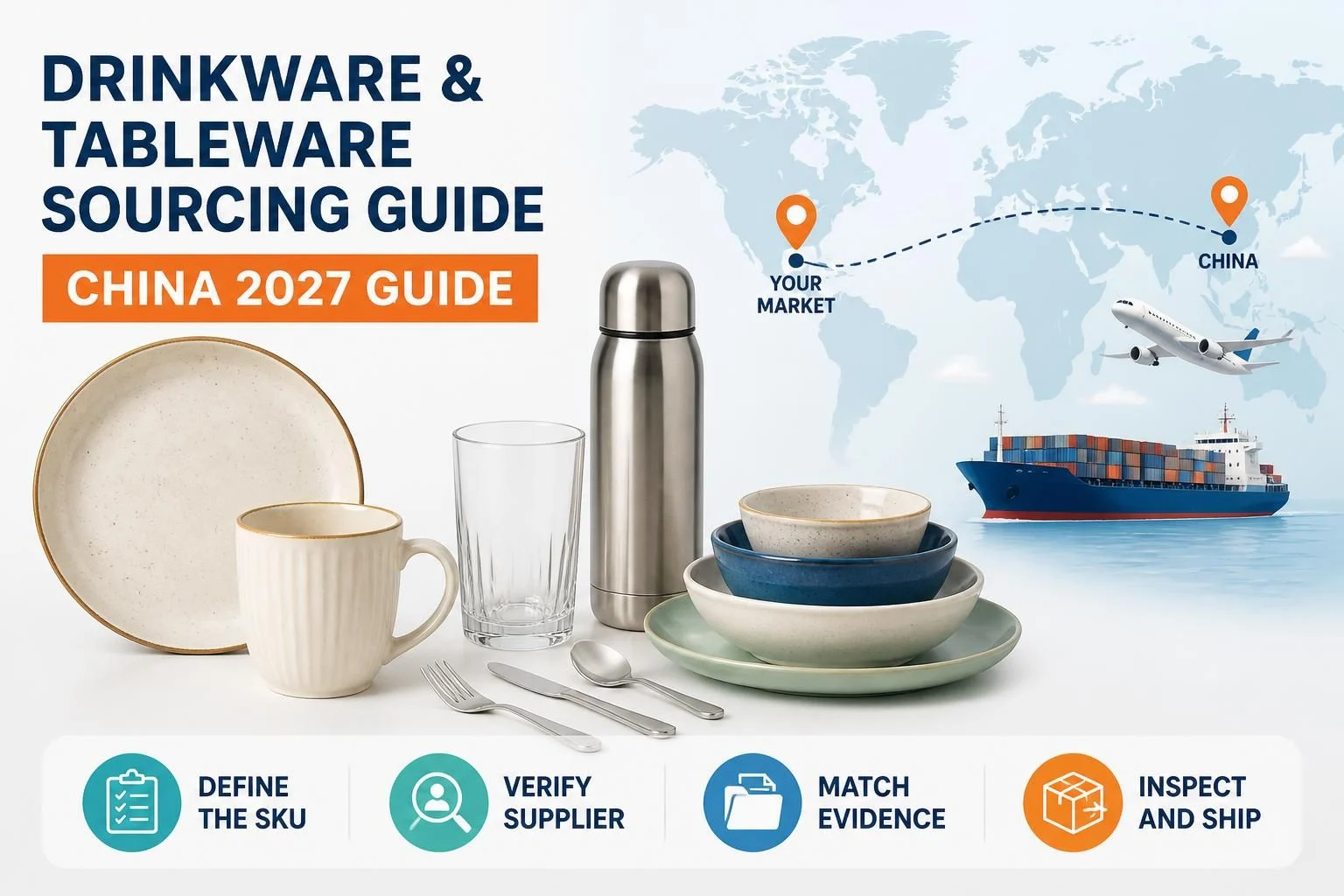
Source Drinkware and Tableware from China: 2027 Guide
Start with a written SKU specification, destination market, and packaging plan. A product photo, target price, or “food grade” claim cannot tell you whether two suppliers are quoting the same item. Approve a production sample, define inspection criteria, and calculate landed cost before releasing the order. The guide covers ceramic and porcelain tableware, glassware, stainless steel drinkware, vacuum bottles, cutlery, and mixed sets. The kitchenware wholesale page lists the product families available through Greentime. Drinkware and tableware product types to consider Common product groups include ceramic and porcelain dinnerware, glassware, stainless steel drinkware, vacuum bottles, tumblers, mugs, cutlery, plastic or melamine items, bamboo products, and hospitality sets. Choose a specific product and intended use first. Material, capacity, finish, destination, and packaging then shape the supplier questions. Define one SKU at a time. Record dimensions, capacity, unit weight, wall or base thickness, finish, color, decoration, handle or lid, and any heat,
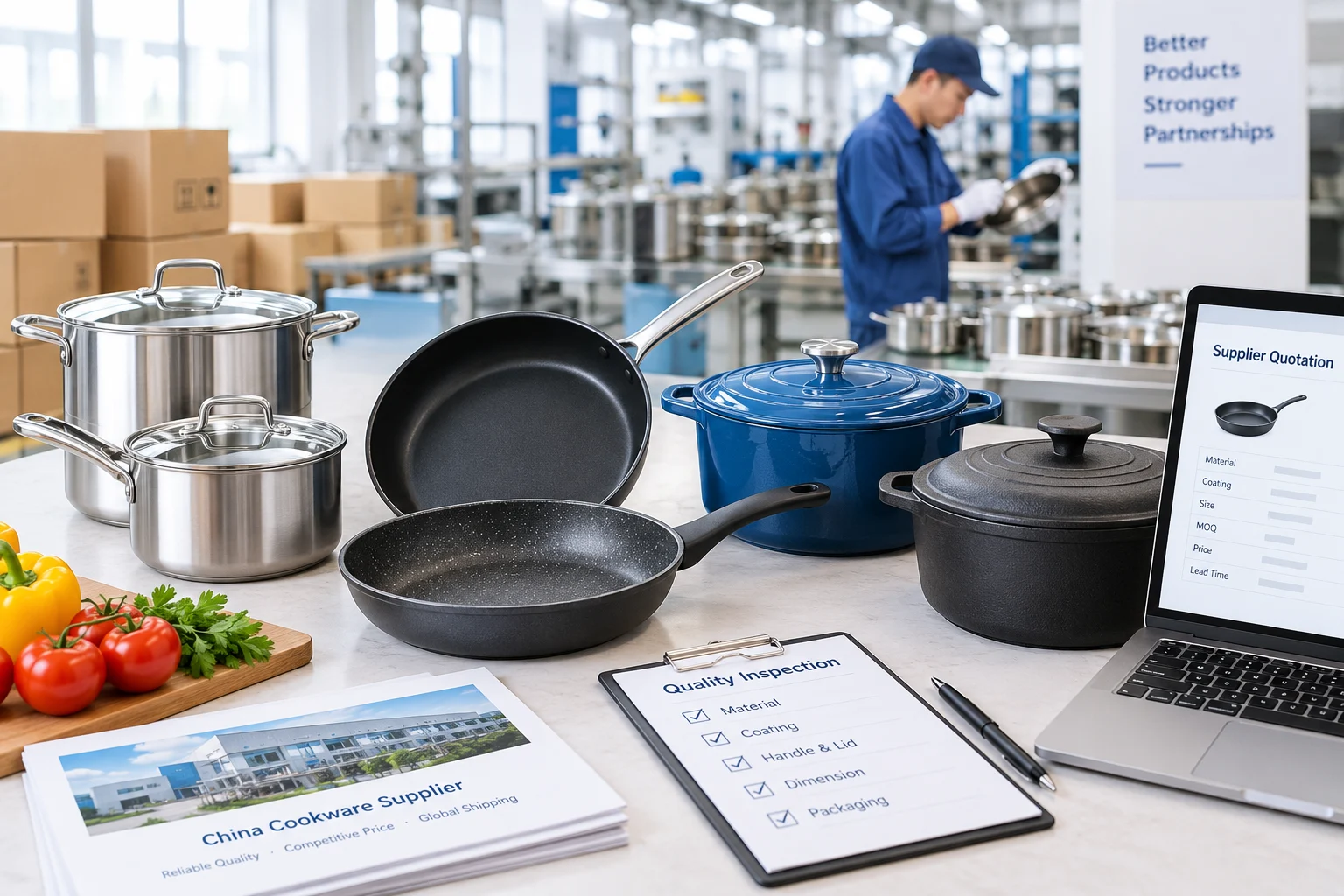
China Cookware Sourcing Guide: Suppliers, Prices & Quality
Sourcing cookware from China can give you more material, finish, and packaging options than a simple marketplace search. It can also expose you to warped bases, weak handles, coating defects, missing documentation, and quotes that are impossible to compare. This China cookware sourcing guide shows you how to define the product, shortlist suppliers, compare landed cost, approve samples, and inspect the order before shipment. The key is simple: compare the same specification, not the same product photo. A 28 cm nonstick pan can vary by alloy, wall thickness, coating system, induction base, handle attachment, lid, carton, and inspection standard. Approve the specification and the sample before you compare supplier prices. What cookware can you source from China? China supplies many cookware constructions, but each one needs a different specification and test plan. The European Commission’s food-contact materials guidance covers materials that contact food, while the exact evidence depends on the
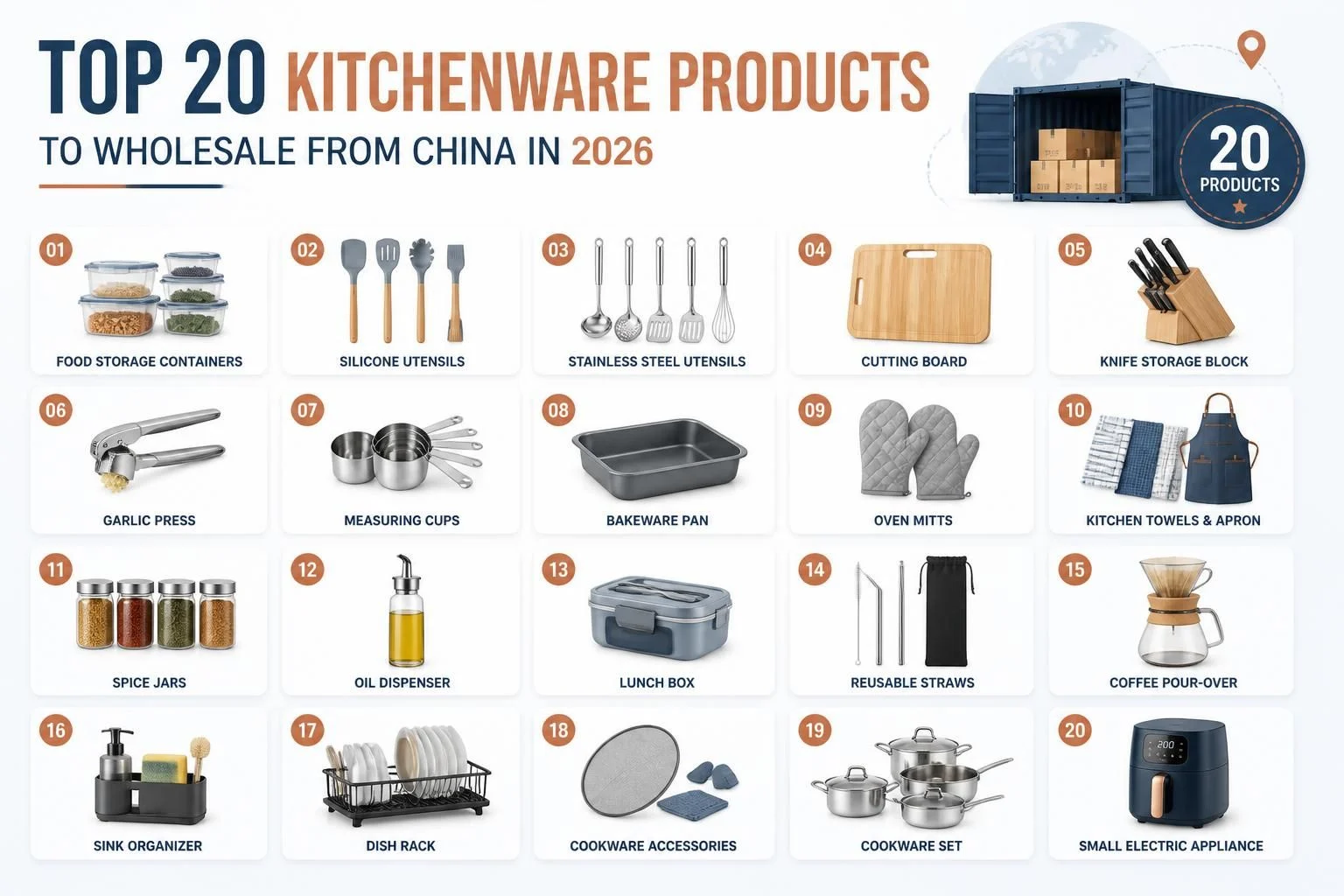
Top 20 Kitchenware Products to Wholesale from China in 2026
Kitchenware is a workable China wholesale category when you begin with a tightly specified product, not a vague “kitchen collection.” This curated 2026 list helps ecommerce sellers, retailers, and private-label buyers compare 20 product opportunities by use case, sourcing route, differentiation potential, quality controls, and destination-market questions. It is not a sales-volume ranking, and it does not claim to cover every worthwhile product. The order is editorial. Use it to plan a test assortment. For food-contact goods, suitability is determined by the final SKU, materials, intended use, product claims, and destination market—not by a generic “food grade” statement or the country of origin. Confirm the requirements for your finished product before production and import. For the supplier-screening, sample-approval, and landed-cost workflow that follows product selection, read How to Source Kitchenware from China: A 2026 Importer Guide. Key Takeaways How do the 20 kitchenware product opportunities compare? Product opportunity Strongest initial