
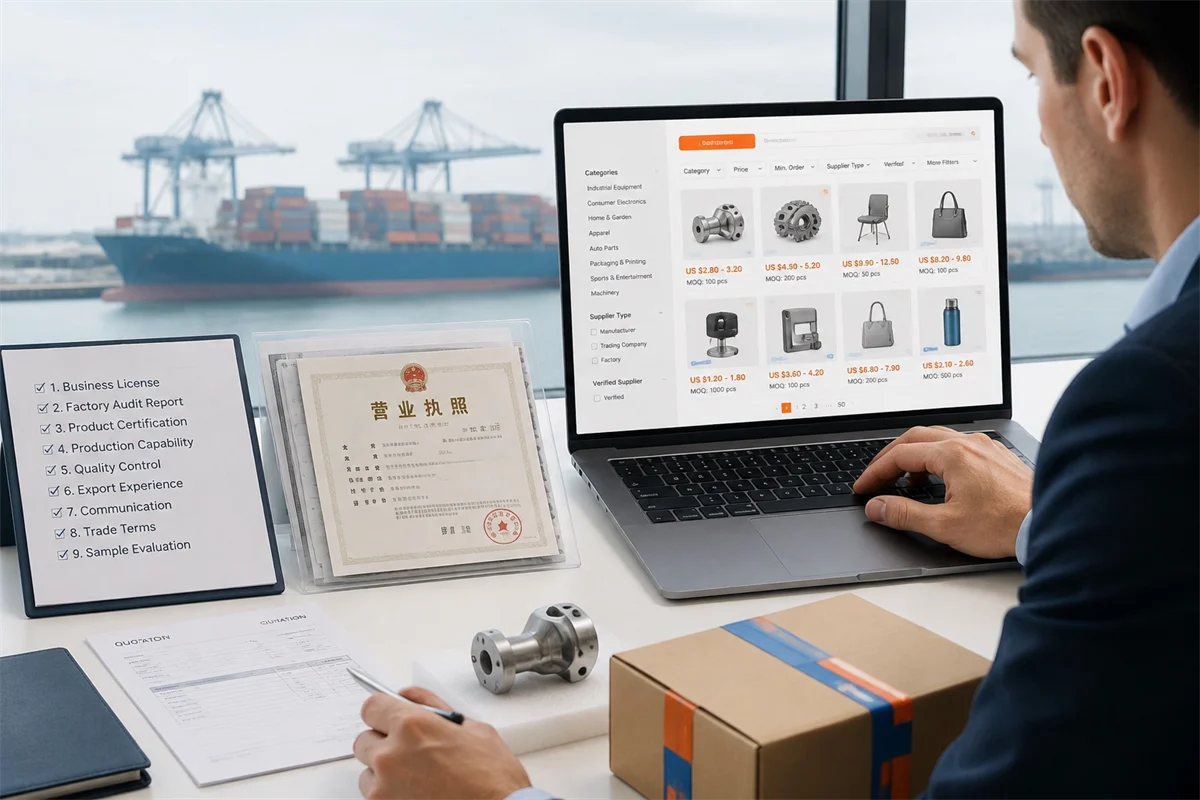
Supplier verification editorial hero

How to verify 1688 suppliers: 9 checks before you order

A 1688 listing is a useful starting point, but it is not a completed supplier check. Before you send a deposit, verify the legal entity, supplier type, product capability, sample, commercial terms, quality controls, and export readiness. If you are learning how to verify 1688 suppliers, this guide gives you nine checks to complete before placing an order. It follows our practical guide on how to buy products on 1688. The process matters most when you are ordering for the first time, buying a custom product, or working with several suppliers. A low listing price can look attractive until packaging, domestic delivery, inspection, consolidation, and international shipping are added. Supplier verification should happen before payment, not after a problem appears. Is it safe to buy from 1688? 1688 can be a useful sourcing channel, but a store page does not prove that a supplier is suitable for your order. It can help
Read More
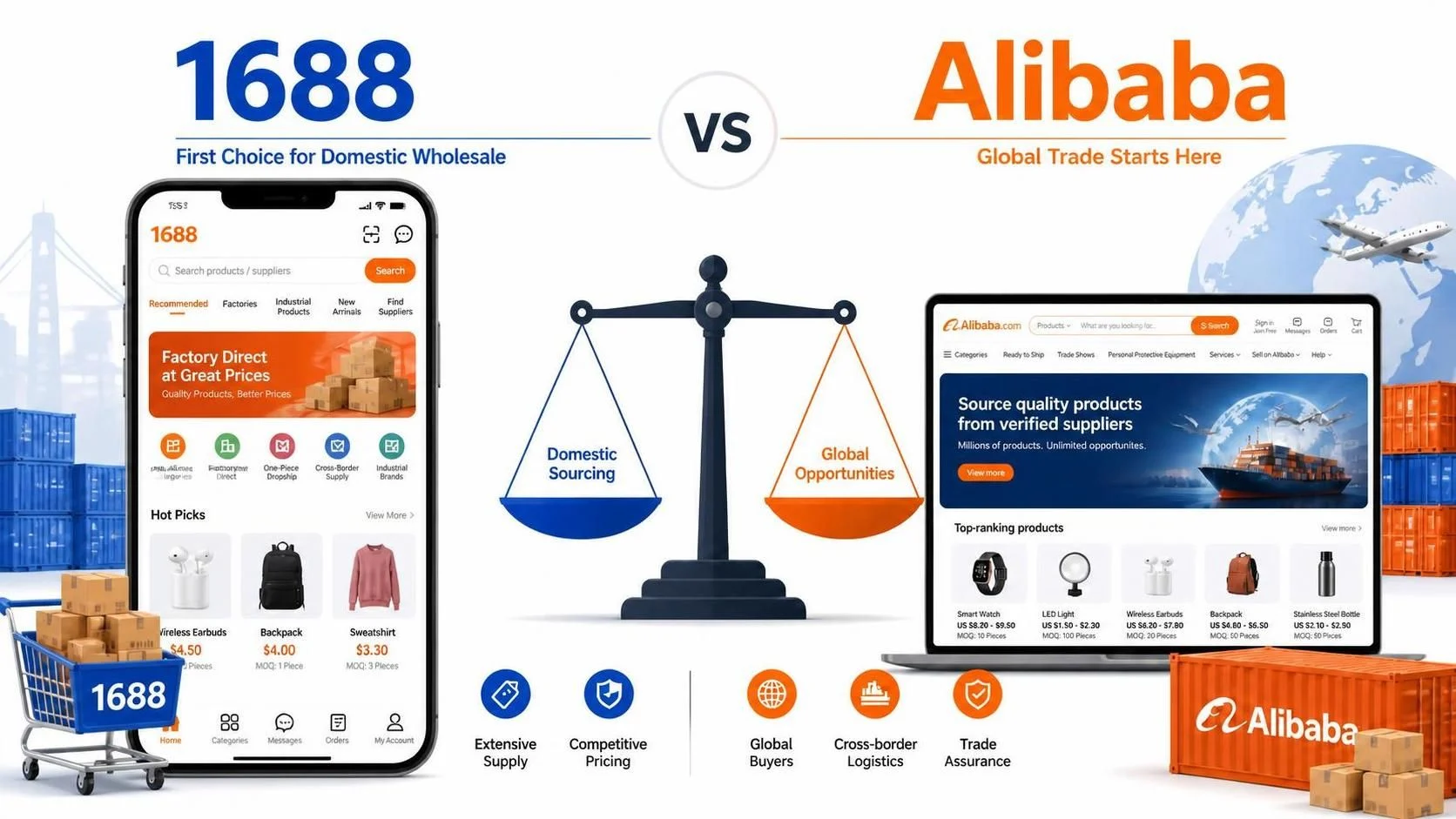
hero 1688 vs alibaba

1688 vs Alibaba in 2026: Which Platform Is Better for Wholesale Buyers?

If you already know you want to import from China, you have probably hit the same fork in the road as thousands of other buyers: 1688 or Alibaba? Both platforms sell Chinese factory goods. Both connect you to the same kinds of manufacturers. But they are built for completely different buyers, and choosing the wrong one can quietly cost you 10–30% on every order — not because the product is more expensive, but because you compared the wrong number. This guide is written specifically for wholesale buyers who are already committed to sourcing from China and just need to decide which platform to run through. We’ll give you a scannable comparison, a clear-eyed look at the eight practical differences that matter for importers, a full landed-cost framework, and four concrete scenarios that tell you exactly which platform fits your situation. 1688 vs Alibaba: Quick Comparison Factor 1688 Alibaba Price Chinese domestic factory prices

Read More

Why a Desktop Multi‑Asset Wallet with a Built‑In Exchange Still Matters

Whoa! I started fiddling with desktop wallets a few years back, and honestly I was skeptical at first. My instinct said mobile apps would win—fast, on-the-go, all that—yet something about a local, desktop wallet kept pulling me back. It felt safer. More controllable. More like owning the keys, not renting them. At the same time I kept hitting friction: desktop apps that were clunky, exchanges that required endless KYC, and wallets that supported a single token family only (ugh, so limiting). Okay, so check this out—desktop multi-asset wallets with built-in swaps solve many of those pains, though they come with trade-offs. They let you manage dozens, sometimes hundreds, of coins and tokens from one interface. They let you swap without leaving the app. But here’s the thing: not all integrated exchanges are created equal. Fees vary. Liquidity varies. Privacy varies. And your threat model matters a lot. Really? Yes. If

Read More

Submit Your Sourcing Request

Thank you for your submission! Have a wonderful day!