The Canton Fair is one of the best opportunities for global buyers to connect with Chinese suppliers face-to-face. However, with thousands of exhibitors across multiple phases, not every supplier you meet will be reliable.
If you’re planning to source products from China, knowing how to verify suppliers is essential to avoid scams, ensure product quality, and build long-term partnerships.
In this guide, you’ll learn practical, proven ways to verify Chinese suppliers at Canton Fair—and how to source with confidence.
1.Why Supplier Verification Matters at Canton Fair
The Canton Fair is one of the largest trade exhibitions in the world, attracting thousands of suppliers across various industries. While this creates great sourcing opportunities, it also means buyers must carefully evaluate who they choose to work with.
Not all suppliers at the fair operate at the same level of reliability, experience, or quality control. Some are well-established manufacturers with strong export backgrounds, while others may be trading companies or newly established businesses with limited production capabilities.

Without proper supplier verification, buyers may encounter several risks:
- Inconsistent product quality
- Misleading product information
- Production delays or missed deadlines
- Payment risks or lack of accountability
For international buyers—especially those sourcing for wholesale, Amazon, or retail—these risks can directly impact profitability and brand reputation.
Supplier verification helps you:
- Confirm the legitimacy of the company
- Evaluate production capabilities
- Ensure compliance with your market standards
- Reduce sourcing risks before placing orders
In short, verifying suppliers is not just a precaution—it’s a necessary step to ensure a successful sourcing experience at the Canton Fair.Before meeting suppliers, make sure you understand which Canton Fair phase to attend and plan your sourcing strategy effectively.
2.Types of Suppliers You’ll Meet at Canton Fair
Before verifying a supplier, it’s important to understand the different types of exhibitors you may encounter. Each type has its own advantages and potential risks.
Manufacturers vs Trading Companies
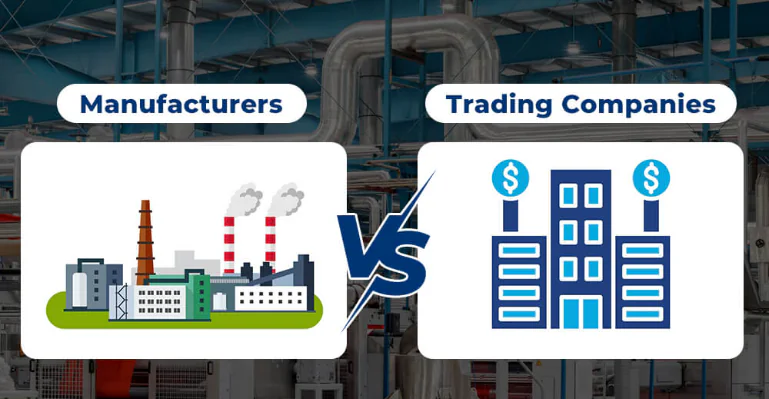
One of the most important distinctions is between manufacturers and trading companies.
Manufacturers own and operate their own factories. They typically offer:
- More competitive pricing
- Better control over production
- Customization options (OEM/ODM)
- Direct communication with production teams
Trading companies, on the other hand, act as intermediaries between buyers and factories. They usually:
- Offer a wider range of products
- Provide flexible sourcing solutions
- Handle communication and coordination
However, they may not have direct control over production, which can sometimes lead to less transparency.
👉 Tip: Don’t assume every supplier is a manufacturer. Always ask directly and verify.
2.1 Manufacturers vs Trading Companies
One of the most important distinctions is between manufacturers and trading companies.
Manufacturers own and operate their own factories. They typically offer:
- More competitive pricing
- Better control over production
- Customization options (OEM/ODM)
- Direct communication with production teams
Trading companies, on the other hand, act as intermediaries between buyers and factories. They usually:
- Offer a wider range of products
- Provide flexible sourcing solutions
- Handle communication and coordination
However, they may not have direct control over production, which can sometimes lead to less transparency.
👉 Tip: Don’t assume every supplier is a manufacturer. Always ask directly and verify.
2.2 OEM / ODM Suppliers
Many suppliers at the Canton Fair offer customization services, typically categorized as OEM or ODM.
OEM (Original Equipment Manufacturer):
The supplier produces products based on your design, specifications, and branding.
ODM (Original Design Manufacturer):
The supplier provides existing product designs that you can customize with your logo or minor changes.
For buyers looking to build private label brands, OEM and ODM suppliers are essential. However, it’s important to verify:
- Design ownership
- Production capability
- Experience with similar projects
2.3 Small Workshops vs Large Factories
Suppliers at the Canton Fair also vary significantly in size and production capacity.
Small workshops:
- Lower minimum order quantities (MOQs)
- More flexible in customization
- Potentially lower costs
But they may have:
- Limited production capacity
- Less stable quality control
- Higher operational risks
Large factories:
- Strong production capabilities
- Established quality control systems
- Experience with international markets
However, they often require:
- Higher MOQs
- Longer lead times for customization
👉 Tip: Choose based on your business stage. Small buyers may prefer flexibility, while large-scale importers should prioritize stability and consistency.
3.7 Key Ways to Verify Suppliers at Canton Fair
Choosing the right supplier is the most important step in successful sourcing. Below are 7 proven methods to verify Chinese suppliers at the Canton Fair and minimize your risks.
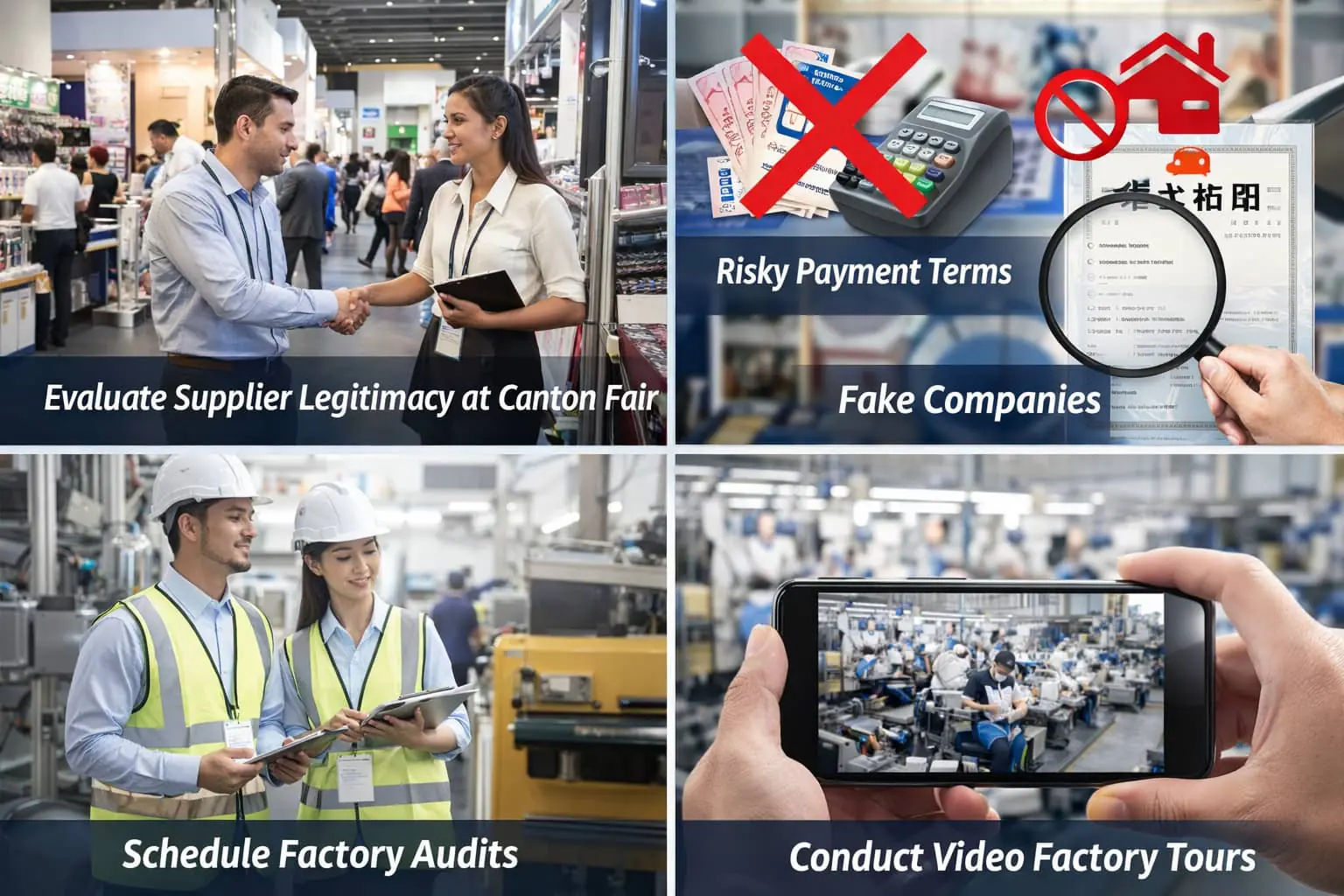
a. Check Business License & Certifications
Start by confirming the supplier’s legal identity.
Ask for:
- Business license
- Export license
- Product certifications (ISO, BSCI, CE, FDA, etc.)
These documents help you verify:
- The company is officially registered
- The business scope matches their products
- Compliance with your target market standards
👉 Pro Tip: Always check if the company name on documents matches their booth and website.
b. Ask for Factory Audit Reports
A reliable supplier should be able to provide third-party audit reports, such as:
- BSCI (social compliance)
- ISO quality management
- Factory inspection reports
These reports give insight into:
- Working conditions
- Production capacity
- Quality management systems
👉 If the supplier cannot provide audit reports, consider arranging a professional factory audit after the fair.
c. Review Export Experience
Suppliers with strong export experience are generally more reliable.
Key questions to ask:
- Which countries do you export to?
- Do you supply Amazon sellers or large retailers?
- Can you share client references or case studies?
Experienced exporters are more familiar with:
- International standards
- Packaging requirements
- Shipping and documentation
d. Inspect Product Quality On-site
Don’t rely on catalogs or brochures—always inspect products in person.
Check for:
- Material quality
- Workmanship and finishing
- Product consistency
- Packaging standards
👉 Pro Tip: Compare similar products across multiple suppliers to identify quality differences.
e. Request Samples Before Ordering
Never place bulk orders directly after the fair.
Instead:
- Request product samples
- Test quality and durability
- Evaluate branding and packaging
This step helps you:
- Avoid costly mistakes
- Validate supplier claims
- Ensure the product meets your expectations
f. Verify Company Online Presence
After meeting a supplier, always verify them online.
Check:
- Alibaba / Made-in-China profiles
- Official website
- Google search results
- Look for consistency in:
- Company name
- Address
- Product categories
👉 A lack of online presence or inconsistent information can be a red flag.
g. Visit the Factory (If Possible)
The most reliable way to verify a supplier is to visit their factory.
During a factory visit, you can:
- Confirm production capacity
- Check machinery and facilities
- Evaluate quality control processes
If you cannot visit in person:
- Request a live video factory tour
- Or work with a local sourcing agent
👉 A professional sourcing agent can help verify suppliers, conduct audits, and reduce risks efficiently.
Quick Checklist: How to Verify a Chinese Supplier
For quick reference, here’s a simple checklist you can follow:
✔ Verify business license and certifications
✔ Check factory audit reports
✔ Evaluate export experience
✔ Inspect product quality in person
✔ Request and test samples
✔ Research online presence
✔ Arrange factory visit or third-party audit
4.Red Flags to Avoid When Verifying Suppliers
When sourcing at the Canton Fair, identifying reliable suppliers is only half the job. You must also be able to recognize warning signs that may indicate potential risks.
Below are the most common red flags to watch out for when evaluating Chinese suppliers.
4.1 Unrealistically Low Prices
One of the most obvious warning signs is pricing that is significantly lower than the market average.
While competitive pricing is common among Chinese suppliers, extremely low prices may indicate:
- Inferior raw materials
- Hidden quality issues
- Incomplete production processes
- Potential scams or bait pricing
👉 Keyword insight:
Search terms like “cheap China suppliers” or “low-cost sourcing China risks” often relate to this scenario.
Always compare multiple suppliers and evaluate whether the price aligns with product quality and specifications.
4.2 No Company Registration Info
Legitimate suppliers should be able to provide verifiable company registration details.
If a supplier cannot provide:
- Business license
- Company name consistency
- Registered address
This is a major red flag.
Reliable suppliers are transparent about their identity and legal status. Lack of registration information may indicate:
- Unregistered operations
- Trading intermediaries posing as manufacturers
- Potential fraud risks
👉 Always verify company legitimacy as part of your China supplier verification process.
4.3 Refuses Factory Visit
A trustworthy supplier should have no issue allowing factory visits or inspections.
If a supplier:
- Avoids factory tours
- Refuses to share factory location
- Hesitates to arrange video calls
This may suggest:
- They are not a real manufacturer
- They lack production capability
- They are hiding operational conditions
👉 Factory verification is a critical step in verifying Chinese manufacturers, especially for bulk orders.
4.4 Poor Communication / Slow Response
Communication quality is often a reflection of a supplier’s professionalism.
Warning signs include:
- Delayed responses
- Vague or inconsistent answers
- Lack of product knowledge
- Language barriers without solutions
Efficient communication is essential for:
- Order confirmation
- Production updates
- Problem resolution
👉 In international sourcing, clear communication is a key factor when choosing a reliable China supplier.
4.5 Only Accepts Risky Payment Terms
Payment terms can reveal a lot about supplier credibility.
Be cautious if a supplier insists on:
- 100% upfront payment
- Untraceable payment methods
- No formal contract or invoice
Standard international sourcing practices usually involve:
- Deposit (e.g., 30%)
- Balance after inspection or before shipment
👉 Safe payment structures are part of professional China sourcing and supplier verification processes.
5.How to Verify Suppliers After Canton Fair
Supplier verification doesn’t end once the Canton Fair is over. In fact, post-fair verification is equally important to ensure that the supplier you selected is truly reliable.
5.1 Use Third-Party Inspection Services
Third-party inspection services help verify supplier reliability before and during production.
These services can:
- Audit factory operations
- Inspect product quality
- Verify production capacity
- Ensure compliance with your requirements
👉 This is especially useful for international buyers who cannot visit China in person.
Using inspection services is a common practice in China sourcing quality control, particularly for bulk orders.
5.2 Conduct Video Factory Tours
If visiting the factory physically is not possible, a live video tour is a practical alternative.
During a video factory tour, you can:
- Observe production lines in real time
- Check machinery and equipment
- Communicate directly with staff
- Verify operational scale
👉 Ask the supplier to walk through different areas of the factory to ensure authenticity.
This step strengthens your supplier verification in China without requiring travel.
5.3 Start with Small Trial Orders
Before committing to large-scale production, always begin with a small trial order.
Benefits include:
- Testing product quality in real conditions
- Evaluating supplier reliability
- Assessing delivery timelines
- Identifying potential issues early
👉 Trial orders are a standard risk-control strategy in importing from China and help build trust gradually.
Once the supplier meets your expectations, you can confidently scale up your order volume.
6.Best Tools to Check Chinese Suppliers
In addition to on-site verification at the Canton Fair, using online tools can help you further confirm a supplier’s legitimacy and track record. These tools are especially useful for background checks and post-fair validation.
National Enterprise Credit Information System (China)
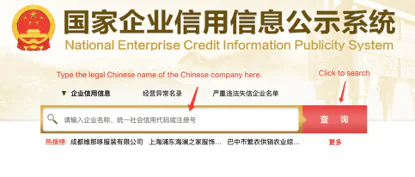
This is China’s official company registration database, where you can verify basic company information such as:
- Legal business name
- Registration status
- Business scope
- Registered capital
It is one of the most reliable ways to verify a Chinese company online and confirm whether a supplier is officially registered.
Alibaba Supplier Profile
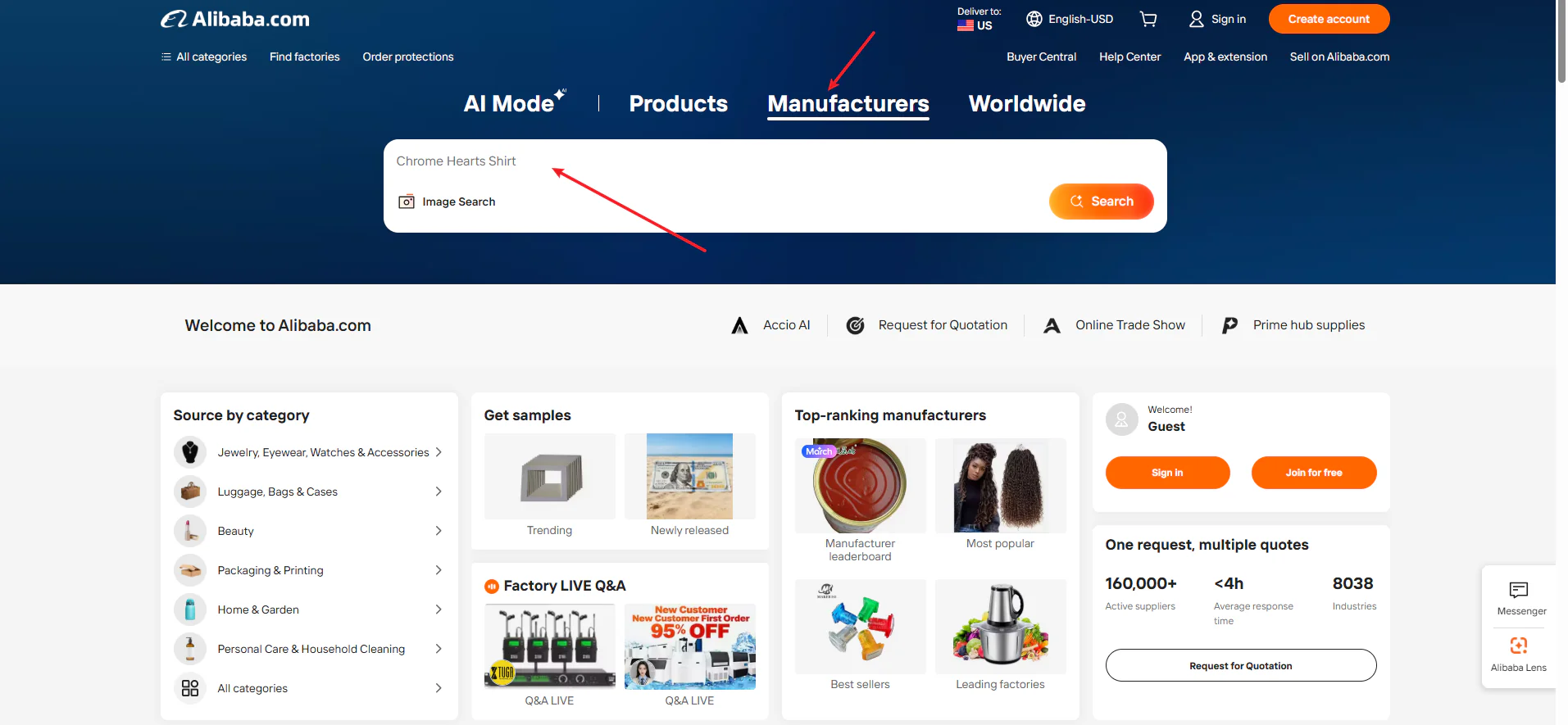
Many Canton Fair suppliers also maintain profiles on platforms like Alibaba.
By reviewing their profile, you can check:
- Years of operation
- Trade history
- Product range
- Customer reviews and ratings
This helps you evaluate whether the supplier has a consistent presence in the international market and is active in China supplier databases.
ImportYeti

ImportYeti is a useful tool for analyzing import/export data.
With ImportYeti, you can:
- See a supplier’s historical shipments
- Identify their overseas clients
- Understand their export scale and experience
This is particularly helpful for verifying whether a supplier has real export records and established international partnerships.
7.Should You Use a Sourcing Agent?
Working with a sourcing agent can significantly simplify and secure your purchasing process, especially if you are new to importing from China or handling large orders.
A professional sourcing partner provides end-to-end support, including:
- Local Factory Verification
- Sourcing agents have on-the-ground teams that can:
- Visit factories in person
- Verify production capabilities
- Confirm supplier authenticity
This is a major advantage when you cannot travel frequently or need fast verification.
Risk Reduction
A sourcing agent helps minimize common risks such as:
- Fake manufacturers
- Inconsistent product quality
- Miscommunication with suppliers
- Unreliable delivery timelines
By acting as a local intermediary, they ensure smoother communication and better control over the sourcing process.
Negotiation Advantages
Experienced sourcing agents understand local market pricing and negotiation tactics. They can:
- Help you secure better pricing
- Negotiate favorable payment terms
- Optimize order conditions
This often leads to cost savings and improved supplier cooperation.
Full-Cycle Service
Many sourcing partners provide comprehensive services, including:
- Supplier sourcing and matching
- Factory audits
- Quality control and inspection
- Order management
- Logistics and shipping coordination
👉 For example, Greentime offers one-stop sourcing solutions for global buyers, helping manage the entire process from supplier selection to final delivery.
If you’re planning to expand sourcing from China, working with a professional partner can improve efficiency and reduce uncertainty.
8.FAQs About Supplier Verification
Q1: How do I verify a Chinese supplier?
You can verify a Chinese supplier by checking their business license, certifications, online presence, export experience, and using third-party tools such as the National Enterprise Credit Information System and Alibaba profiles.
Q2: What is the safest way to check if a supplier is legitimate?
The safest approach is to combine multiple methods: document verification, factory audit, online database checks, and sample testing. For high-value orders, third-party inspections are strongly recommended.
Q3: Can I trust suppliers at the Canton Fair?
Most suppliers at the Canton Fair are legitimate, but verification is still necessary. The fair includes both manufacturers and trading companies, so due diligence is essential before placing orders.
Q4: What tools can I use to verify Chinese companies online?
Common tools include:
National Enterprise Credit Information System
Alibaba supplier profiles
ImportYeti shipment data platform
These tools help you validate company registration and export history.
Q5: Should I visit the factory before placing an order?
Yes, factory visits are highly recommended for large orders. If you cannot visit in person, consider arranging a video tour or using a sourcing agent to conduct verification on your behalf.
Q6: What is the role of a sourcing agent in supplier verification?
A sourcing agent helps verify suppliers, conduct factory audits, negotiate pricing, manage communication, and oversee quality control. This reduces sourcing risks and improves efficiency.
Conclusion
Verifying suppliers at the Canton Fair is a critical step for any international buyer looking to source from China safely and efficiently. With thousands of exhibitors across different industries, taking the time to properly evaluate each supplier can help you avoid risks and build long-term, reliable partnerships.
By following the verification methods outlined in this guide—such as checking business licenses, reviewing certifications, inspecting product quality, and using trusted verification tools—you can significantly reduce the chances of working with unreliable suppliers.
In addition, being aware of common red flags and conducting post-fair verification through factory audits, video tours, or trial orders will further strengthen your sourcing strategy.
If you want to streamline the process and minimize risks, contact us with an experienced sourcing partner can provide valuable local support, from supplier verification to quality control and logistics management.
👉 With the right approach and proper due diligence, the Canton Fair can become one of the most powerful sourcing opportunities for growing your business.

Tennie Chen is responsible for sourcing and supplier evaluation, with a focus on balancing product quality, cost efficiency, and supply chain reliability. My role involves identifying trustworthy manufacturers, comparing quotations, analyzing total landed costs, and ensuring compliance with international standards. I always prioritize long-term partnerships over one-time deals, aiming to work with suppliers who can provide consistent quality, competitive pricing, and flexible solutions. When making purchasing decisions, I evaluate not only the product itself but also the supplier’s production capacity, lead time, and after-sales support, ensuring that every cooperation contributes to sustainable business growth.