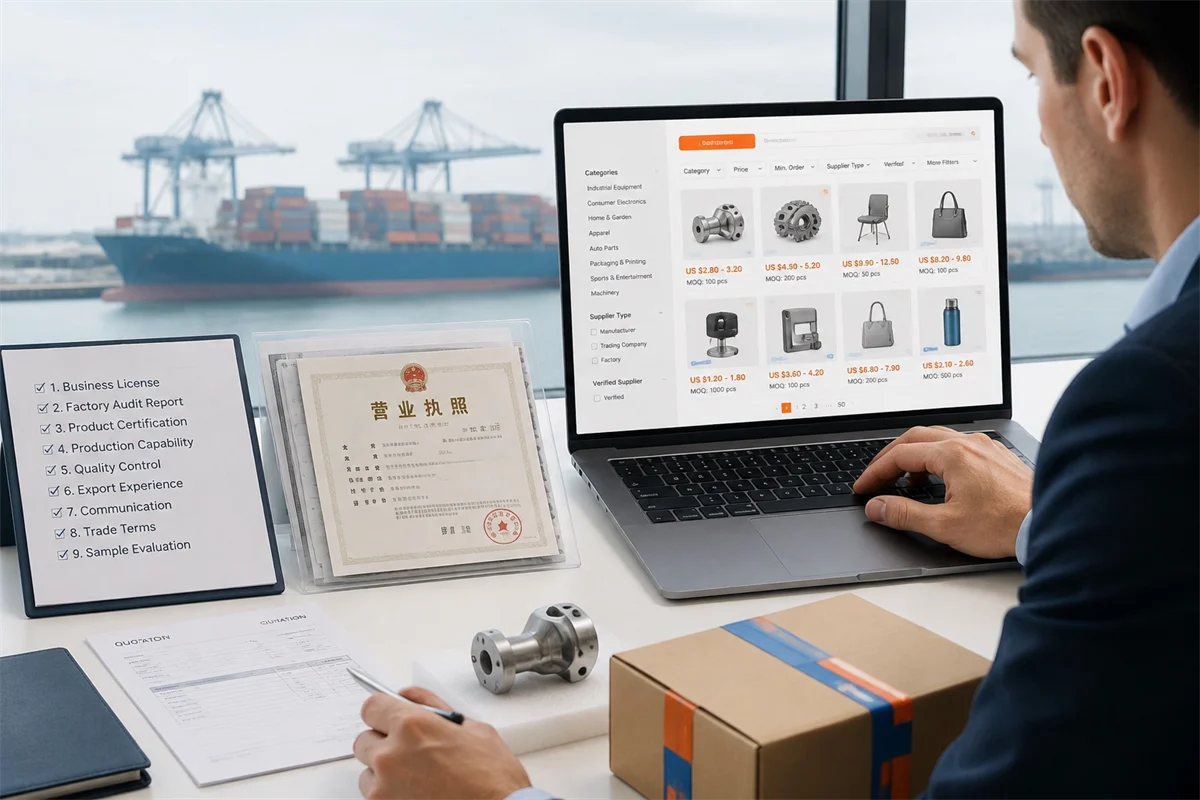
Are you attending trade shows but still struggling to find reliable suppliers or secure competitive pricing?
For many importers and wholesalers, participating in a trade show can feel overwhelming—thousands of suppliers, limited time, and constant pressure to make the right sourcing decisions. Without a clear strategy, it’s easy to waste time, choose the wrong partners, or miss high-value opportunities.
In today’s global sourcing environment, selecting the right trade show is no longer optional—it’s a critical step toward building a stable and profitable supply chain. From large-scale events like the Canton Fair to premium exhibitions such as Ambiente Frankfurt, each trade show offers different advantages depending on your target market, product category, and business model.
But the real challenge is not just which trade show to attend—it’s how to use trade shows effectively to source better products, negotiate smarter, and reduce risks.
In this guide, you’ll discover the top 10 global B2B trade shows for daily-use goods, along with practical strategies to help you choose the right events, identify reliable suppliers, and maximize your return on investment.
1. Top 10 Global B2B Trade Shows for Daily-Use Goods
For importers and wholesalers, choosing the right trade show can directly impact sourcing efficiency, supplier quality, and overall business growth. The following are the top global B2B trade shows for daily-use goods, housewares, and consumer products, each offering unique advantages across different regions and markets.
1.1 Ambiente Frankfurt – The World’s Leading Consumer Goods Fair
As one of the most influential trade shows in Europe, Ambiente Frankfurt is the top destination for high-end housewares, kitchenware, and lifestyle products. It attracts major European importers, retail chains, and global brands, making it ideal for businesses targeting premium markets.
👉 Best for: Entering the European market and sourcing design-driven products
1.2 ASD Market Week – North America’s Largest Wholesale Show
ASD Market Week is one of the most important trade shows in the United States for wholesale and distribution. It brings together Amazon sellers, retailers, and distributors looking for fast-moving consumer goods and daily-use products.
👉 Best for: Accessing the U.S. wholesale and e-commerce market
1.3 Canton Fair – The Largest Global Sourcing Platform
The Canton Fair is the largest trade show in the world, offering unmatched supplier diversity and factory-direct pricing. It is the top choice for sourcing daily-use goods in bulk directly from manufacturers in China.
👉Best for: Large-volume sourcing and supplier comparison
1.4 HKTDC Hong Kong Houseware Fair – Asia’s Professional Houseware Exhibition
The HKTDC Hong Kong Houseware Fair is known for its high-quality exhibitors and international buyer base. Compared to mainland trade shows, it offers a more curated and professional sourcing environment.
👉 Best for: Mid-to-high-end houseware sourcing in Asia
1.5 MosBuild / Household Expo – Gateway to Eastern Europe
MosBuild and Household Expo are key trade shows for entering the Russian and CIS markets. These exhibitions attract regional distributors and importers looking for practical and affordable daily-use goods.
👉 Best for: Expanding into Russia, Central Asia, and Eastern Europe
1.6 Brazil Homelife Expo – South America’s Key Market Entry
Brazil Homelife Expo is one of the most important trade shows in South America for home and daily-use goods. It connects suppliers with buyers from Brazil and neighboring countries.
👉 Best for: Entering Brazil and the wider South American market
1.7 INDEX Dubai – Middle East & Africa Hub
INDEX Dubai serves as a strategic trade show for accessing the Middle East and Africa markets, especially for high-end home, hospitality, and lifestyle products.
👉 Best for: Premium markets and project-based sourcing
1.8 Tokyo International Gift Show – High-End Asian Market
The Tokyo International Gift Show is Asia’s leading trade show for premium gift and lifestyle products. It is ideal for businesses targeting Japan, Korea, and other high-standard markets.
👉 Best for: Design-focused and high-quality product sourcing
1.9 Expo Hogar – Latin America Distribution Center
Expo Hogar is a key trade show for connecting with buyers from Mexico, Central America, and the southern United States. It acts as a distribution hub for the region.
👉 Best for: Expanding into Latin America and nearby markets
1.10 Spring Fair Birmingham – UK & Northern Europe’s Largest Sourcing Event
The Spring Fair Birmingham is the largest retail trade show in the UK, attracting buyers from the UK, Ireland, and Northern Europe. It is a key platform for sourcing daily-use goods and gift products.
👉 Best for: Entering the UK and Northern European markets
2. How to Choose the Right Trade Show for Your Business
With so many global trade shows available, selecting the right one is critical for maximizing your sourcing efficiency and return on investment. For importers and wholesalers, the ideal trade show should align with your target market, product category, and business model.
Below are key factors to consider when choosing the most suitable trade show for your business.
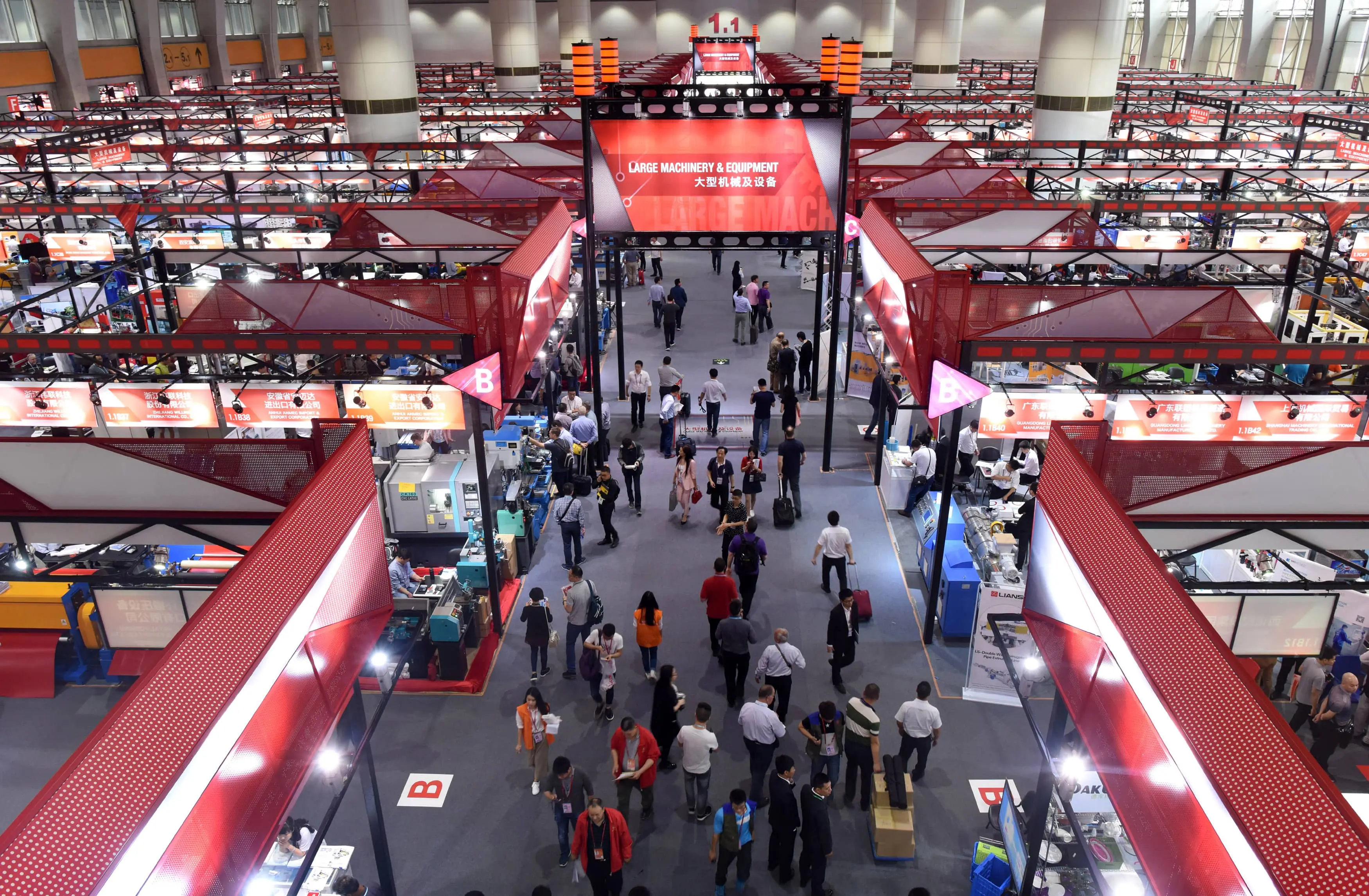
2.1 Choose Based on Target Market (Europe, USA, Asia, Middle East)
Different trade shows attract buyers from different regions, so aligning your participation with your target market is essential.
Europe → Ambiente Frankfurt
USA → ASD Market Week
Asia → Canton Fair / HKTDC Hong Kong Houseware Fair
Middle East & Africa → INDEX Dubai
Choosing a trade show based on your target region ensures better access to relevant buyers, distributors, and market insights.
2.2 Choose Based on Product Category (Kitchenware, Cleaning, Home Goods)
Not all trade shows focus on the same product categories. Some are specialized, while others are more comprehensive.
Kitchenware & housewares → Ambiente, Canton Fair
Cleaning & plastic products → Canton Fair, ASD
Home & lifestyle goods → INDEX Dubai, Tokyo Gift Show
Selecting a trade show that aligns with your core product category helps you connect with more relevant suppliers and reduces time wasted on unrelated exhibitors.
2.3 Choose Based on Order Size and Business Model
Your business model should determine the type of trade show you attend.
Large-volume importers → Canton Fair (factory-direct sourcing)
Wholesalers & distributors → ASD Market Week
Premium or boutique buyers → Ambiente Frankfurt
Understanding whether you need bulk orders, private label products, or high-end designs will help you choose the most suitable sourcing platform.
2.4 Budget Considerations for International Trade Shows
Attending international trade shows involves multiple costs, including travel, accommodation, exhibition entry, and logistics.
Key cost factors include:
- Flight and visa expenses
- Hotel and local transportation
- Sample purchases and shipping
- Time investment
Buyers should evaluate the potential return on investment (ROI) and prioritize trade shows that offer the highest sourcing efficiency and business opportunities.
2.5 Trade Show Strategy for Importers and Wholesalers
A clear trade show strategy is essential for achieving real results.
Successful buyers usually:
- Define sourcing goals before attending
- Identify target product categories
- Prepare a shortlist of suppliers
- Allocate time for comparison and negotiation
Attending a trade show without a clear plan often leads to wasted time and missed opportunities.
2.6 How to Prepare Before Attending a Trade Show
Preparation is key to maximizing your trade show experience.
Before attending, buyers should:
- Research exhibitors and product categories
- Schedule meetings with potential suppliers
- Prepare product specifications and requirements
- Set a sourcing budget
Being well-prepared allows you to move quickly and make better decisions during the exhibition.
2.7 How to Identify Reliable Suppliers On-Site
Finding reliable suppliers is one of the biggest challenges at any trade show.
Buyers should evaluate suppliers based on:
- Factory background and certifications
- Product quality and samples
- Communication and professionalism
- Export experience
Comparing multiple suppliers and asking detailed questions can help reduce sourcing risks.
2.8 Negotiation Tips for Better Pricing
Negotiation plays a crucial role in securing competitive pricing.
Effective strategies include:
- Comparing multiple suppliers before deciding
- Negotiating based on order volume
- Discussing packaging and customization options
- Building long-term partnerships
Strong negotiation skills can significantly improve profit margins for importers and wholesalers.
2.9 Post-Show Follow-Up Strategy
Many buyers underestimate the importance of follow-up after a trade show.
To maximize results:
- Organize supplier information immediately after the event
- Send inquiries and request quotations promptly
- Confirm product details and samples
- Maintain consistent communication
👉 Key Insight: The real success of a trade show often depends on what happens after the event, not during it.
3. Trade Shows vs Online Sourcing: Which Is Better?
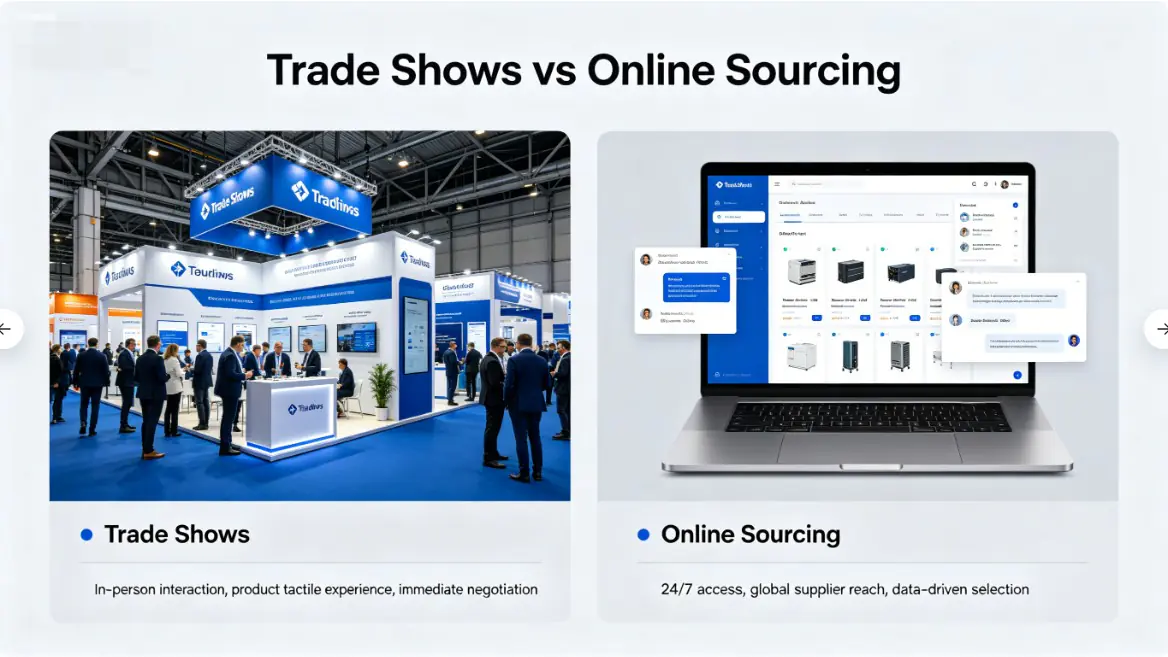
For importers and wholesalers, one of the most common questions is whether to source products through trade shows or online platforms. Both methods offer unique advantages, and choosing the right approach depends on your sourcing goals, budget, and business model.
In reality, the most successful buyers often combine both strategies to maximize efficiency and reduce risk.
3.1 Advantages of Trade Shows (Trust, Samples, Negotiation)
Trade shows such as the Canton Fair and Ambiente Frankfurt provide a face-to-face sourcing environment that is difficult to replicate online.
Key advantages include:
Direct communication with suppliers → Build trust and avoid misunderstandings
Product inspection on-site → Evaluate quality, materials, and design immediately
Stronger negotiation opportunities → Discuss pricing, MOQ, and customization directly
Access to multiple suppliers in one place → Efficient comparison and decision-making
For bulk buyers, trade shows are especially valuable because they reduce uncertainty and improve supplier verification.
👉 Best for: Large-volume sourcing, private label business, and long-term partnerships
3.2 Advantages of Online Platforms (Convenience, Speed)
Online sourcing platforms such as Alibaba and Global Sources offer unmatched convenience and accessibility. Buyers can search for products, contact suppliers, and request quotations without traveling.
Key advantages include:
- 24/7 access to global suppliers
- Fast product search and comparison
- Lower initial cost (no travel expenses)
- Suitable for small orders and testing products
However, online sourcing also comes with challenges, such as difficulty verifying suppliers, inconsistent product quality, and communication barriers.
👉 Best for: Small orders, product testing, and initial supplier research
3.3 Best Strategy: Combining Both for Maximum Results
Instead of choosing between trade shows and online sourcing, the most effective strategy is to combine both methods.
A practical approach is:
Use online platforms to research products, identify potential suppliers, and compare pricing
Attend trade shows like the Canton Fair to verify suppliers, inspect products, and negotiate better terms
Follow up online after the show to finalize orders, manage communication, and maintain long-term relationships
This hybrid strategy allows buyers to leverage the speed of online sourcing and the reliability of face-to-face interactions.
👉 Key Insight: Online sourcing helps you find suppliers, while trade shows help you confirm and secure the right partners.
4.Why Work with a Sourcing Agent During Trade Shows
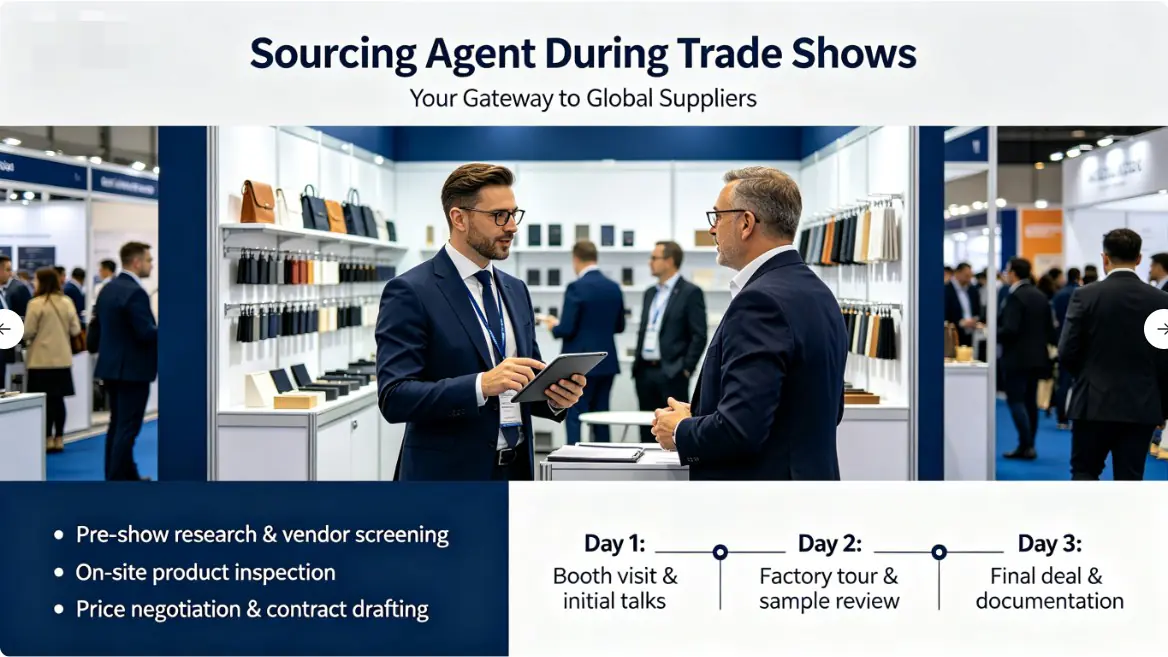
Attending global trade shows like the Canton Fair or Ambiente Frankfurt can be highly rewarding—but also overwhelming. With thousands of suppliers, language differences, and complex negotiation processes, many buyers struggle to achieve the best results on their own.
Working with a professional sourcing agent can significantly improve efficiency, reduce risks, and help importers and wholesalers get the most value from their trade show experience.
4.1 Reduce Time and Communication Barriers
One of the biggest challenges at international trade shows is communication. Language differences, cultural gaps, and unclear product requirements can easily lead to misunderstandings.
A sourcing agent acts as your local representative, helping you:
- Communicate clearly with suppliers
- Translate technical product details
- Avoid costly misinterpretations
In addition, navigating large trade shows takes time. A sourcing agent can pre-screen suppliers, guide you directly to relevant booths, and help you focus only on high-potential opportunities.
👉 Result: Faster sourcing process + fewer communication errors
4.2 Access Better Suppliers and Factory Pricing
Not all suppliers at a trade show are equal. Some are manufacturers, while others are trading companies with higher prices and less control over production.
An experienced sourcing agent understands the market and can:
- Identify real factories vs middlemen
- Recommend reliable and verified suppliers
- Help you access better pricing based on local knowledge
At major trade shows like the Canton Fair, this advantage can directly impact your profit margins and long-term supply stability.
👉 Result: Better suppliers + more competitive pricing
4.3 Quality Control and Logistics Support
Sourcing does not end at the trade show—it continues through production, quality control, and delivery.
A sourcing agent can support you by:
- Arranging product inspections and quality checks
- Monitoring production progress
- Managing shipping and logistics coordination
This ensures that the products you order meet your expectations and arrive on time, reducing risks associated with international trade.
👉 Result: Lower risk + smoother order execution
4.4 How a Yiwu or China Agent Can Maximize ROI
For buyers sourcing daily-use goods, working with a China-based sourcing agent—especially in hubs like Yiwu—can significantly improve return on investment (ROI).
A professional agent can:
- Combine trade show sourcing with local market visits (e.g., Yiwu Market)
- Help you consolidate orders from multiple suppliers
- Negotiate better terms and optimize total procurement costs
- Provide ongoing support even after the trade show ends
By integrating sourcing, negotiation, quality control, and logistics into one streamlined process, a sourcing agent helps you maximize efficiency and profitability.
👉 Key Insight: The right sourcing agent doesn’t add cost—it reduces total sourcing cost and increases long-term returns.
5.Tips for First-Time Trade Show Buyers
Attending a global trade show for the first time—whether it’s the Canton Fair or ASD Market Week—can be both exciting and overwhelming. With thousands of suppliers, multiple product categories, and limited time, first-time buyers often struggle to manage the process efficiently.
The following tips will help you avoid common pitfalls and maximize your sourcing results.
5.1 Common Mistakes to Avoid
Many first-time buyers focus too much on price and overlook other critical factors such as product quality, supplier reliability, and communication efficiency.
Common mistakes include:
- Choosing suppliers without proper verification
- Failing to compare multiple options
- Not taking detailed notes during meetings
- Making quick decisions without testing samples
👉 Key Tip: Treat trade shows as a supplier evaluation process—not just a buying trip.
5.2 How to Manage Multiple Suppliers Efficiently
At major trade shows, buyers may meet dozens—or even hundreds—of suppliers in a short period of time. Without a clear system, it’s easy to lose track of important information.
To stay organized:
- Categorize suppliers by product type
- Record booth numbers and contact details
- Take photos of products and business cards
- Rank suppliers based on quality, price, and communication
Using a simple tracking sheet or digital tool can help you compare suppliers more effectively after the event.
👉 Key Tip: Organization during the show determines your success after the show.
5.3 How to Track Orders and Samples
After identifying potential suppliers, managing samples and order details becomes critical.
Best practices include:
- Requesting samples from shortlisted suppliers
- Labeling and organizing samples clearly
- Recording supplier quotations and specifications
- Tracking sample delivery timelines
This process ensures that you can accurately compare product quality and make informed purchasing decisions before placing bulk orders.
👉 Key Tip: Always base your final decision on tested samples, not just showroom displays.
5.4 Cultural Tips for International Negotiation
Trade shows bring together suppliers and buyers from different cultural backgrounds, which can influence communication and negotiation styles.
Key cultural considerations include:
- Be patient and respectful during negotiations
- Avoid overly aggressive bargaining at the initial stage
- Focus on building long-term relationships, not just short-term price advantages
- Understand that trust plays a major role in international business
Establishing a good relationship with suppliers often leads to better pricing, priority production, and long-term cooperation.
👉 Key Tip: Strong relationships often lead to better deals than aggressive negotiation alone.
Conclusion
Global trade shows remain one of the most effective ways for importers and wholesalers to source products, discover new suppliers, and expand into international markets. From large-scale events like the Canton Fair to specialized exhibitions such as Ambiente Frankfurt, each trade show offers unique advantages depending on your target market and sourcing goals.
By choosing the right trade show, preparing in advance, and applying effective sourcing strategies, buyers can significantly improve efficiency, reduce risks, and secure better deals. Whether you are sourcing daily-use goods, housewares, or consumer products, trade shows provide direct access to manufacturers, real product evaluation, and stronger negotiation opportunities.
However, success does not come from attending a trade show alone—it depends on how well you plan, evaluate suppliers, negotiate, and follow up after the event. Buyers who take a structured approach are far more likely to build reliable supply chains and achieve long-term business growth.
For businesses looking to scale their sourcing operations and maximize return on investment, combining trade shows with professional support can make a significant difference.
👉 If you are planning to attend a trade show or source products from China, working with an experienced sourcing team can help you save time, reduce risks, and connect with the right suppliers more efficiently. Contact us to explore customized sourcing solutions for your business.

Tennie Chen is responsible for sourcing and supplier evaluation, with a focus on balancing product quality, cost efficiency, and supply chain reliability. My role involves identifying trustworthy manufacturers, comparing quotations, analyzing total landed costs, and ensuring compliance with international standards. I always prioritize long-term partnerships over one-time deals, aiming to work with suppliers who can provide consistent quality, competitive pricing, and flexible solutions. When making purchasing decisions, I evaluate not only the product itself but also the supplier’s production capacity, lead time, and after-sales support, ensuring that every cooperation contributes to sustainable business growth.