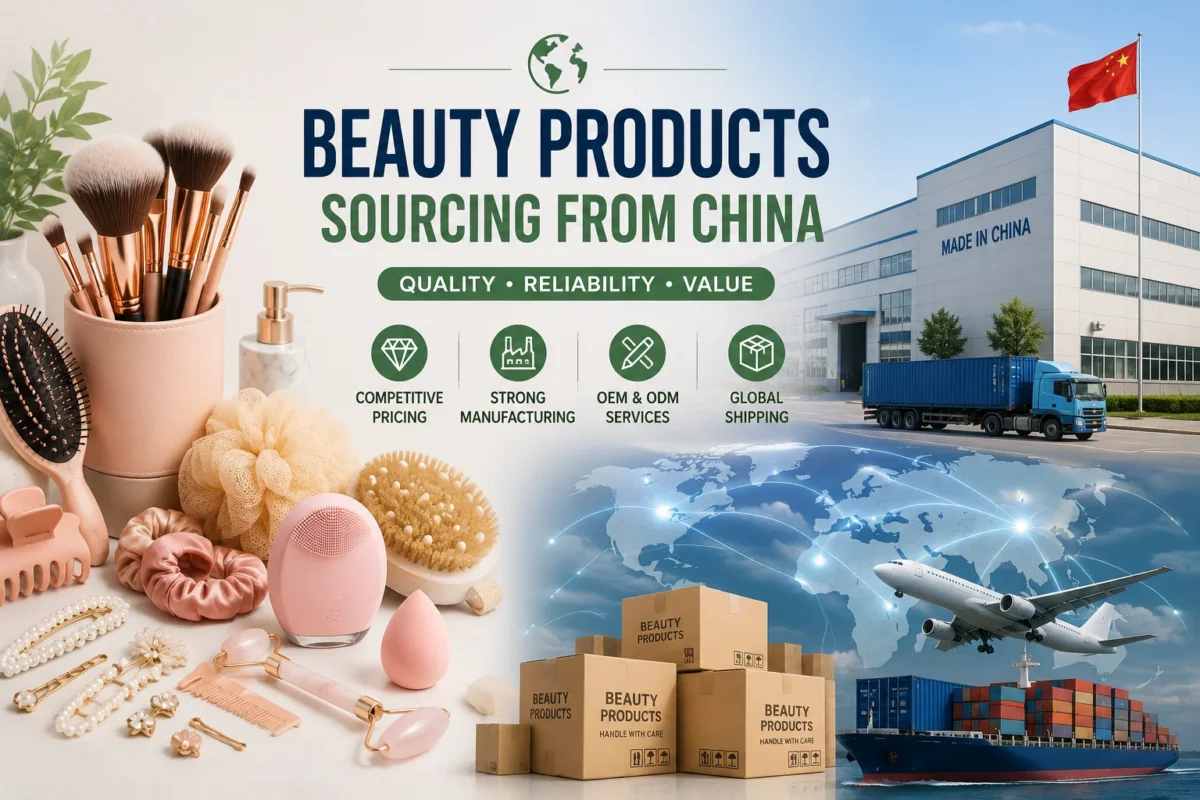
Walk into almost any beauty store today—whether it’s a local retailer in Europe, an Amazon warehouse in the United States, or a fast-growing cosmetics brand in the Middle East—and there’s a good chance that at least some of the beauty accessories on the shelves were manufactured in China.
From makeup brushes and cosmetic organizers to bath sponges, hair accessories, manicure tools, and salon supplies, China has become the world’s most comprehensive production base for beauty and personal care products. Thousands of factories across cities such as Yiwu, Guangzhou, Shenzhen, and Ningbo produce millions of products every day for wholesalers, retailers, supermarkets, private-label brands, and e-commerce sellers around the world.
But importing beauty products successfully involves much more than finding a supplier offering the lowest price.
Many first-time buyers assume that placing an order on an online marketplace is enough. In reality, experienced importers know that the real work begins after selecting a supplier. Product quality, production capacity, packaging, inspections, shipping arrangements, and regulatory compliance all influence whether an order becomes a profitable success or an expensive lesson.
The good news is that importing from China has become easier than ever—provided you understand how the sourcing process works and avoid the mistakes that catch many new buyers off guard.
In this guide, we’ll walk through every stage of importing beauty products from China, from choosing the right product category and finding trustworthy manufacturers to negotiating prices, managing production, and ensuring consistent quality. Whether you’re launching a new beauty brand, expanding an existing product line, or sourcing for wholesale distribution, this guide will help you make informed purchasing decisions with greater confidence.
Why China Has Become the Global Leader in Beauty Product Manufacturing
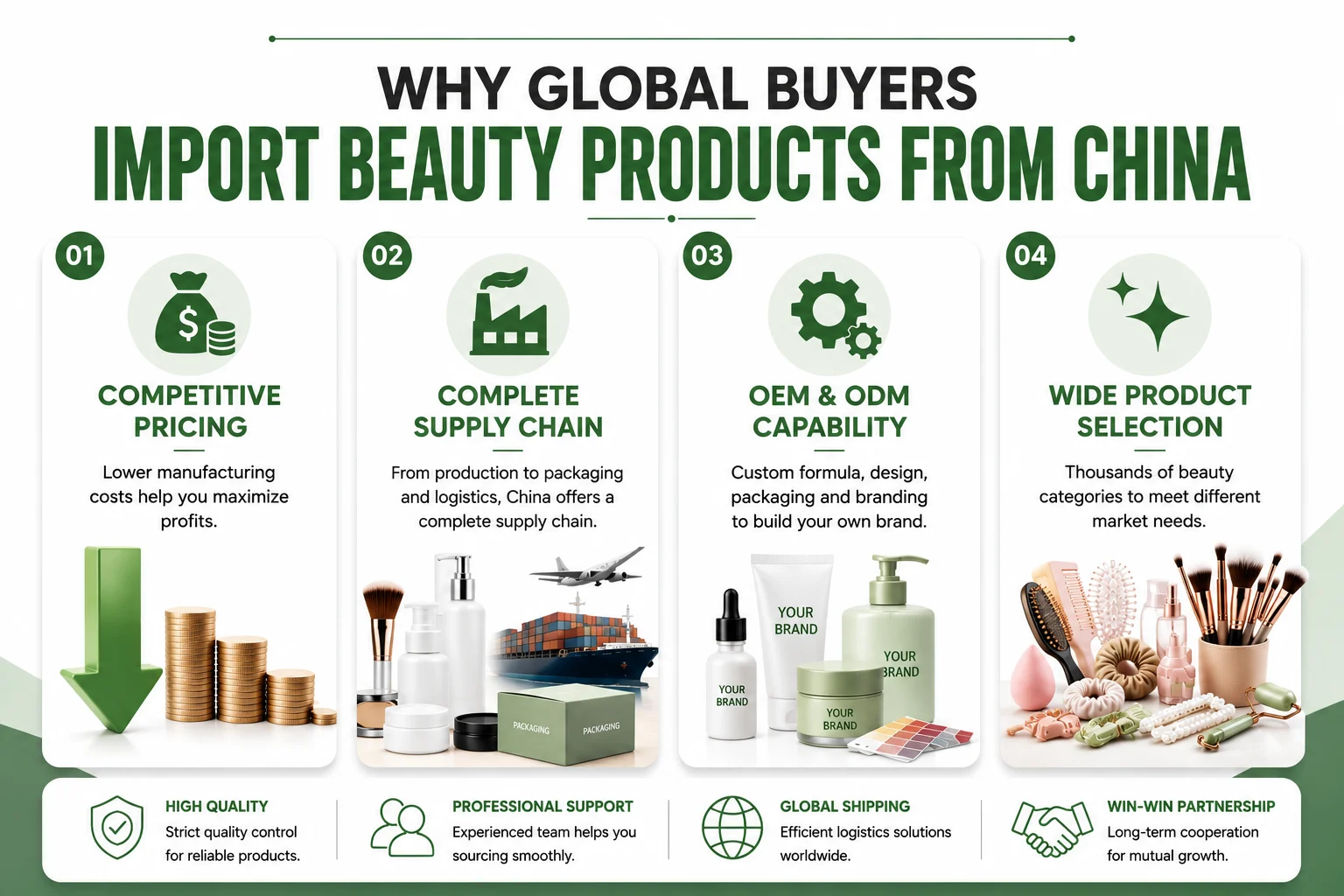
When people talk about sourcing from China, competitive pricing is usually the first advantage that comes to mind. While lower manufacturing costs are certainly attractive, they’re only one piece of a much bigger picture.
The real strength of China’s beauty industry lies in its manufacturing ecosystem.
Unlike many countries where production, packaging, and logistics are spread across different regions or suppliers, China’s beauty supply chain is highly integrated. Product designers, raw material suppliers, mold manufacturers, packaging companies, printing factories, quality inspection agencies, and freight forwarders often operate within the same industrial clusters. This allows buyers to move from product development to mass production far more efficiently than in many other manufacturing markets.
For importers, this means shorter lead times, greater flexibility, and fewer communication barriers throughout the production process.
Another reason global buyers continue sourcing from China is the enormous variety of products available. Whether you’re looking for budget-friendly bath accessories for supermarkets or premium makeup tools for a private-label cosmetics brand, Chinese manufacturers can usually provide multiple quality levels and price points. Instead of limiting your business to one supplier or one factory, you can compare different manufacturers and choose the option that best matches your target market.
Flexibility is another major advantage.
Many factories no longer focus solely on large-volume orders. As cross-border e-commerce has grown, manufacturers have adapted by offering lower minimum order quantities, customized packaging, and OEM or ODM services that make it easier for smaller brands to enter the market. This has opened opportunities for Amazon sellers, Shopify store owners, and startup beauty brands that may not have the purchasing power of large retail chains.
Of course, sourcing from China doesn’t eliminate every challenge. Competition among suppliers varies significantly, product quality isn’t always consistent, and communication can become difficult without local support. These challenges don’t mean buyers should avoid China—they simply highlight the importance of having a structured sourcing strategy.
Experienced importers understand that choosing the right manufacturing partner is far more valuable than choosing the cheapest quotation.
Choosing the Right Beauty Products to Import
One of the biggest mistakes new importers make is selecting products based purely on what’s popular online. A product that generates millions of views on social media isn’t necessarily profitable once manufacturing costs, shipping expenses, import duties, and market competition are taken into account.
Successful buyers start by understanding their customers rather than chasing short-term trends.
Before contacting any supplier, ask yourself a few important questions. Who are you selling to? Are your customers looking for affordable everyday essentials, premium salon-quality tools, or eco-friendly alternatives? Will your products be sold through supermarkets, beauty stores, online marketplaces, or your own brand’s website? The answers to these questions will influence every sourcing decision you make.
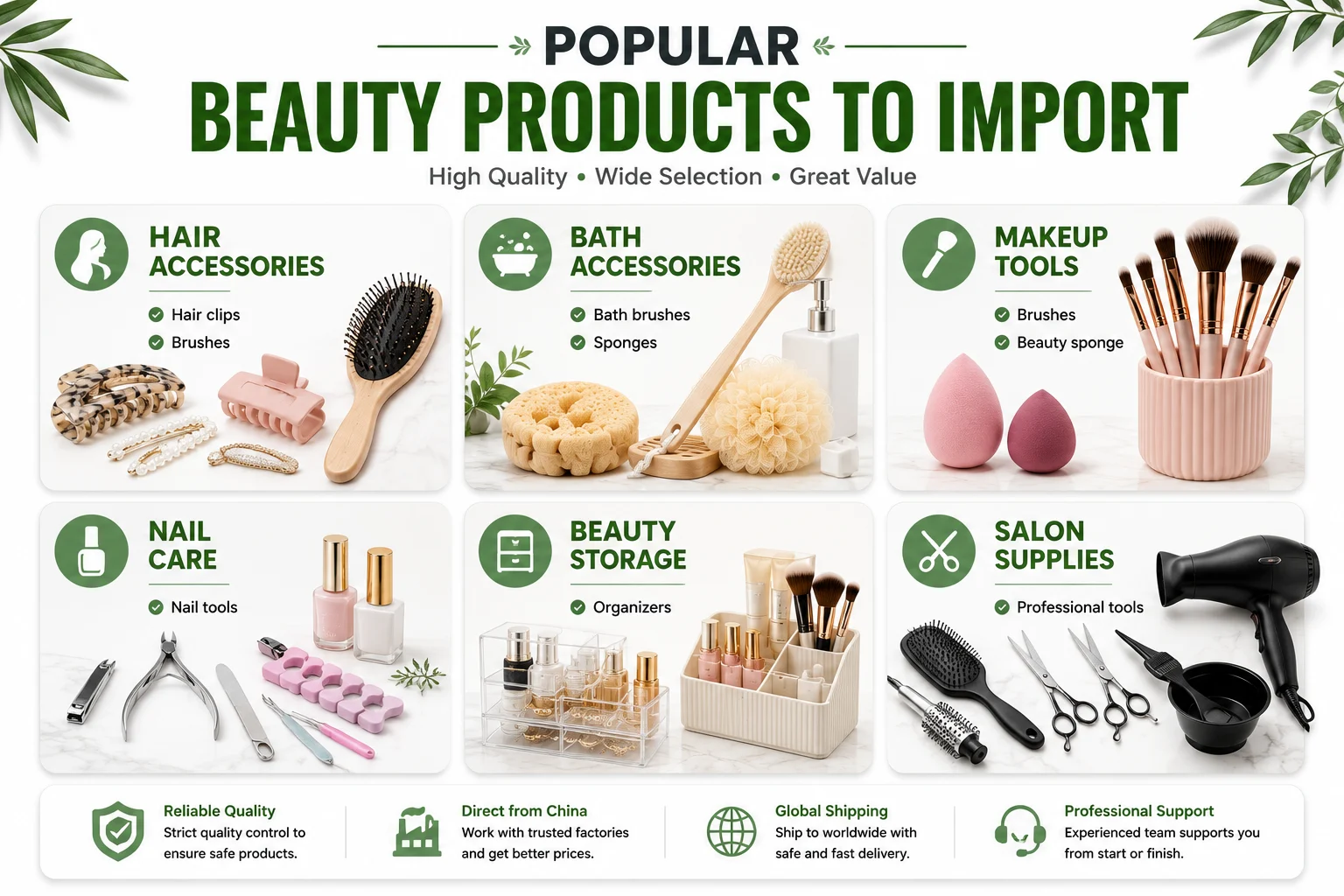
Fortunately, China’s beauty manufacturing industry covers virtually every major category.
For wholesalers supplying retail stores, bath accessories such as shower sponges, bath brushes, exfoliating gloves, and body scrubbers remain steady sellers because they are inexpensive, lightweight, and purchased repeatedly by consumers.
Hair accessories are another category with broad international demand. Hair clips, combs, brushes, headbands, scrunchies, and styling accessories appeal to customers across different age groups and markets. Because fashion trends change quickly, buyers often refresh their product assortment several times a year, making reliable suppliers especially important.
Makeup tools continue to be one of the fastest-growing segments. Professional makeup brushes, beauty sponges, eyelash curlers, cosmetic mirrors, and makeup organizers are popular among beauty retailers as well as private-label brands looking to differentiate themselves through design and packaging.
For businesses serving professional salons, products such as manicure tools, nail accessories, facial cleansing tools, and beauty equipment offer opportunities to build long-term customer relationships, as salons frequently reorder consumable products throughout the year.
Rather than trying to source dozens of unrelated products from multiple factories, many experienced importers begin by focusing on one or two categories. Developing expertise within a specific niche makes supplier management easier, simplifies quality control, and helps establish a stronger market position. As your business grows and your supply chain becomes more stable, expanding into complementary product lines becomes much more manageable.
Choosing the right products isn’t about finding the cheapest items or following the latest trend. It’s about identifying products that match your customers’ expectations, fit your business model, and can be supplied consistently over the long term. That mindset lays the foundation for a profitable and sustainable sourcing strategy.
How to Find Reliable Beauty Product Suppliers in China
Finding the right supplier is often the most important decision you’ll make during the entire importing process. A great supplier can help you improve product quality, reduce costs, and grow your business over the long term. On the other hand, choosing the wrong partner can lead to delayed shipments, inconsistent quality, unexpected costs, and unhappy customers.
One of the biggest misconceptions among first-time importers is that finding a supplier simply means searching on Alibaba and selecting the company with the lowest quotation. While online marketplaces are useful starting points, experienced buyers know that a supplier’s online profile tells only part of the story.
The goal isn’t to find the cheapest supplier—it’s to find the most reliable one.
Start with Online Research, but Don’t Stop There
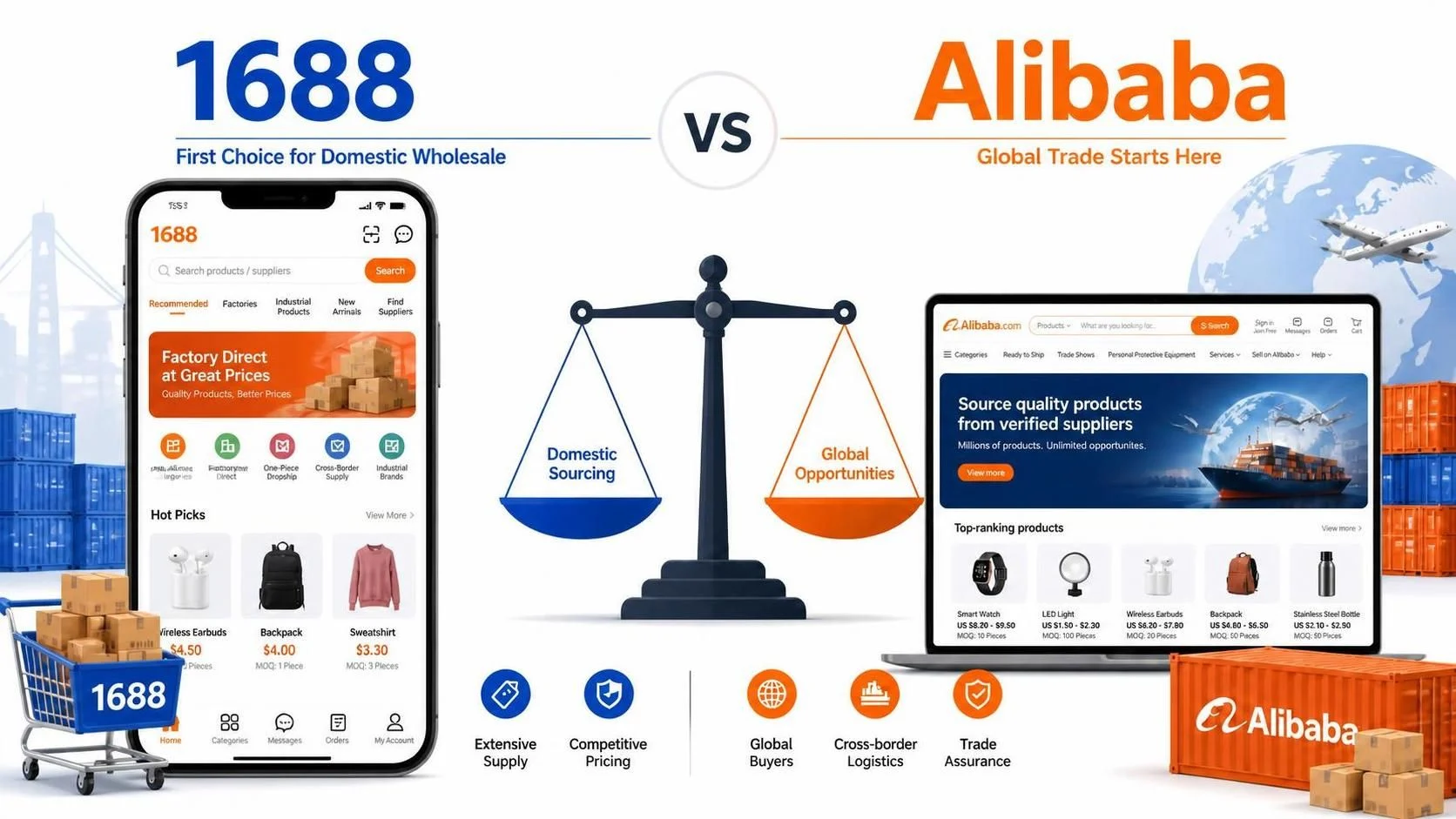
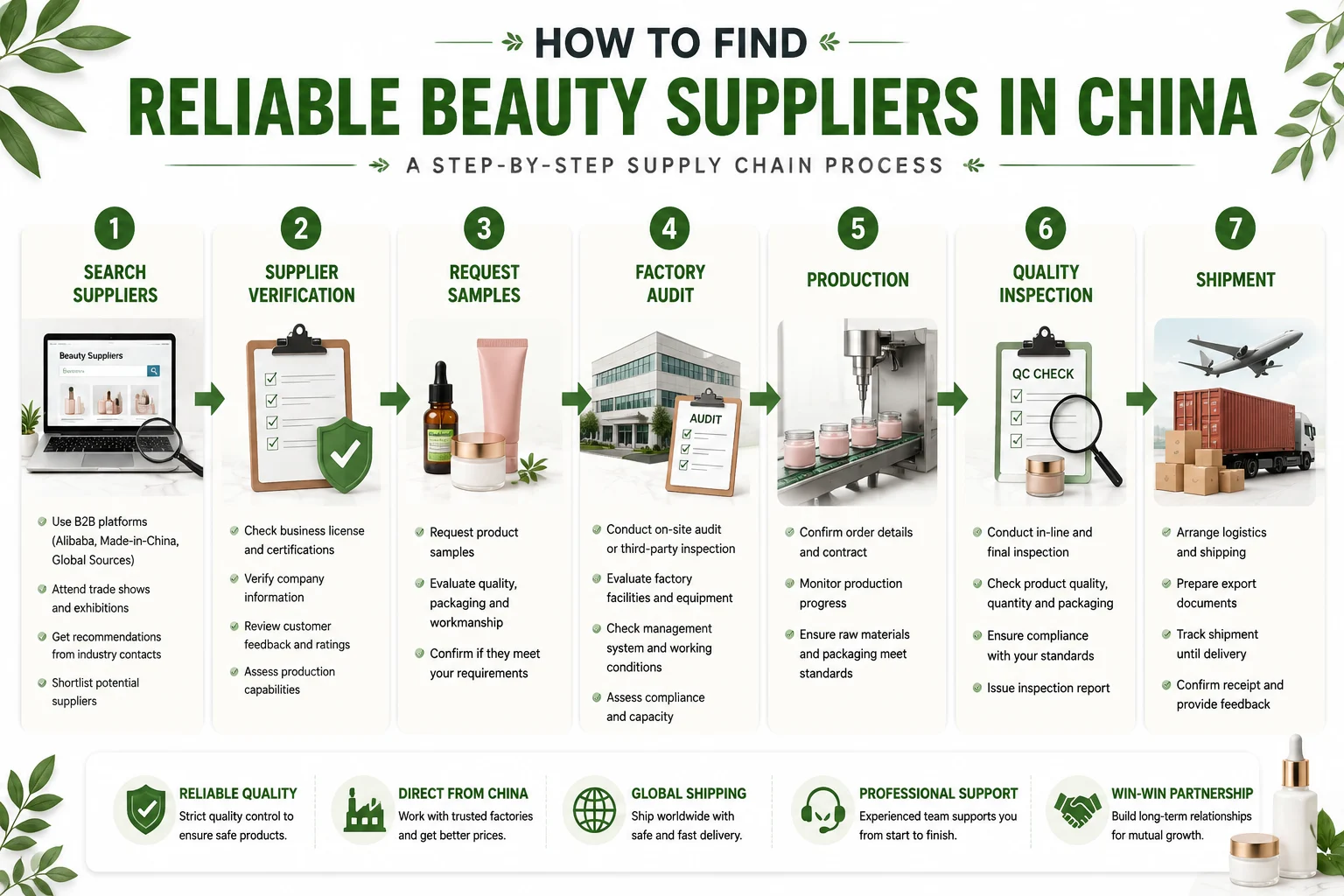
Online B2B platforms such as Alibaba, Made-in-China, and Global Sources have made it easier than ever to connect with Chinese manufacturers. These platforms allow buyers to compare products, request quotations, and communicate with suppliers from anywhere in the world.
However, it’s important to remember that not every supplier listed on these platforms is a manufacturer. Some companies operate as trading firms, while others may outsource production to different factories depending on the order.
That doesn’t necessarily make them a poor choice, but it does mean buyers should understand exactly who they’re working with before placing an order.
When reviewing supplier profiles, pay attention to factors such as:
- How long the company has been in business
- Whether it specializes in your product category
- Export markets and customer reviews
- Product consistency across different listings
- Response speed and communication quality
A supplier that has focused on beauty accessories for many years is generally a safer choice than a company selling hundreds of unrelated product categories.
Manufacturer or Trading Company: Which Is Better?
Many buyers assume that working directly with a factory is always the best option. In reality, the answer depends on your purchasing needs.
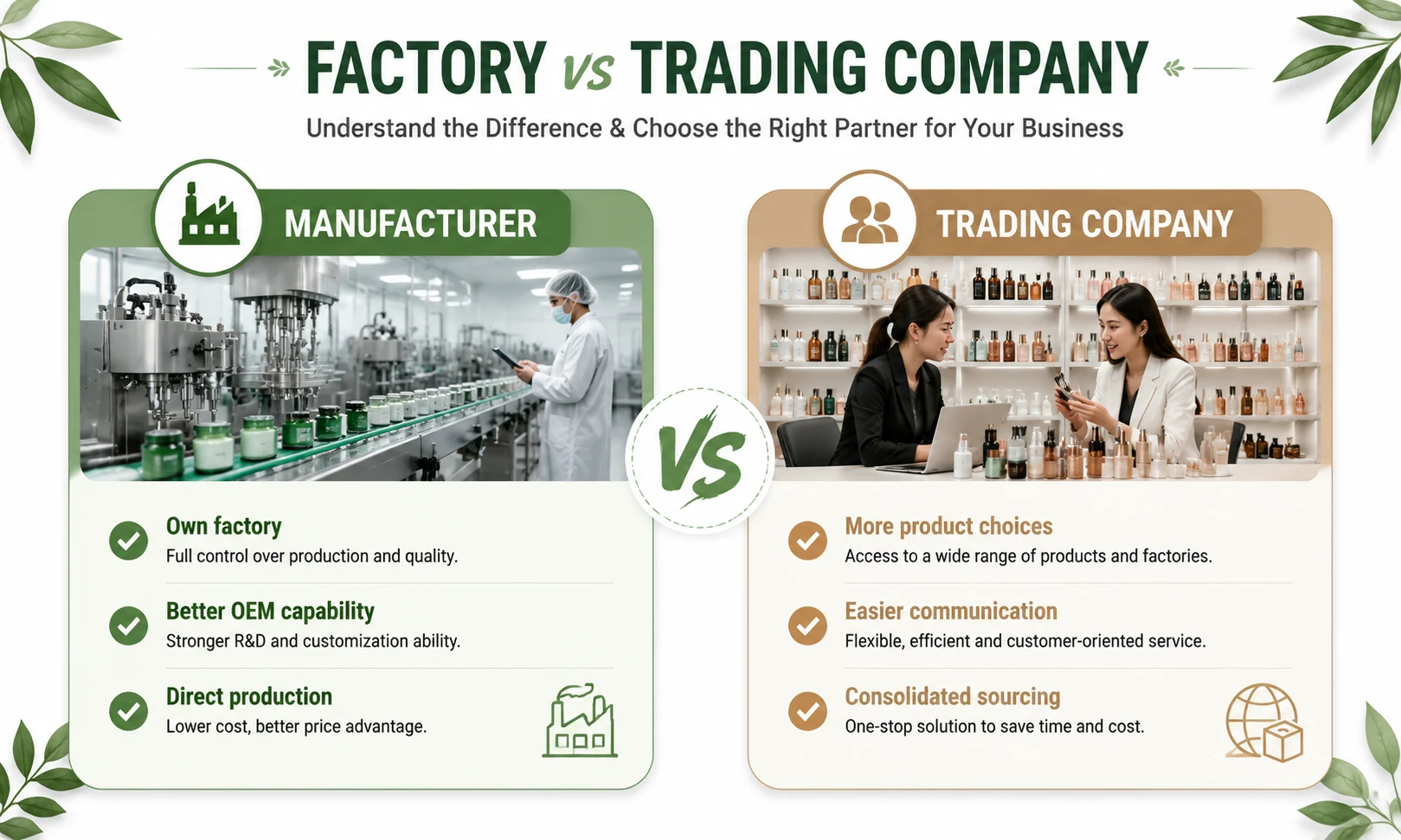
Manufacturers own production facilities and are responsible for making the products themselves. They usually offer better pricing, stronger technical knowledge, and greater flexibility when it comes to product customization or OEM projects. If you’re developing a private-label beauty brand or placing large orders, working directly with a factory often provides more control over production.
Trading companies, on the other hand, don’t always manufacture products themselves. Instead, they cooperate with multiple factories and act as sourcing partners for overseas buyers.
While some importers view trading companies negatively, reputable trading companies can actually provide significant advantages. They often have access to a wider range of products, can consolidate orders from multiple factories into a single shipment, and help solve communication or production issues more efficiently.
For buyers sourcing several beauty product categories—such as makeup tools, bath accessories, and hair accessories—a professional sourcing company may save both time and management costs by coordinating everything through one point of contact.
Rather than asking whether a supplier is a factory or a trading company, a better question is whether they can consistently deliver the quality, pricing, and service your business requires.
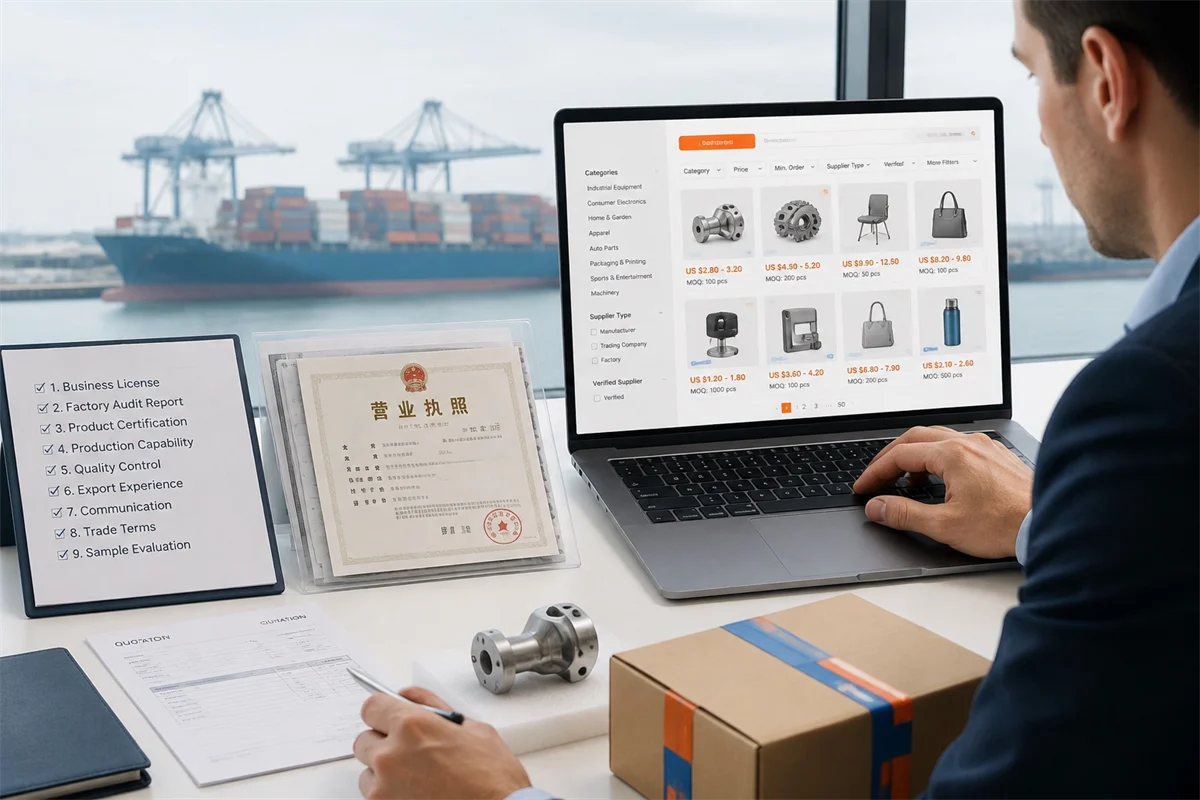
How to Verify a Beauty Product Supplier
Once you’ve identified a few promising suppliers, the next step is verification.
Professional buyers rarely rely on product photos alone. Instead, they collect as much information as possible before committing to production.
Start by asking detailed questions about the company’s manufacturing experience. A supplier that specializes in makeup brushes may not have the expertise to produce bath accessories or salon equipment to the same standard. Understanding their core product categories helps you evaluate whether they truly have experience with the items you intend to purchase.
You should also request recent factory photos or production videos. Genuine manufacturers are usually willing to show their workshops, production lines, warehouses, packaging areas, and quality inspection processes. These materials provide valuable insight into the company’s production capacity and organization.
If you’re planning a large order, it’s also worth asking about their current export markets. Suppliers already exporting to Europe, North America, Australia, or Japan are often more familiar with international quality standards, packaging requirements, and shipping documentation.
Good suppliers welcome professional questions. Vague answers or reluctance to provide basic company information should be treated as warning signs.
Don’t Skip Product Samples
No matter how impressive a supplier appears online, never place a bulk order without first evaluating samples.
A sample allows you to assess much more than appearance. It gives you the opportunity to examine material quality, workmanship, packaging, durability, and overall user experience.
For example, when sourcing bath brushes, you might check whether the bristles are securely attached, whether the handle feels comfortable to hold, and whether the packaging protects the product during transportation.
For makeup brushes, you’ll want to examine brush density, softness, glue quality, and handle finishing.
Small details often reveal the overall manufacturing standard.
It’s also useful to compare samples from multiple suppliers before making your final decision. Even if one supplier offers a slightly lower price, another may provide noticeably better quality that ultimately leads to fewer customer complaints and stronger repeat business.
Why Factory Audits Matter
For larger orders or long-term partnerships, conducting a factory audit is one of the most effective ways to reduce sourcing risk.
A factory audit isn’t simply about checking whether a factory exists. It’s a comprehensive assessment of how the business operates.
During an audit, inspectors typically evaluate production equipment, employee management, quality control systems, warehouse organization, production capacity, and compliance with customer requirements. The goal is to determine whether the supplier can consistently deliver products that meet your expectations.
Many experienced importers arrange audits before placing their first major order, particularly when developing customized or private-label products.
Although an audit involves additional cost, it is often far less expensive than dealing with defective products, production delays, or failed shipments later.
Build Relationships, Not Just Purchase Orders
One of the biggest differences between successful importers and beginners is how they view supplier relationships.
New buyers often negotiate aggressively for the lowest possible price and then switch suppliers whenever they find a cheaper quotation.
Experienced buyers think differently.
They understand that a reliable supplier becomes a long-term business partner. A manufacturer that understands your quality expectations, packaging requirements, and production schedule can help you solve problems before they become costly. Over time, trusted suppliers may also prioritize your orders during busy seasons, recommend new products, or offer better pricing based on long-term cooperation.
In the beauty industry, where product consistency directly affects customer satisfaction and brand reputation, these relationships are often more valuable than saving a few cents per unit.
Consider Working with a Professional Sourcing Partner
If you’re importing beauty products for the first time—or sourcing from multiple factories at the same time—managing every stage of the process yourself can quickly become overwhelming.
This is where a professional sourcing company can add significant value.
Instead of spending weeks comparing suppliers, negotiating prices, arranging inspections, and coordinating shipments, a sourcing partner handles these tasks on your behalf while acting as your local representative in China.
At Greentime, we help international buyers identify reliable manufacturers, compare quotations objectively, inspect product quality, monitor production schedules, and consolidate shipments before export. Our goal isn’t simply to find suppliers—it’s to build a sourcing process that is efficient, transparent, and scalable as your business grows.
Ultimately, choosing the right supplier isn’t about finding the lowest quote or the largest factory. It’s about working with partners you can trust to deliver consistent quality, reliable communication, and long-term support. Those partnerships form the foundation of every successful beauty sourcing business.
OEM, ODM & Private Label Explained
When importing beauty products from China, understanding different manufacturing models is essential. OEM, ODM, and Private Label solutions allow businesses to create products based on their budget, brand strategy, and level of customization.
Choosing the right model can help you reduce development costs, launch products faster, and build a stronger brand identity.
OEM Beauty Products: Your Design, Factory Production
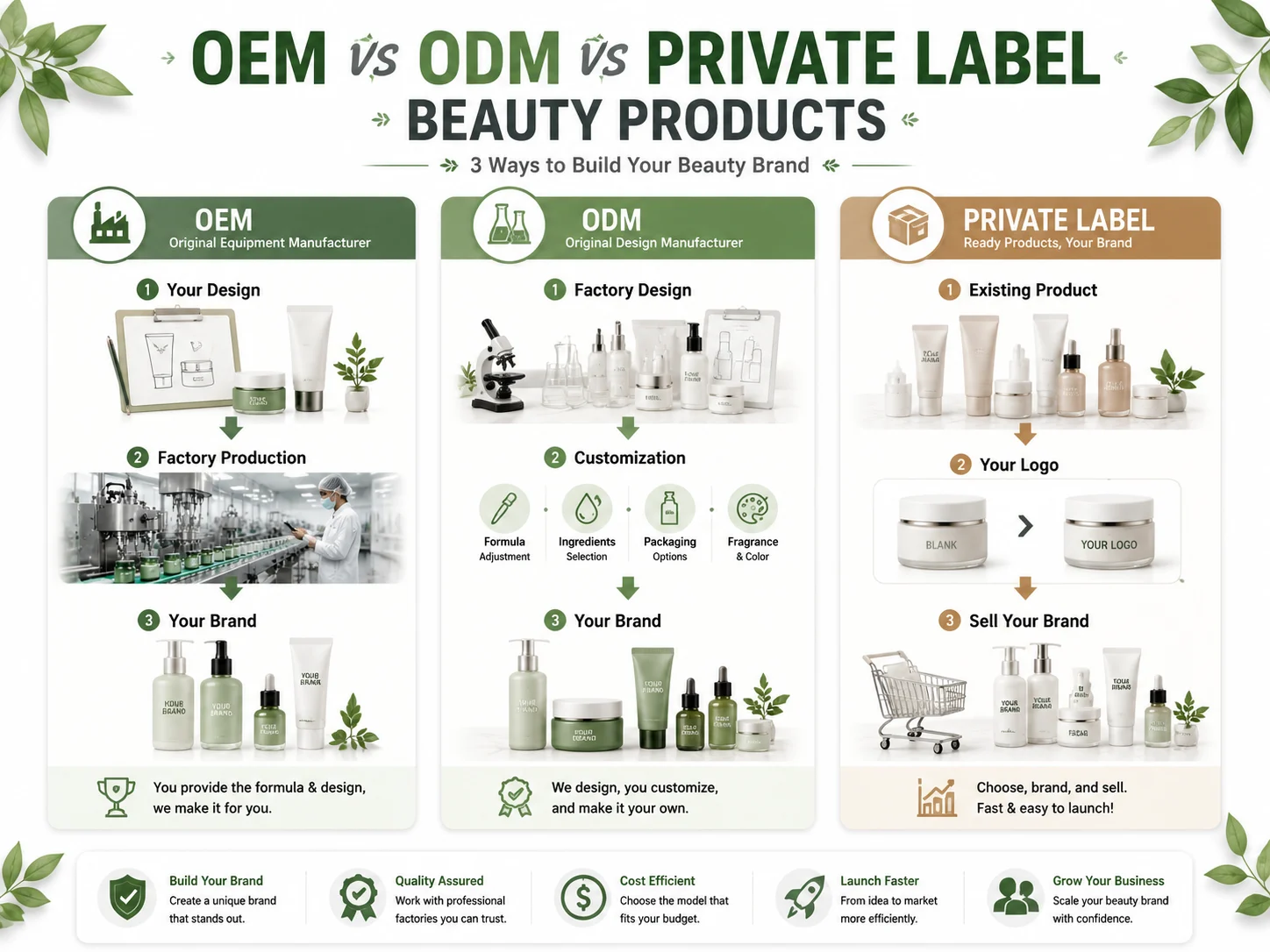
OEM (Original Equipment Manufacturing) means you provide the product concept, specifications, design requirements, or packaging details, and the factory produces the product according to your instructions.
This model gives buyers more control over the final product. It is commonly used by established beauty brands that already understand their market and want to create unique products that are different from competitors.
For example, a beauty brand may provide its own design for makeup brushes, select specific materials, customize colors, and create branded packaging. The manufacturer is responsible for turning those requirements into a finished product.
OEM is best for:
- Established beauty brands
- Companies with their own product designs
- Businesses looking for high customization
ODM Beauty Products: Factory Design, Your Brand
ODM (Original Design Manufacturing) allows buyers to use a manufacturer’s existing product designs and customize them with their own branding.
Instead of developing a product from zero, buyers can choose from the supplier’s existing product range and modify elements such as packaging, colors, materials, or features.
ODM is a popular choice for businesses that want to enter the beauty market quickly without investing heavily in product development.
For example, a startup beauty brand can select an existing bath accessory or makeup tool design, add its own logo and packaging, and launch the product under its brand name.
ODM is best for:
- Startups
- New beauty brands
- Businesses looking for faster product launches
Private Label Beauty Products: Products Under Your Brand
Private Label means a manufacturer produces an existing product, and you sell it under your own brand name.
This approach allows businesses to focus on branding, marketing, and sales without managing complex manufacturing processes.
Private label products are especially popular among Amazon sellers, e-commerce brands, and retail companies that want to build their own product lines.
Private Label is best for:
- Amazon sellers
- Online retailers
- Retail brands expanding product categories
OEM vs ODM: Which One Should You Choose?
| OEM | ODM | |
|---|---|---|
| Product Design | Buyer provides design | Factory provides design |
| Customization | High | Medium |
| Development Cost | Higher | Lower |
| Launch Speed | Slower | Faster |
| Best For | Established brands | Startups & new sellers |
The right manufacturing model depends on your business goals. Established brands often choose OEM for maximum customization, while startups and online sellers usually prefer ODM or Private Label solutions to enter the market faster.
By working with an experienced beauty product supplier in China, businesses can choose the right approach and develop products that match their target customers and brand strategy.
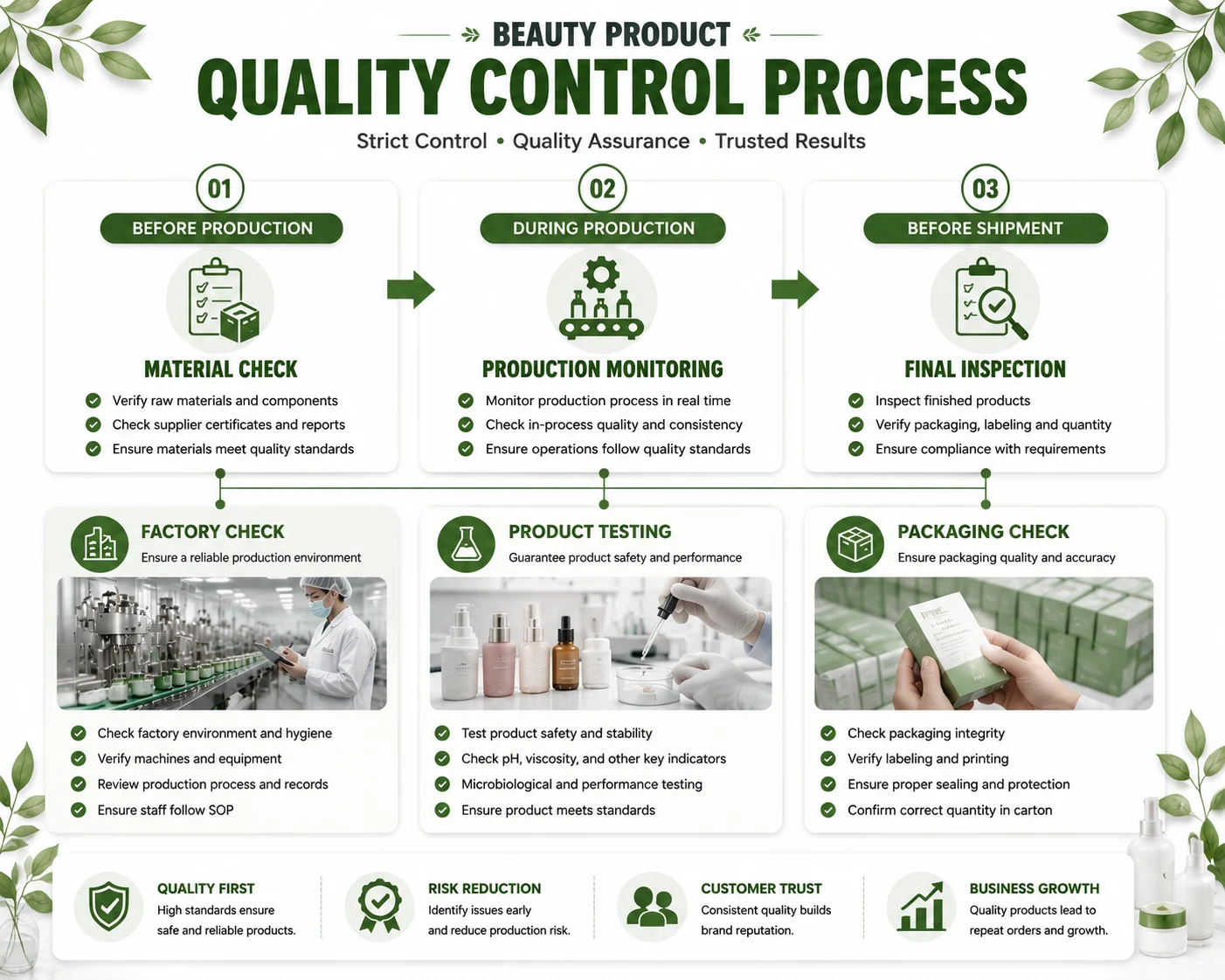
Quality Control Before Shipping
For beauty product importers, quality control is one of the most important steps in building a successful supply chain. A product with attractive pricing may seem like a good opportunity, but poor quality can quickly damage your brand reputation, increase customer complaints, and create unnecessary costs.
A low-cost product with poor quality can damage your brand reputation. Therefore, professional buyers should always establish a clear quality control process before shipping products from China.
Before Production: Material and Product Requirements Check
Quality control starts before manufacturing begins.
Before production, buyers should confirm all product specifications with the supplier, including materials, colors, sizes, packaging requirements, and product functions.
For example, when sourcing beauty tools, buyers may need to check:
- Material quality and safety
- Product design details
- Packaging specifications
- Labeling requirements
A sample approval process is also highly recommended. Comparing the final production with an approved sample helps ensure that the supplier understands your expectations before starting mass production.
During Production: Production Monitoring
Monitoring the production process helps identify potential problems before they become expensive mistakes.
During manufacturing, buyers or inspection partners can check:
- Production progress
- Product consistency
- Assembly quality
- Packaging accuracy
Early inspection allows suppliers to correct issues while production is still ongoing, reducing the risk of receiving a large quantity of defective products.
For long-term partnerships, regular production monitoring also helps maintain consistent quality between different orders.
Before Shipment: Final Inspection
A final inspection before shipment is the last opportunity to verify product quality before goods leave the factory.
During final inspection, professionals typically check:
- Product appearance
- Quantity accuracy
- Packaging condition
- Function testing
- Carton labeling
Only after the products meet the agreed requirements should they be approved for shipment.
A reliable quality control process protects your investment and helps ensure that your customers receive products that meet their expectations. For beauty brands and retailers, consistent quality is not just about avoiding problems—it is about building trust and creating long-term business growth.
At Greentime, we help global buyers manage supplier communication, production follow-up, and quality inspection to make the importing process safer and more efficient.
Understand MOQ, Pricing & Hidden Costs
When importing beauty products from China, many buyers focus only on the unit price quoted by suppliers. However, the real cost of importing is much more than the product price alone.
Understanding MOQ (Minimum Order Quantity) and the hidden costs involved in sourcing can help buyers create more accurate budgets and avoid unexpected expenses.
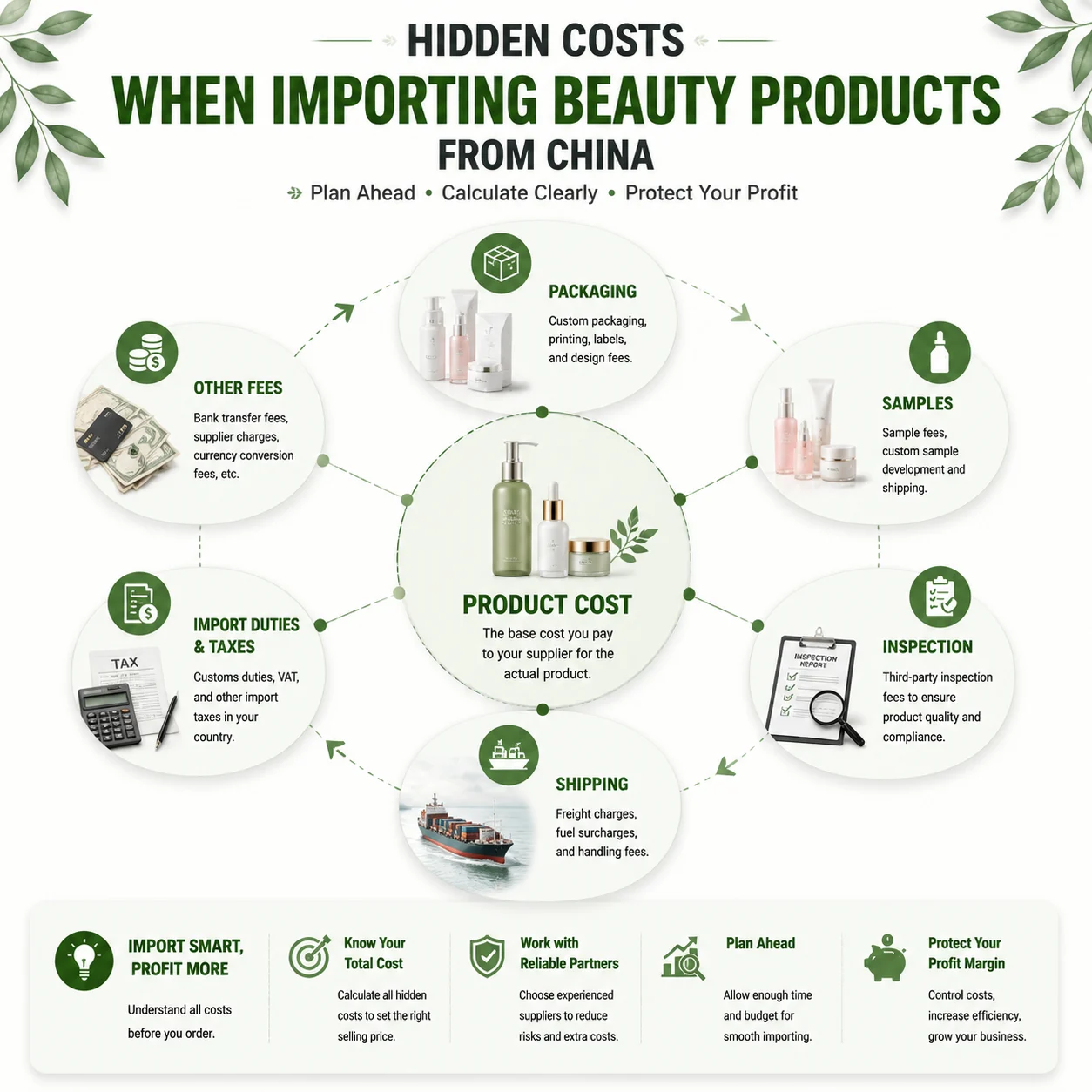
The Real Cost of Importing Beauty Products
The product price is only one part of the total investment. A successful import plan should consider several additional costs, including:
Product Cost
This is the basic manufacturing cost per unit, which depends on materials, design, quantity, and customization requirements.
Packaging Cost
Custom packaging, printed boxes, labels, and branded materials can increase the total cost, especially for private-label products.
Sample Cost
Before placing a bulk order, buyers usually need samples to check product quality, design, and functionality. Sample fees may vary depending on customization requirements.
Inspection Cost
Professional quality inspections help reduce the risk of defective products and ensure that goods meet your expectations before shipment.
Shipping Cost
Freight costs depend on product weight, volume, destination country, and shipping method. Lightweight beauty accessories may have different shipping economics compared with larger items.
Import Duties and Taxes
Different countries have different customs requirements and tax rates. Buyers should understand these costs before calculating their final profit margins.
Understanding MOQ Requirements
MOQ means Minimum Order Quantity, which refers to the smallest quantity a supplier is willing to produce for an order.
MOQ requirements vary depending on the product type and customization level.
For example:
| Product Type | Typical MOQ |
|---|---|
| Hair accessories | 500–1,000 pcs |
| Makeup tools | 1,000+ pcs |
| Custom packaging products | 3,000+ pcs |
Standard products usually have lower MOQs because factories already have existing designs and production processes. However, customized products with special colors, materials, or packaging often require higher quantities because suppliers need additional setup and production costs.
For new businesses, starting with a manageable MOQ can reduce inventory risks. As sales increase and demand becomes more predictable, buyers can place larger orders to achieve better pricing.
Understanding the complete cost structure—not just the factory quotation—allows importers to make smarter purchasing decisions and build a more profitable beauty product business.
Shipping Beauty Products from China
After production and quality inspection are completed, the next step is arranging transportation from China to your destination market. Choosing the right shipping method depends on your order quantity, budget, product type, and delivery timeline.
For most beauty product importers, sea freight is the most common option. It is cost-effective for large orders and suitable for products such as bath accessories, beauty tools, and bulk wholesale shipments. Although sea shipping takes longer than other methods, the lower transportation cost makes it the preferred choice for regular commercial imports.
Air freight is a faster alternative for buyers who need products quickly or are importing smaller quantities. It is often used for urgent restocking, product launches, or higher-value beauty products where delivery speed is more important than transportation cost.
Express shipping is mainly used for samples, small trial orders, or product testing. Services such as international courier companies provide fast delivery and convenient door-to-door transportation, making them suitable before placing a larger production order.
Before choosing a shipping method, buyers should consider factors such as product volume, order value, delivery requirements, and import regulations in their country.
A professional sourcing partner can help compare different shipping solutions, arrange export documents, and coordinate logistics to ensure products arrive safely and on time. By selecting the right transportation method, beauty businesses can better control costs while maintaining an efficient supply chain.
Why Choose Greentime for Beauty Product Sourcing
Finding reliable beauty product suppliers in China can be challenging, especially for overseas buyers who need to manage multiple factories, quality requirements, and international shipping. Greentime helps global businesses simplify the sourcing process by providing professional support from product selection to final delivery.
With one-stop sourcing services, we help buyers find suitable manufacturers for beauty and personal care products, including hair accessories, bath accessories, makeup tools, nail care products, and other beauty supplies. Instead of communicating with multiple suppliers, customers can manage their sourcing projects through one reliable partner.
Greentime also provides OEM and ODM support for businesses looking to create customized products or develop their own beauty brands. Whether you need custom packaging, product modifications, or private-label solutions, we help connect you with experienced manufacturers.
To reduce sourcing risks, we focus on supplier verification and quality control. We evaluate factories, confirm production capabilities, follow up on orders, and arrange quality inspections to ensure products meet customer expectations before shipment.
With years of experience in China sourcing and international trade, Greentime understands the challenges faced by global buyers. From supplier communication and production management to export arrangements, we provide a smoother and more efficient sourcing experience.
Whether you are a wholesaler, retailer, Amazon seller, or growing beauty brand, Greentime can help you source reliable beauty products from China with confidence.
Start your beauty product sourcing project with Greentime today and get a customized sourcing solution.
Frequently Asked Questions About Importing Beauty Products from China
1. Is China good for importing beauty products?
Yes, China is one of the best sourcing destinations for beauty and personal care products. Chinese manufacturers offer competitive pricing, a wide range of product options, and strong OEM/ODM capabilities. From makeup tools and hair accessories to bath products and salon supplies, global buyers can find reliable suppliers for different market needs.
2. How do I find beauty suppliers in China?
You can find beauty suppliers through platforms such as Alibaba, Global Sources, and Made-in-China, or work with a professional sourcing partner. When evaluating suppliers, check their manufacturing experience, product quality, export history, certifications, and ability to provide samples before placing a bulk order.
3. What is the MOQ for beauty products?
MOQ (Minimum Order Quantity) depends on the product type, customization requirements, and supplier policies. Standard beauty accessories may have MOQs of around 500–1,000 pieces, while customized products with special packaging or designs may require higher quantities, often 3,000 pieces or more.
4. What is OEM vs ODM?
OEM means you provide the product design or specifications, and the factory manufactures it according to your requirements. ODM means the supplier provides existing product designs that you can customize with your branding. OEM offers more customization, while ODM allows faster product development with lower initial investment.
5. Can I create my own beauty brand?
Yes. Many businesses create their own beauty brands through OEM, ODM, or private-label manufacturing. Chinese suppliers can help customize products, packaging, and branding, allowing startups, Amazon sellers, and retailers to launch their own product lines without owning a factory.
6. How long does production take?
Production time depends on the product type, order quantity, customization level, and supplier schedule. Standard products usually require several weeks, while customized OEM or private-label products may take longer due to design approval, sample development, and packaging preparation.
7. How do I control product quality?
Quality control should be managed throughout the entire sourcing process. Buyers should check samples before production, monitor manufacturing progress, and arrange final inspections before shipment. Working with experienced suppliers or sourcing partners can help reduce quality risks and ensure products meet your requirements.
8. Can Greentime help with beauty product sourcing?
Yes. Greentime provides one-stop beauty product sourcing services, including supplier verification, OEM/ODM support, production follow-up, quality inspection, and export coordination. Whether you are a wholesaler, retailer, or private-label brand, Greentime helps simplify the process of sourcing reliable beauty products from China.

Gong Zheng is a blog editor for Greentime, focusing on global sourcing, wholesale market trends, and practical advice for international buyers. Drawing on extensive experience in digital marketing and cross-border trade, he shares expert insights to help small and medium-sized enterprises source products more efficiently and avoid common pitfalls. Passionate about connecting buyers with reliable suppliers, he writes in a clear, approachable style that makes complex topics easy to understand.