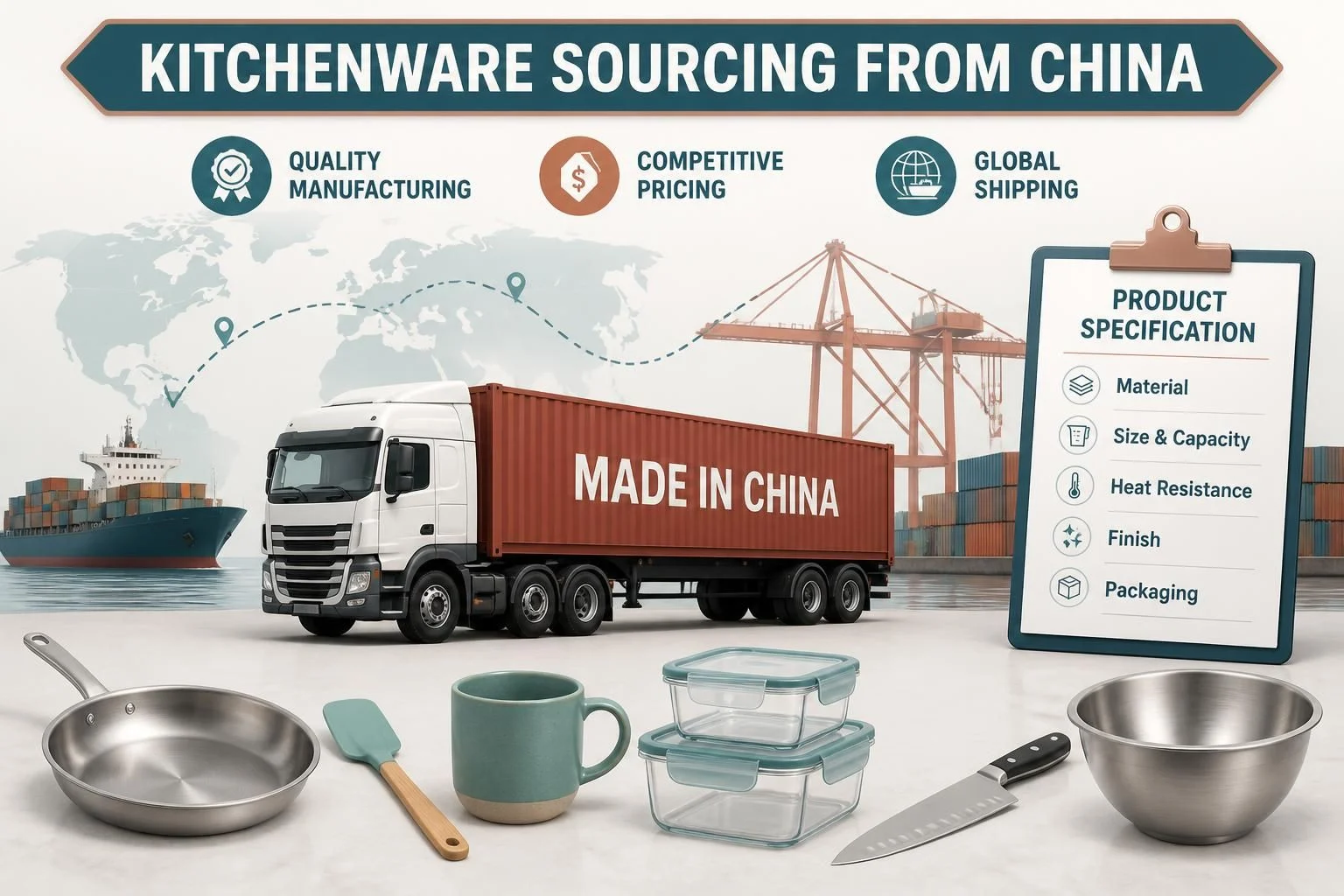
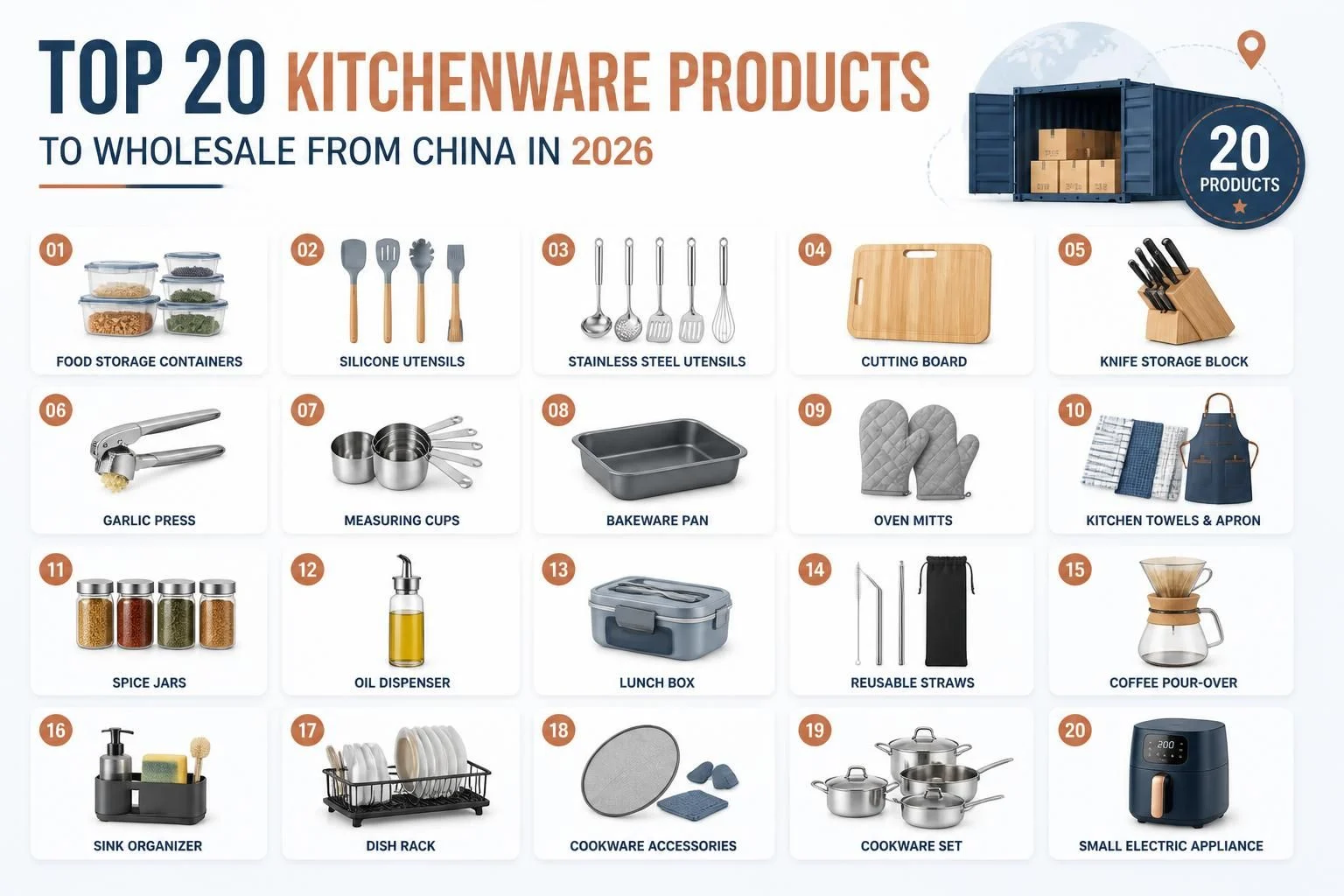
Kitchenware is a workable China wholesale category when you begin with a tightly specified product, not a vague “kitchen collection.” This curated 2026 list helps ecommerce sellers, retailers, and private-label buyers compare 20 product opportunities by use case, sourcing route, differentiation potential, quality controls, and destination-market questions. It is not a sales-volume ranking, and it does not claim to cover every worthwhile product. The order is editorial. Use it to plan a test assortment.
For food-contact goods, suitability is determined by the final SKU, materials, intended use, product claims, and destination market—not by a generic “food grade” statement or the country of origin. Confirm the requirements for your finished product before production and import.
For the supplier-screening, sample-approval, and landed-cost workflow that follows product selection, read How to Source Kitchenware from China: A 2026 Importer Guide.
Key Takeaways
- Start with repeat-use products whose specification can be written clearly, such as storage containers, utensils, bakeware, or a defined cookware accessory. Avoid an unfocused mixed set.
- Bundles can differentiate a listing, but every component, pack-out, label, and food-contact claim must be controlled in the sample and purchase order.
- Stainless steel, silicone, glass, ceramic, wood, plastics, coatings, and blades each bring different inspection and compliance questions. One report does not automatically cover another material or SKU.
- Fragile, sharp, electrically powered, and bulky goods can work, but freight, breakage, return handling, and product-safety risk may outweigh a low ex-works unit quote.
- For a first order, compare suppliers against one RFQ, approve a production-representative sample, and price the same quantity, packaging, destination, and Incoterm.
How do the 20 kitchenware product opportunities compare?
| Product opportunity | Strongest initial fit | Sourcing path to investigate | Bundle/customization lever | Primary buyer check | Main risk |
|---|---|---|---|---|---|
| 1. Food-storage container sets | Repeat-use home organization | Plastic, glass, or stainless specialists | Lid/color/label system | Material and seal performance | Leaks; mismatched components |
| 2. Silicone utensil sets | Giftable entry-level private label | Silicone-tool manufacturers | Holder, color palette, recipe card | Material, odor, heat-use claim | Weak joints; unsupported claims |
| 3. Stainless-steel utensils | Retail and hospitality replenishment | Metal utensil factories | Handle/finish/engraving | Alloy, edges, welds | Rust or burrs |
| 4. Cutting boards | Home, gift, and culinary retail | Bamboo, wood, plastic, or composite suppliers | Size set, juice groove, packaging | Material treatment and finish | Warping; splitting; hygiene claims |
| 5. Knife storage accessories | Lower-risk add-on assortment | Kitchen-accessory suppliers | Drawer insert or countertop set | Fit, stability, edge protection | Poor fit; sharp-edge exposure |
| 6. Manual food-prep tools | Demonstration-led ecommerce | Tool specialists | Multi-piece prep kit | Function, cleaning, blade protection | Injury and return risk |
| 7. Measuring tools | Baking and meal-prep bundles | Stainless/plastic tool factories | Nested set, conversion chart | Volume accuracy and marking durability | Inaccurate markings |
| 8. Bakeware | Baking-focused retail | Carbon steel, silicone, ceramic, or glass specialists | Pan shapes and packaging | Coating/material and oven-use claim | Warping; coating defects |
| 9. Oven mitts and pot holders | Low-cube seasonal or gift bundles | Textile kitchenware suppliers | Color story and matching towels | Heat-protection claim and stitching | Heat injury claims; weak insulation |
| 10. Kitchen towels and aprons | Coordinated private-label collections | Home-textile factories | Embroidery, print, set packing | Fiber, colorfastness, labeling | Shrinkage; dye transfer |
| 11. Spice jars and organizers | Home-organization retail | Glass/plastic and accessory suppliers | Labels, rack, refill funnel | Closure, breakage protection | Breakage; label mismatch |
| 12. Oil and condiment dispensers | Everyday countertop use | Glass, stainless, ceramic suppliers | Pourer, tray, label bundle | Leakage and cleanability | Leakage; fragile transit |
| 13. Lunch boxes and bento containers | Meal-prep assortment | Plastic/stainless container suppliers | Compartments, cutlery, bag | Seal and intended-use evidence | Leaks; food-contact mismatch |
| 14. Reusable drinkware accessories | Add-on or bundle strategy | Silicone/stainless accessory suppliers | Straw/brush/sleeve set | Fit, cleaning, material | Fit problems; small parts |
| 15. Coffee and tea accessories | Specialty retail | Manual-brewing accessory suppliers | Gift box, filter, scoop | Glass/metal finish and use claim | Breakage; taste/odor complaints |
| 16. Sink and countertop organizers | Storage-led retail | Metal/plastic kitchen organizers | Modular caddy system | Load, drainage, corrosion resistance | Instability; rust |
| 17. Dish racks and drying mats | Household organization | Metal, plastic, silicone, textile suppliers | Rack + mat + utensil cup | Load, coating, drainage | Bulky freight; corrosion |
| 18. Cookware accessories | Cross-sell to cookware buyers | Metal/silicone accessory suppliers | Lid, splatter guard, spoon rest | Fit and heat-use claim | Compatibility issues |
| 19. Cookware sets | Established private-label programs | Focused cookware factories | Handle, finish, packaging | Construction, coating, flatness | High defect and claim risk |
| 20. Small electric kitchen appliances | Experienced importers only | Appliance manufacturers | Color/packaging/accessories | Electrical safety and market rules | Regulatory, warranty, plug risk |
How did we select these kitchenware products for 2026?
This is a curated product-opportunity list, reviewed on September 20, 2026. We included products that can serve a defined household, food-prep, baking, storage, or hospitality use case and that can plausibly be sourced through China’s specialized kitchenware, metalware, plastics, glassware, ceramics, textiles, or appliance supply chains. We assessed four planning factors: repeat-use or clear buyer need; scope for a distinctive SKU or bundle; ability to specify and inspect the product; and risk introduced by materials, food contact, shipping, or safety claims.
We excluded novelty-only products with no clear buyer problem, products that depend on unverified trend claims, and products for which a generic article could responsibly state a universal certificate, MOQ, price, lead time, or margin. The list does not measure current marketplace sales, supplier capacity, or legal eligibility in every destination. Obtain live quotes and SKU-specific compliance advice before publishing a product claim or placing an order.
The 20 kitchenware products to consider
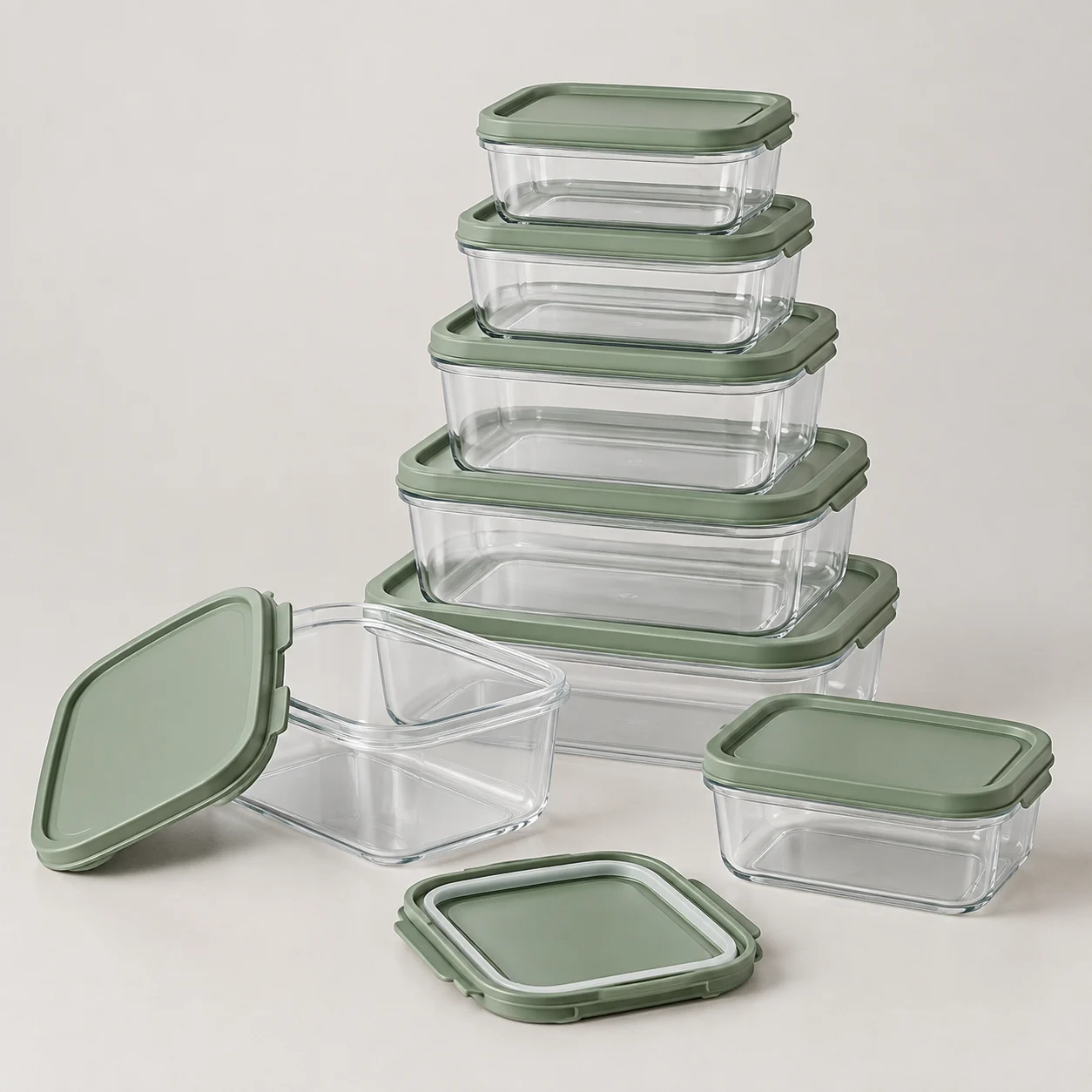
1. Food-storage container sets: a repeat-use foundation for organization and meal prep
Why it belongs on the list: Container sets solve a recurring storage and meal-prep need and can be differentiated through shape, nesting, lid design, portioning, and a coherent pack-out. Demand is an editorial, use-case observation; validate current channel demand with your own marketplace and customer research.
Product ideas: stackable dry-food containers; glass meal-prep containers; stainless lunch containers; freezer-oriented portion sets.
| Sourcing decision | What to establish before buying |
|---|---|
| Best fit | Retailers or sellers able to test a small, clearly defined set rather than many unrelated sizes. |
| Sourcing path | Shortlist suppliers by the exact material and closure type; do not assume a glass-container factory makes comparable plastic lids. |
| Economics | Quote by SKU, material, capacity, lid, unit box, carton, MOQ, quantity, Incoterm, and destination. |
| Customization lever | A size system, lid color, label sheet, or meal-prep bundle. |
| Quality/compliance check | Verify final-SKU material, lid fit, leakage performance, intended use, and destination-market food-contact questions. |
| Main risk | Leaks, incompatible replacement parts, breakage, and over-broad microwave/freezer/dishwasher claims. |
Before you source it: Ask for a filled-container leakage test on the sample; specify the container/lid material separately; and confirm which final version any test report covers.
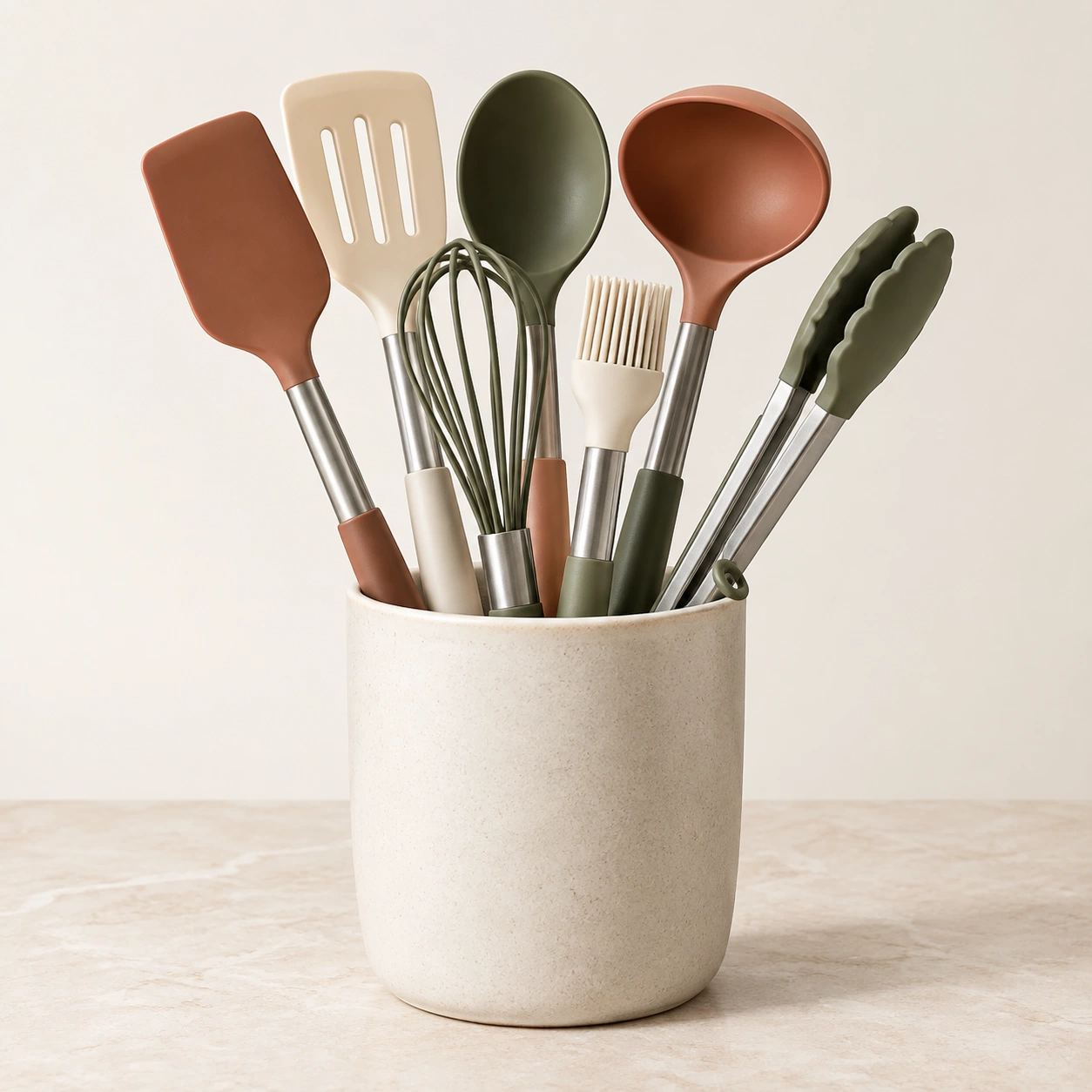
2. Silicone utensil sets: suitable for coordinated color-led assortments
Why it belongs on the list: Spatulas, spoons, tongs, brushes, and turners lend themselves to a coordinated set and often make sense as a low-complexity private-label test when the specification is controlled.
Product ideas: baking-tool set; utensil set with holder; mini spatula set; grill-tool accessory set.
| Sourcing decision | What to establish before buying |
|---|---|
| Best fit | Brand owners with a defined color palette and a simple initial assortment. |
| Sourcing path | Compare factories by the exact construction: one-piece silicone, steel core, handle assembly, and holder. |
| Economics | Request a component-level quote and separate price for holder, printing, color, and gift box. |
| Customization lever | Consistent colors, logo position, holder, and a practical recipe or care insert. |
| Quality/compliance check | Check odor, surface finish, handle-to-head joint, cleaning, and evidence for any heat or food-contact claim. |
| Main risk | Loose cores, tearing, staining, odor complaints, or unsupported temperature claims. |
Before you source it: Bend and pull-test the sample at joints; document color reference and logo artwork; ask what changes when a new colorant or construction is used.
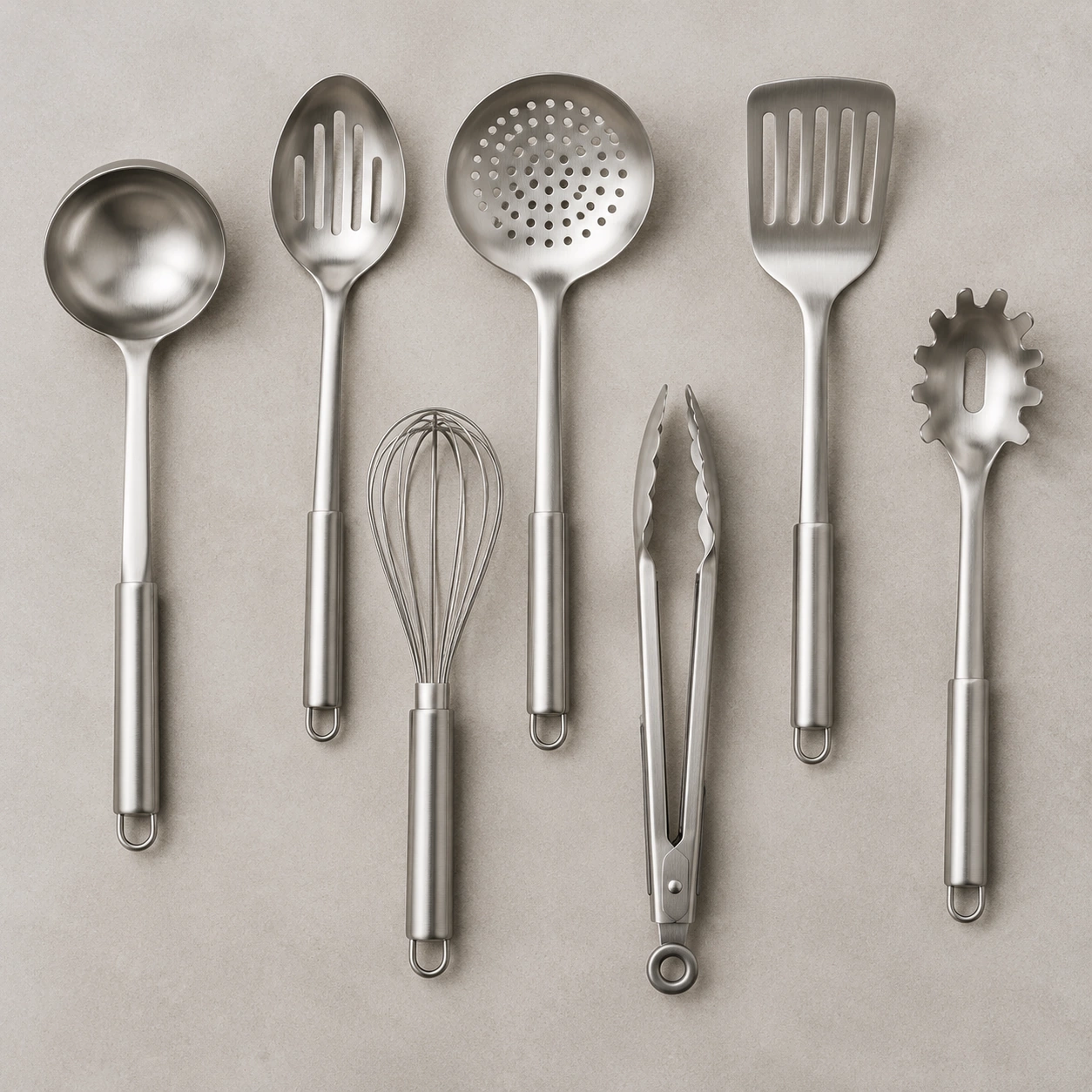
3. Stainless-steel cooking utensils: a practical replenishment category with finish-dependent quality
Why it belongs on the list: Ladles, skimmers, whisks, tongs, peelers, and serving tools are familiar, repeat-use products for home and hospitality buyers. Their value depends less on novelty than on material, finish, ergonomics, and consistent pack-out.
Product ideas: all-metal utensil set; bar and serving tools; camping cooking tools; commercial-style single utensils.
Sourcing decision: Source by actual construction and intended use, not the word “stainless.” Quote the stated grade or alloy, thickness, finish, handle construction, unit packaging, and quantity. Inspect edges and burrs, welds or joins, alignment, corrosion resistance questions, and logo finish. The principal risk is that a visually similar sample can conceal a different material or rough finish in bulk.
Before you source it: Request material identification/documentation appropriate to the SKU; inspect edges with the same use conditions a customer will encounter; agree on appearance standards with close-up sample photos.
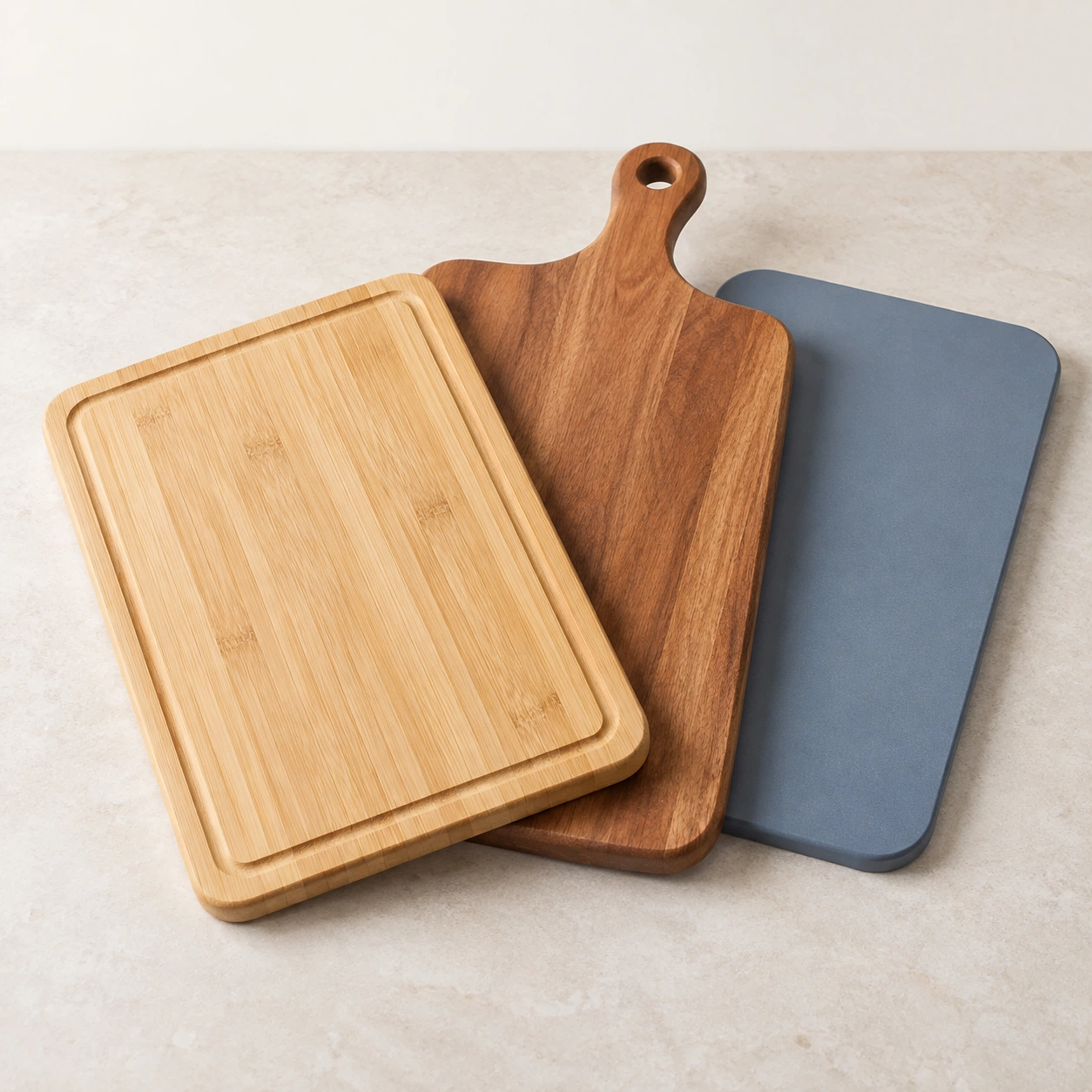
4. Cutting boards: high gift and bundle potential, but material controls matter
Why it belongs on the list: A cutting board can be sold as a single functional item, an engraved gift, or part of a prep bundle. It is not one homogeneous category: bamboo, wood, plastic, and composite boards require separate supplier and quality questions.
Product ideas: bamboo serving board; acacia-style presentation board; dishwasher-oriented plastic board set; color-coded prep board set.
Sourcing decision: Establish species or material, dimensions, thickness, construction, finish, groove, feet, intended use, packaging, and care instructions. Check flatness, moisture-related movement, splits, glue lines where present, surface finish, odor, and packaging protection. Main risks include warping, cracking, inconsistent grain/finish, and unsupported antimicrobial or dishwasher-safe claims.
Before you source it: Condition samples as reasonably as possible for your intended market; state acceptable wood variation; request the treatment/finish details and verify whether they match the imported SKU.
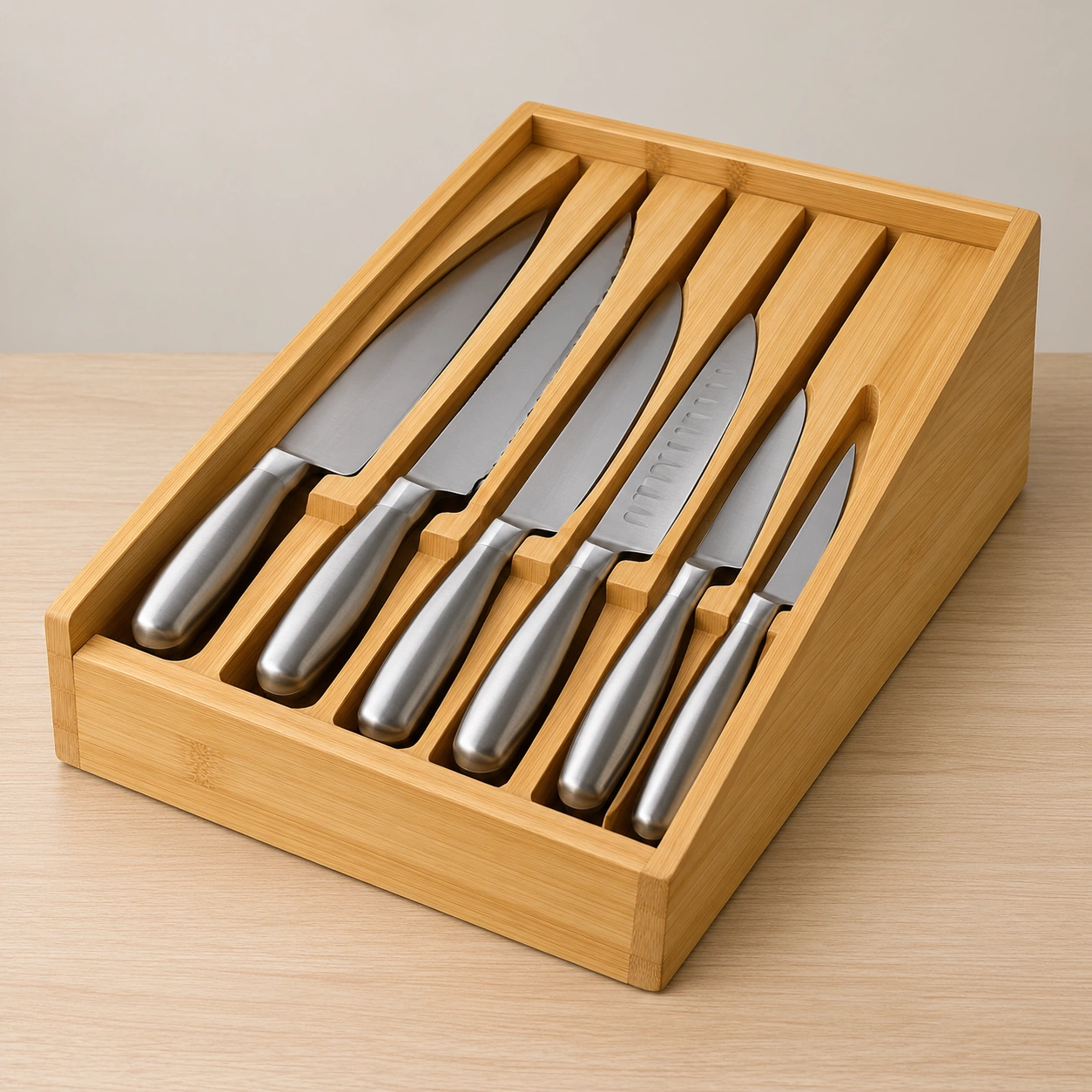
5. Knife storage accessories: a lower-complexity way to serve knife owners
Why it belongs on the list: Blocks, magnetic strips, blade guards, drawer inserts, and knife rolls can meet a clear storage need without making the buyer responsible for the knife itself. They still need careful fit and safe-use evaluation.
Product ideas: in-drawer bamboo insert; universal blade guards; countertop block; magnetic wall strip with mounting kit.
Sourcing decision: Define knife sizes or allowable blade range, dimensions, mounting hardware, load expectation, surface finish, packaging, and instructions. Test stability, retention, exposed edges, component fit, and mounting information. The main risk is a “universal” claim that does not match common knife sizes or a mounting method that fails in real homes.
Before you source it: Test with the stated knife-size range; verify the mounting hardware and instructions; include a clear customer-safety review before using magnetic-retention claims.
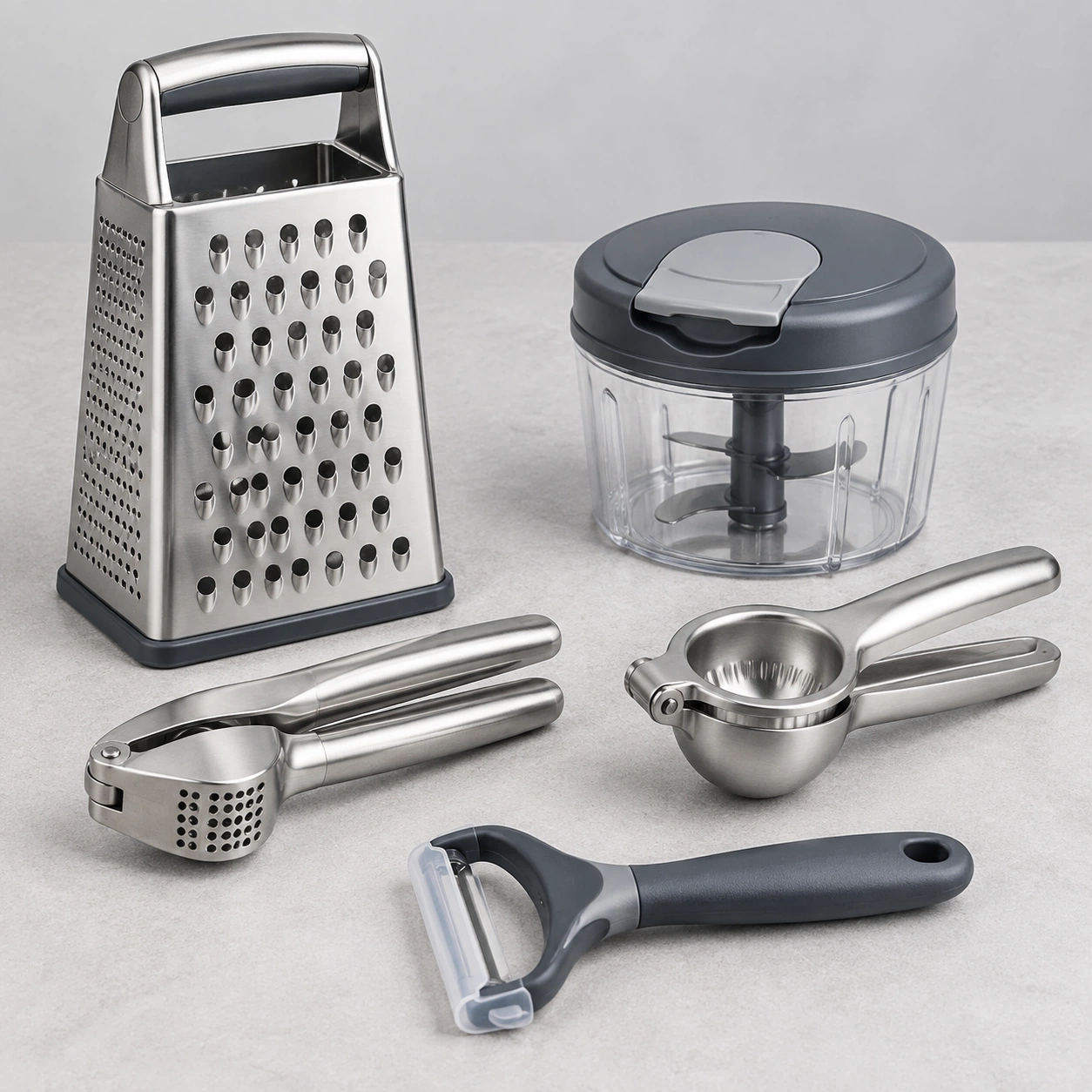
6. Manual food-prep tools: demonstration-friendly, but function and blade safety decide returns
Why it belongs on the list: Graters, slicers, presses, choppers, peelers, mashers, and salad spinners can be easy to demonstrate visually. They should be selected for a specific task, not because a supplier labels them “multifunctional.”
Product ideas: garlic press; box grater; vegetable chopper; handheld citrus press.
Sourcing decision: Request a working sample and define input food, output, cleaning method, blade guard, materials, and pack-out. Check functional performance, sharp edges, pinch points, locking mechanism, cleaning access, and spare-part availability where relevant. Main risks are injury, disappointing performance, difficult cleaning, and IP/design-right concerns for copied mechanisms.
Before you source it: Film a repeatable function test; check blade covers and instructions; carry out an IP/design review appropriate to your selling market before copying a recognizable product.
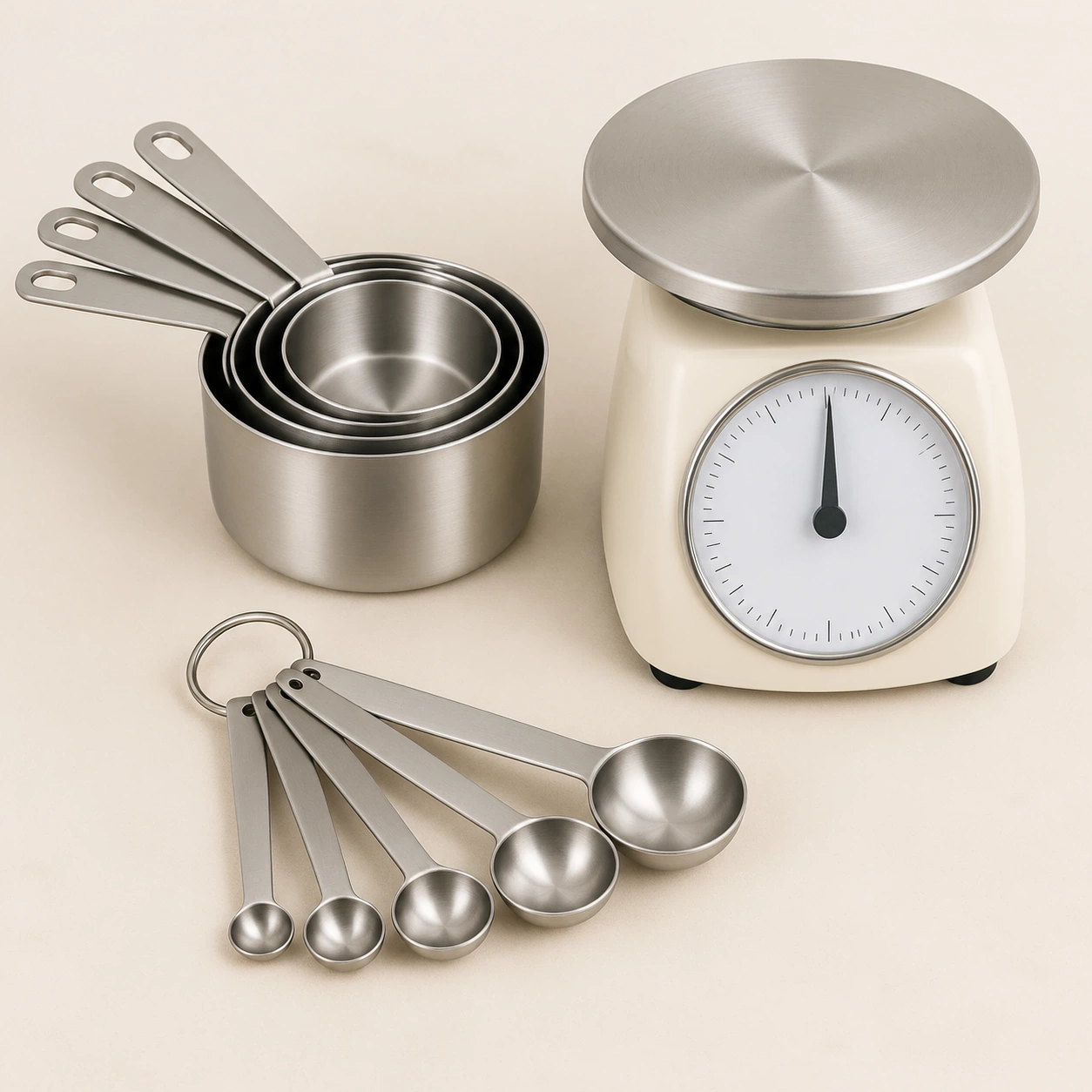
7. Measuring cups, spoons, and scales: simple bundles where accuracy must be earned
Why it belongs on the list: Measuring tools pair naturally with baking, meal-prep, and coffee accessories. They are easy to bundle but should not make precision claims without an appropriate check.
Product ideas: nested cup-and-spoon set; adjustable measuring spoon; stainless tablespoon set; manual kitchen scale.
Sourcing decision: Specify measurement system, capacity, marking language, font/finish, material, ring or nesting mechanism, and packaging. Check volume or weight accuracy against the stated markings, readability after washing/use, sharp edges, and component retention. Main risks are inaccurate conversion labels and markings that fade or confuse customers.
Before you source it: Test representative sizes against a calibrated reference; have destination-market units and labeling reviewed; do not describe a measuring tool as “precise” without a defined tolerance.
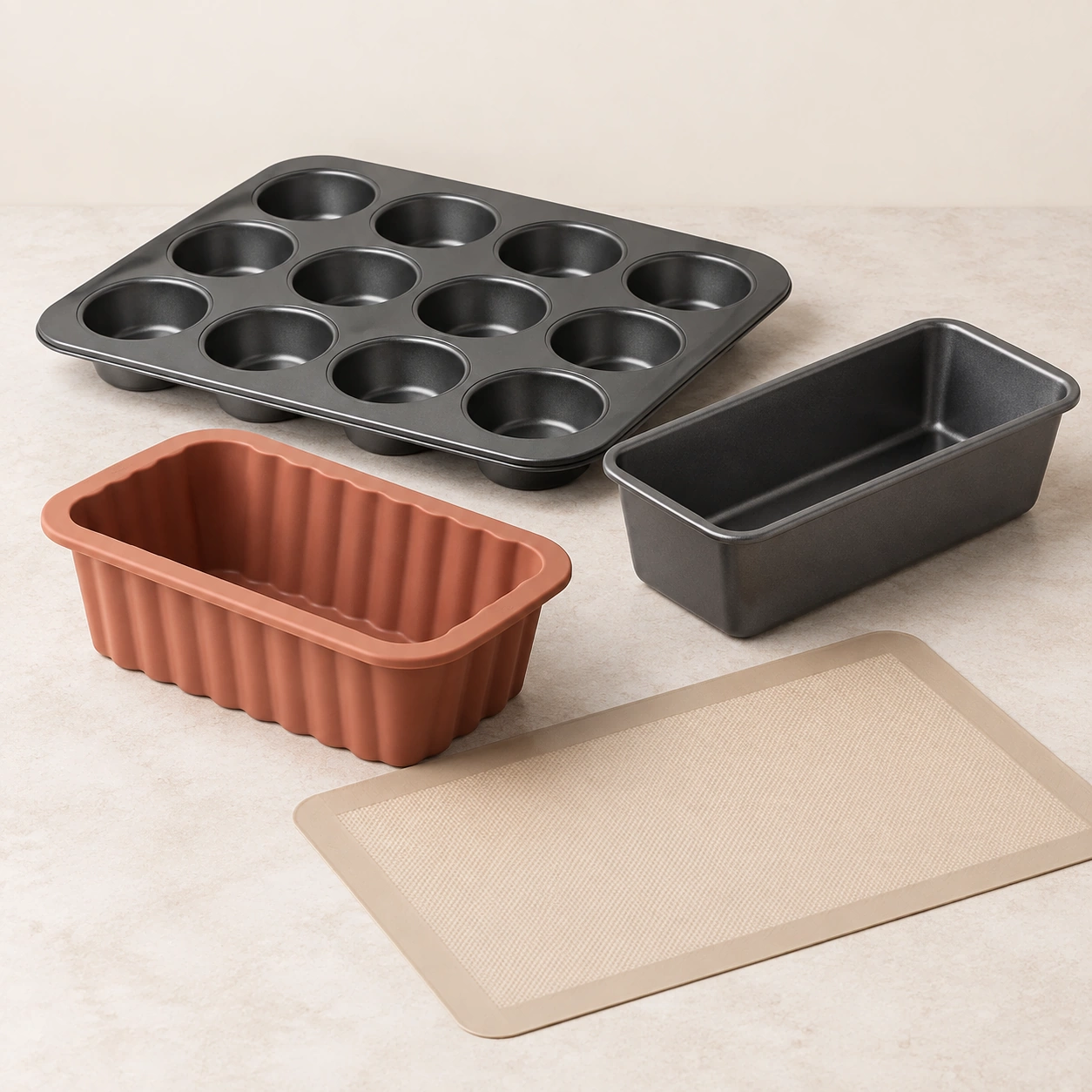
8. Bakeware: a category that needs product-specific temperature and coating discipline
Why it belongs on the list: Baking trays, loaf tins, muffin pans, mats, molds, and racks serve a stable baking use case and offer shape-led merchandising. Different materials cannot share one quality checklist.
Product ideas: carbon-steel muffin pan; silicone mold set; perforated pizza pan; baking mat and scraper bundle.
Sourcing decision: Source by material, dimensions, thickness, coating or surface, temperature/use claim, and packaging. Check flatness, edge finish, warping behavior, coating consistency, mold release/cleanability questions, and the exact conditions behind oven-safe or non-stick statements. Main risks are warping, coating flaws, odor, and claims unsupported by the final production version.
Before you source it: Run a documented sample-use test consistent with the claim you intend to make; freeze the coating/material specification; ask how the factory controls batch-to-batch changes.
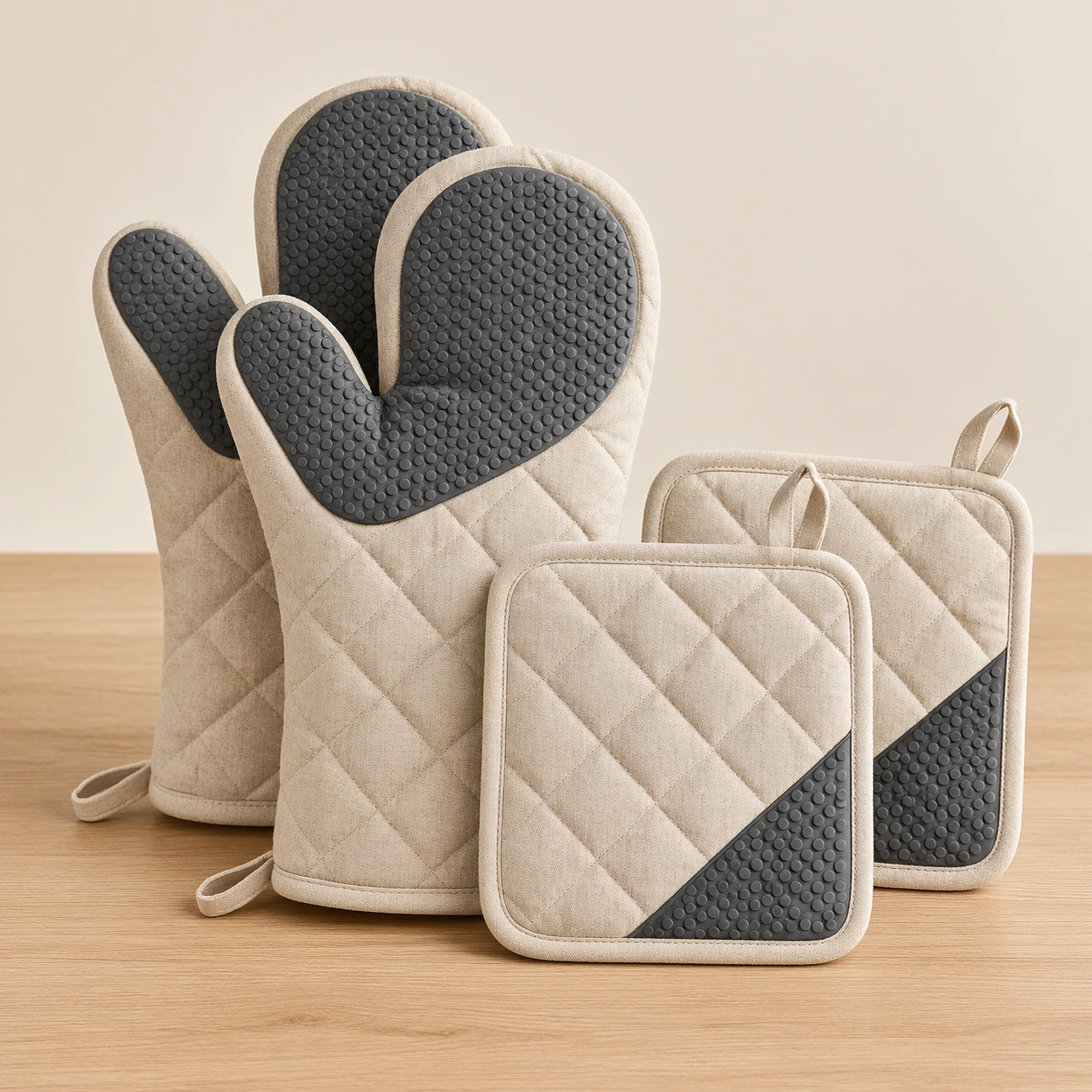
9. Oven mitts and pot holders: textile products that should not rely on vague heat-protection language
Why it belongs on the list: These products can complete baking and cookware collections and can be branded through color, pattern, trim, and gift packaging. They protect users from heat, so marketing language needs particular care.
Product ideas: silicone-grip mitt; quilted cotton potholder set; long barbecue glove; mitt and towel gift set.
Sourcing decision: Specify fiber composition, layers, silicone print/grip, size, seam construction, care label, and intended use. Check stitching, coverage, grip, odor, color transfer, and evidence behind any heat-resistance claim. Main risks are insulation performance that differs from customer expectations and labels that do not match the finished construction.
Before you source it: Define the use scenario rather than using a generic heat claim; inspect stitching and grip after sample-use testing; confirm textile labeling rules in the destination market.
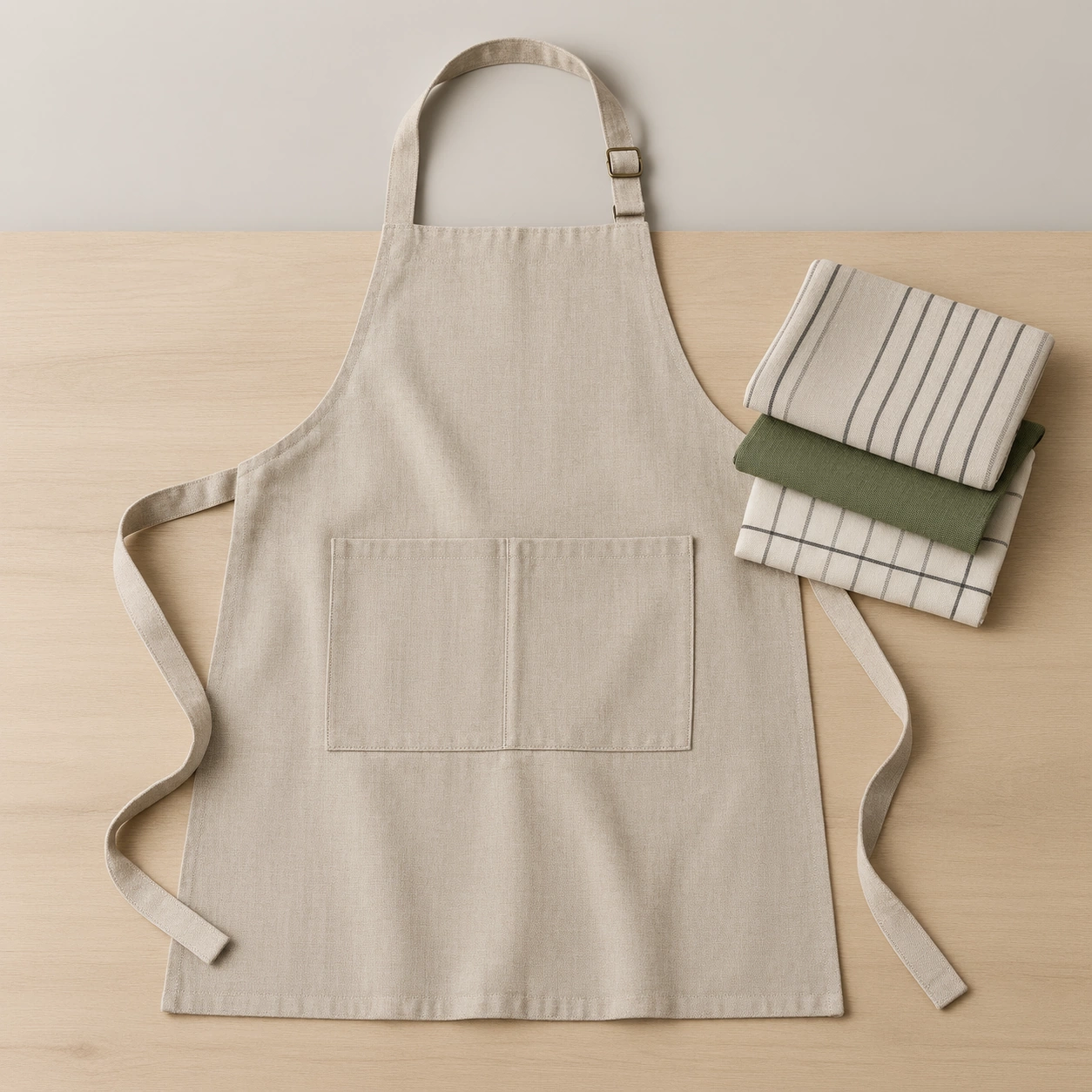
10. Kitchen towels and aprons: a straightforward collection builder with textile-labeling checks
Why it belongs on the list: Textiles can make a kitchen line feel coherent, improve gifting, and allow lower-cost color or artwork tests. Their economics depend on fabric, weight, construction, decoration, and pack count.
Product ideas: tea-towel set; adjustable apron; waffle-weave cleaning cloth; embroidered host-gift set.
Sourcing decision: Define fiber content, fabric weight or construction, dimensions, trim, print/embroidery, wash/care instructions, packaging, and color standard. Check shrinkage, stitching, print placement, colorfastness, linting, and label accuracy. Main risks include dye transfer, inconsistent sizing, and a generic “cotton” description that does not match final fiber content.
Before you source it: Approve a wash-tested sample; use a signed color reference; ask for the final label text and fiber-content evidence before production.
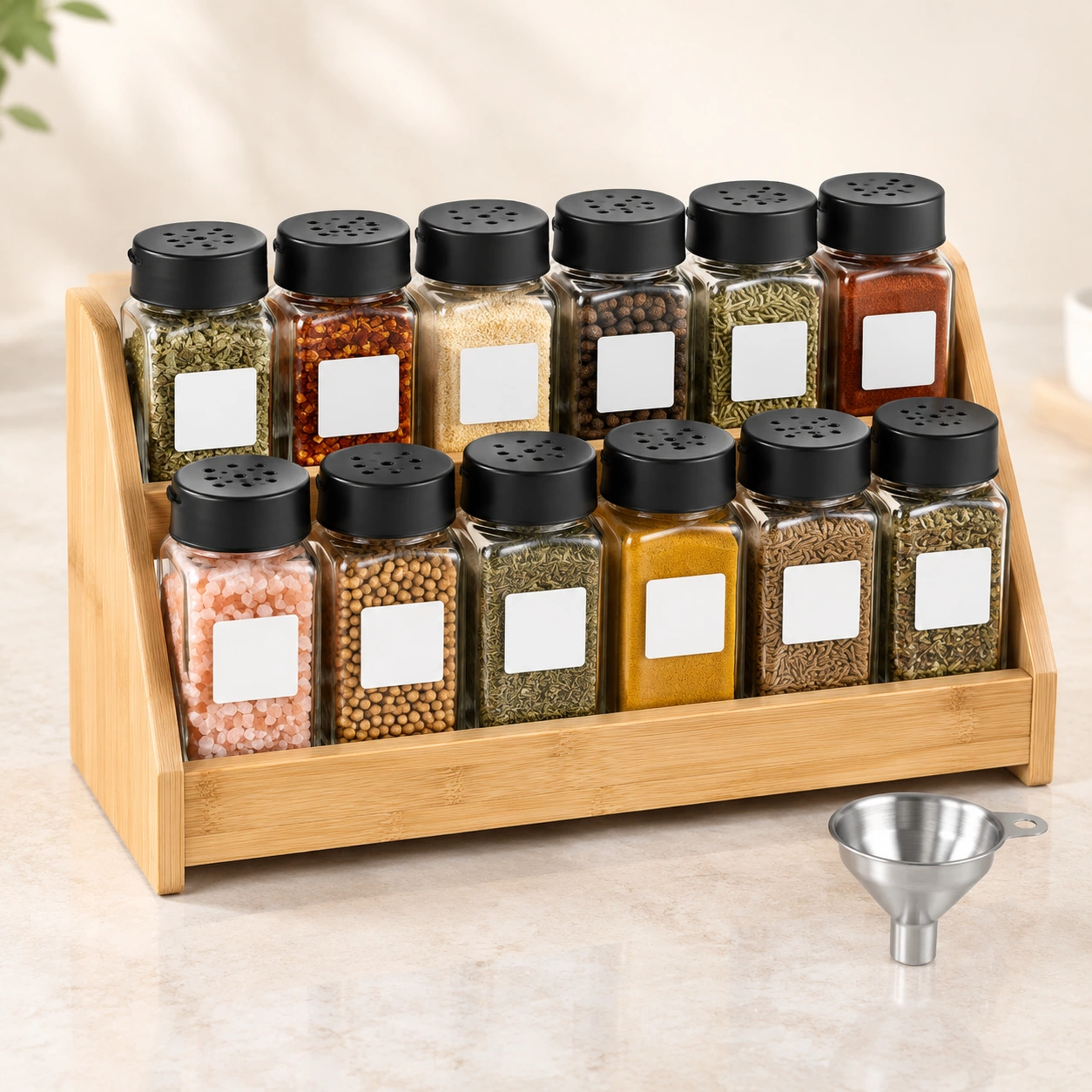
11. Spice jars and organizers: a high-perceived-value system when parts are controlled
Why it belongs on the list: Refill jars, drawer organizers, racks, labels, funnels, and shaker lids turn a low-value component into an organization system. The customer experience depends on fit across all components.
Product ideas: drawer spice-jar set; countertop rack; magnetic jar set; pantry-label and funnel kit.
Sourcing decision: Define jar material, capacity, neck finish, lid/shaker type, label material, rack dimensions, adhesive/magnet specification, and pack-out. Check closures, label alignment, rack stability, breakage protection, and whether the components fit across production batches. Main risks are fragile transit, mismatched threads, weak magnets, and label claims that do not match contents or market rules.
Before you source it: Assemble a complete sellable set from production-representative parts; use a drop/packaging evaluation appropriate to the route; verify replacement-component consistency.

12. Oil and condiment dispensers: useful countertop goods where leakage testing is non-negotiable
Why it belongs on the list: Oil bottles, vinegar dispensers, sauce bottles, and pourer sets have a clear daily-use case and can be sold as a visually coordinated countertop collection.
Product ideas: glass oil bottle with pourer; stainless condiment set; labeled sauce bottle set; dispenser with drip tray.
Sourcing decision: Specify vessel and closure material, capacity, pourer, gasket, finish, label, tray, and package orientation. Test leaks and drips in the real orientation, cleanability, cap fit, glass thickness/finish where relevant, and carton protection. Main risks are oil leakage, staining, breakage, and decorative coatings that do not suit the intended use.
Before you source it: Conduct a timed leakage and pour test; identify each food-contact component; specify package orientation and cushioning in the order file.
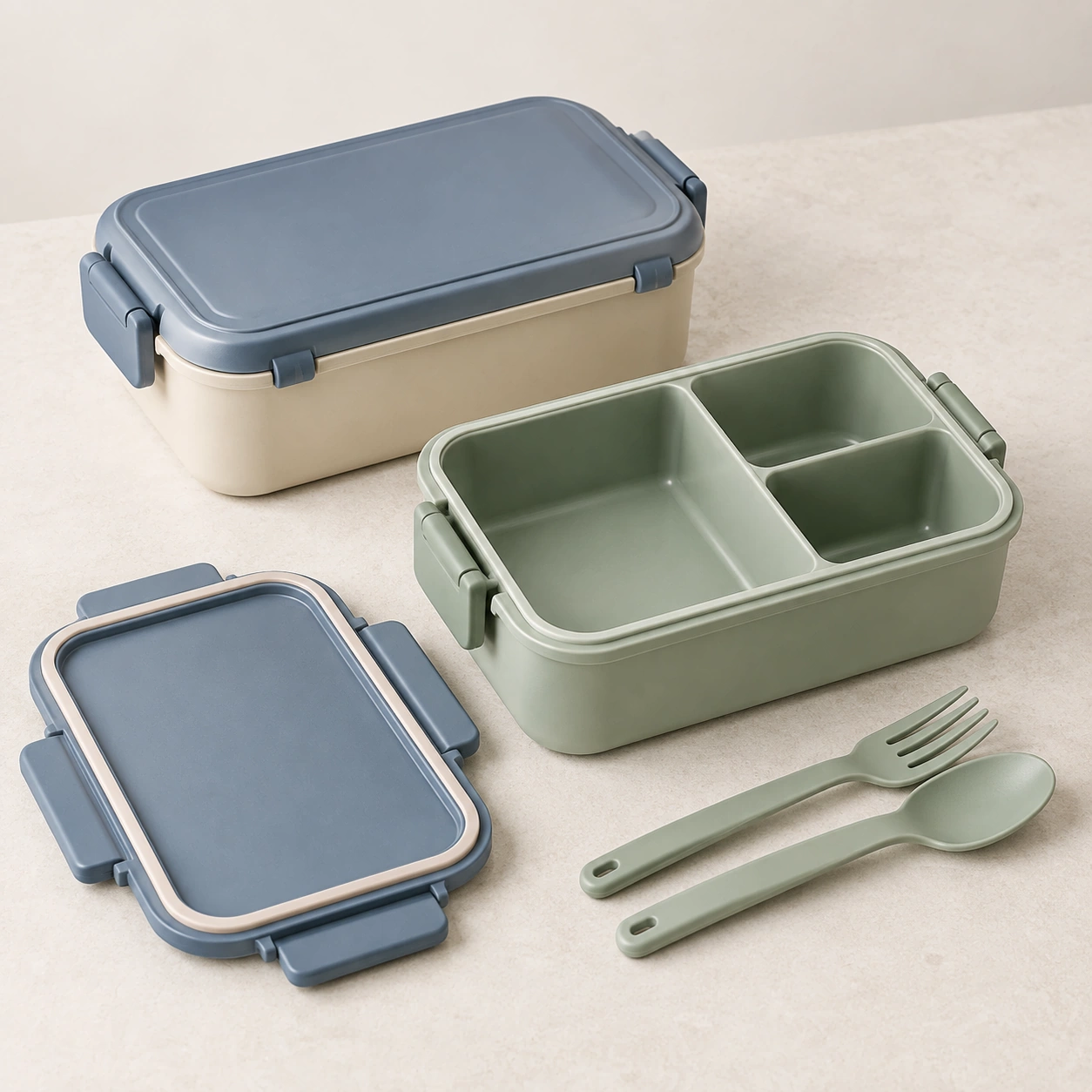
13. Lunch boxes and bento containers: a meal-prep opportunity that needs a precise use case
Why it belongs on the list: Compartment containers can address work, school, travel, and meal-prep needs, but their appeal changes with portion sizes, closure design, cutlery, insulation, and use claims.
Product ideas: compartment bento box; stainless tiffin-style container; salad bowl with sauce cup; snack box with reusable cutlery.
Sourcing decision: Define capacity, compartments, lid/gasket, cutlery, material, temperature/use statement, cleaning, packaging, and target age/use case. Check seal performance, hinge/latch life, odors, fit, and the exact final-SKU evidence needed for food-contact and product claims. Main risks include leaks, difficult cleaning, small detachable parts, and a mismatch between the use claim and the material.
Before you source it: Test the complete loaded product through normal transport orientation; identify all materials and colorants; assess age-grading or child-product implications if marketing is aimed at children.
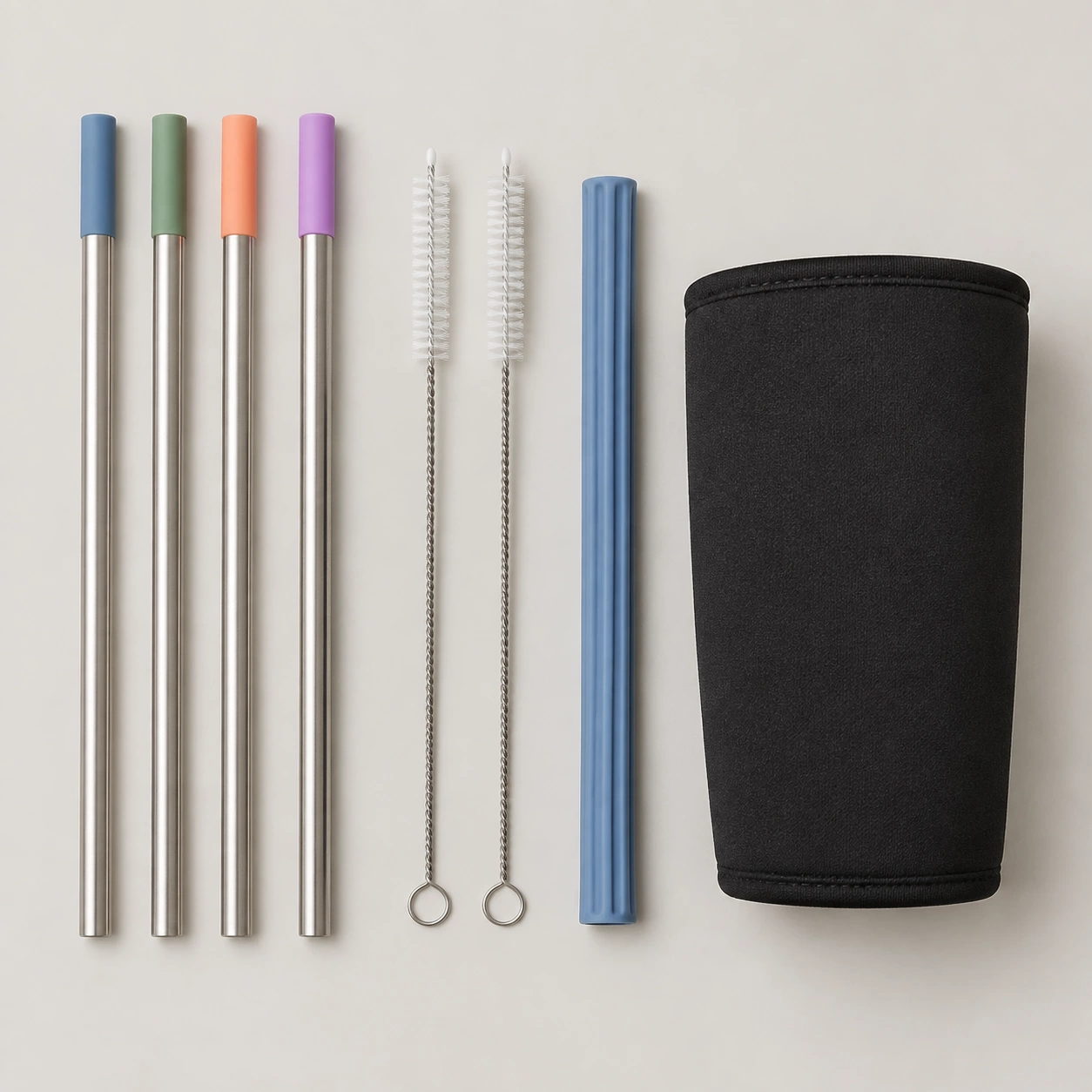
14. Reusable drinkware accessories: best as a fit-tested add-on, not a universal claim
Why it belongs on the list: Straws, cleaning brushes, sleeves, lids, caps, and carry accessories can increase basket size and support a reusable-drinkware collection. They are most reliable when designed around a defined vessel or size standard.
Product ideas: straw and brush kit; silicone cup sleeve; replacement lid set; travel-mug carry strap.
Sourcing decision: State compatible vessel dimensions, material, cleaning method, component count, packaging, and intended user. Check fit, leakage where relevant, brush shedding, small-part retention, odor, and food-contact questions. Main risks are poor compatibility, missing pieces, small-part hazards, and marketing a product as universal when it is not.
Before you source it: Fit-test across the exact target vessel range; make compatibility limitations prominent on the package; document component counts at inspection.
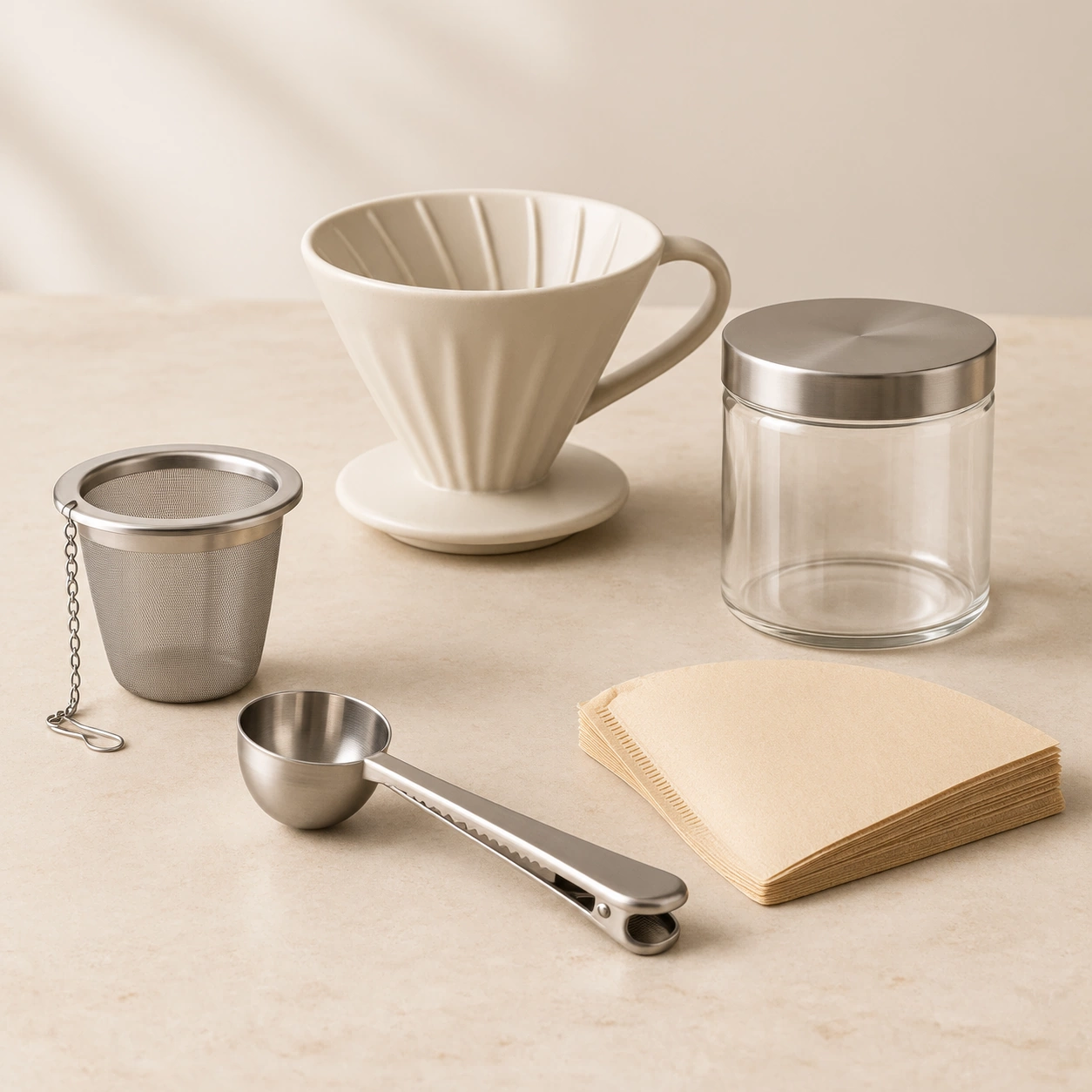
15. Coffee and tea accessories: specialty positioning works best when the ritual is specific
Why it belongs on the list: Manual brewers, tea infusers, scoops, canisters, drippers, frothing tools, and filters can serve an enthusiast or gift buyer. The product should solve a specific preparation step rather than copy a generic coffee aesthetic.
Product ideas: stainless tea infuser; manual pour-over kit; coffee scoop and clip; loose-leaf tea storage set.
Sourcing decision: Define brew/steep use, vessel compatibility, material, mesh or filter specification, capacity, heat-use claim, and pack-out. Check fit, sharp wire ends, handle temperature, residue/cleaning, glass protection, and evidence for any food-contact or heat claim. Main risks are breakage, poor fit, metallic/odor complaints, and product designs that imitate protected brand features.
Before you source it: Test with the intended vessel and routine; review design/IP exposure; confirm the cleaning and replacement-part experience.
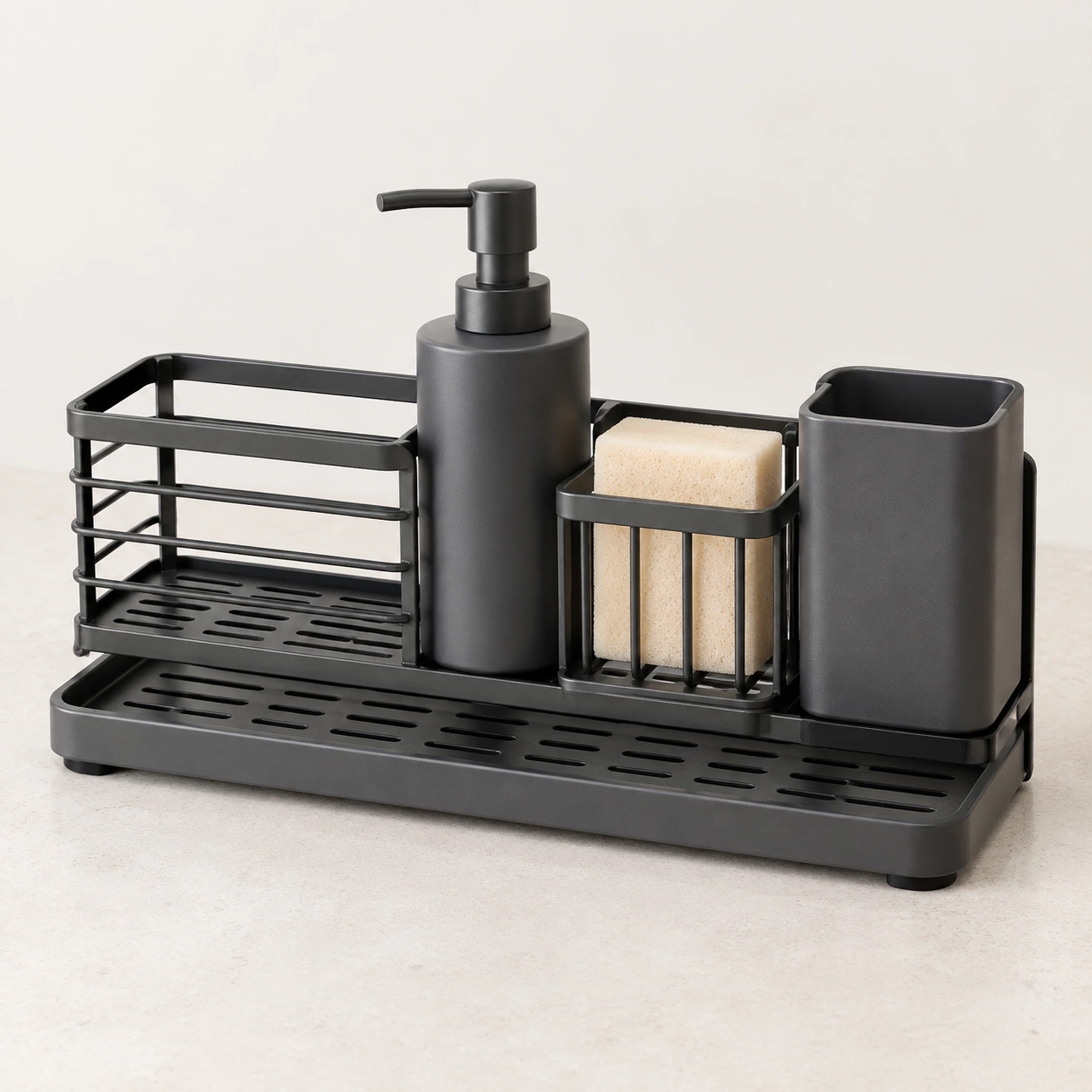
16. Sink and countertop organizers: a high-utility category where corrosion and stability matter
Why it belongs on the list: Soap caddies, sponge holders, utensil holders, and countertop trays solve visible organization problems and can be merchandised as a modular system.
Product ideas: over-sink sponge caddy; utensil-cup organizer; soap dispenser tray; under-sink bin system.
Sourcing decision: Specify material, coating, drainage design, hook/adhesive/suction mechanism, load, dimensions, and installation surface. Check stability, drainage, rust/corrosion performance appropriate to wet use, sharp edges, adhesion, and packaging. Main risks are coating failure, poor drainage, surface damage, and claims that a fixture works on every surface.
Before you source it: Test mounting on the surfaces named in instructions; expose a sample to wet/dry cycles; define an acceptable finish standard for wet-area use.
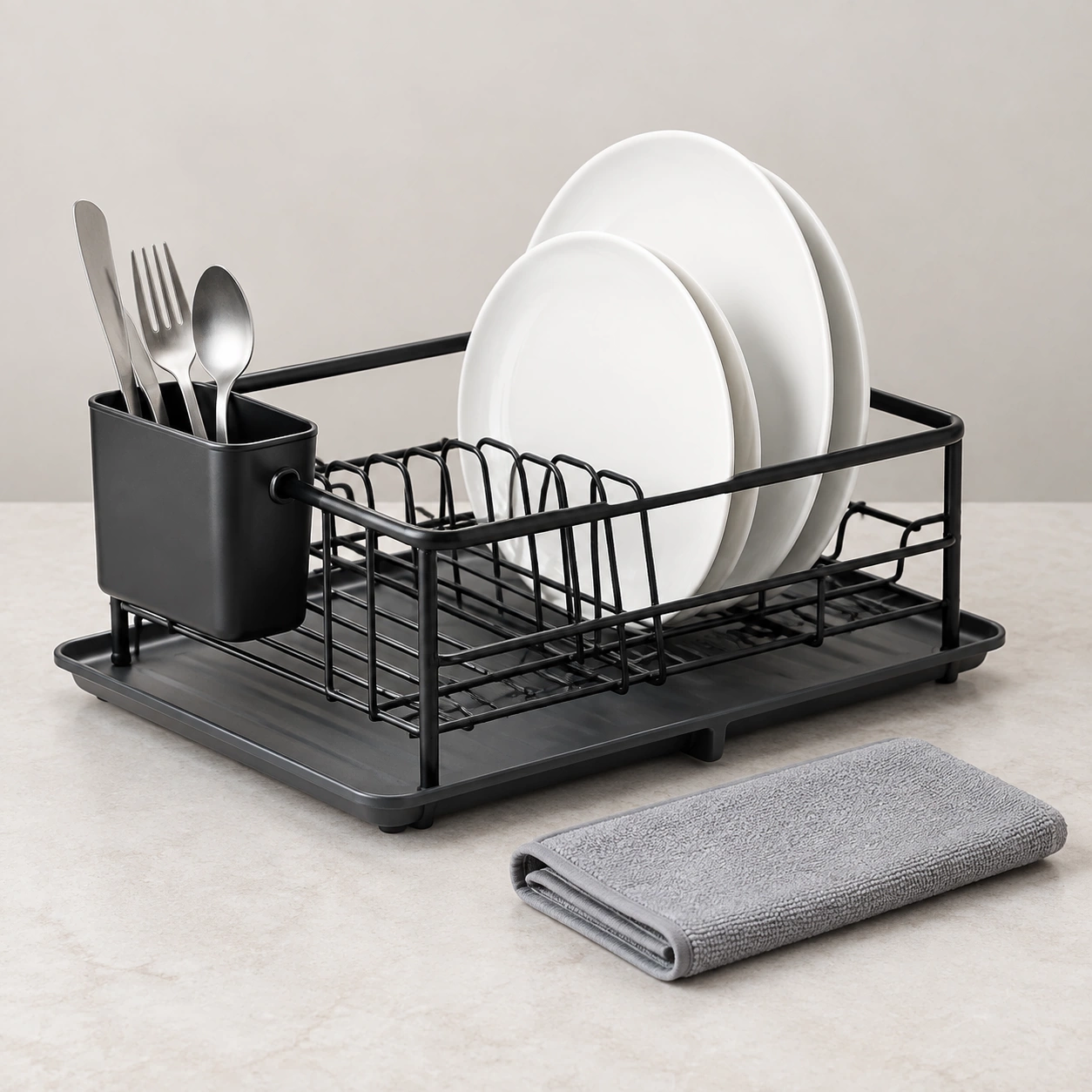
17. Dish racks and drying mats: sell a drying solution, while pricing its shipping cube honestly
Why it belongs on the list: Dish racks, drainboards, drying mats, and utensil cups can solve a clear daily kitchen problem. They may be less attractive for a small test order when carton volume is high.
Product ideas: foldable drying rack; microfiber drying mat; compact dish drainer; rack-plus-utensil-cup set.
Sourcing decision: Quote assembled and packed dimensions, carton data, material/coating, load, drainage path, and accessory count. Check stability under stated load, water drainage, corrosion/finish, folding mechanism, textile absorption/care where relevant, and packaging. Main risks are dimensional-weight freight, instability, rust, trapped water, and a poor fit for common dish sizes.
Before you source it: Obtain final carton measurements and weight before comparing freight; load-test the sample; verify that every removable part is secured in transit.
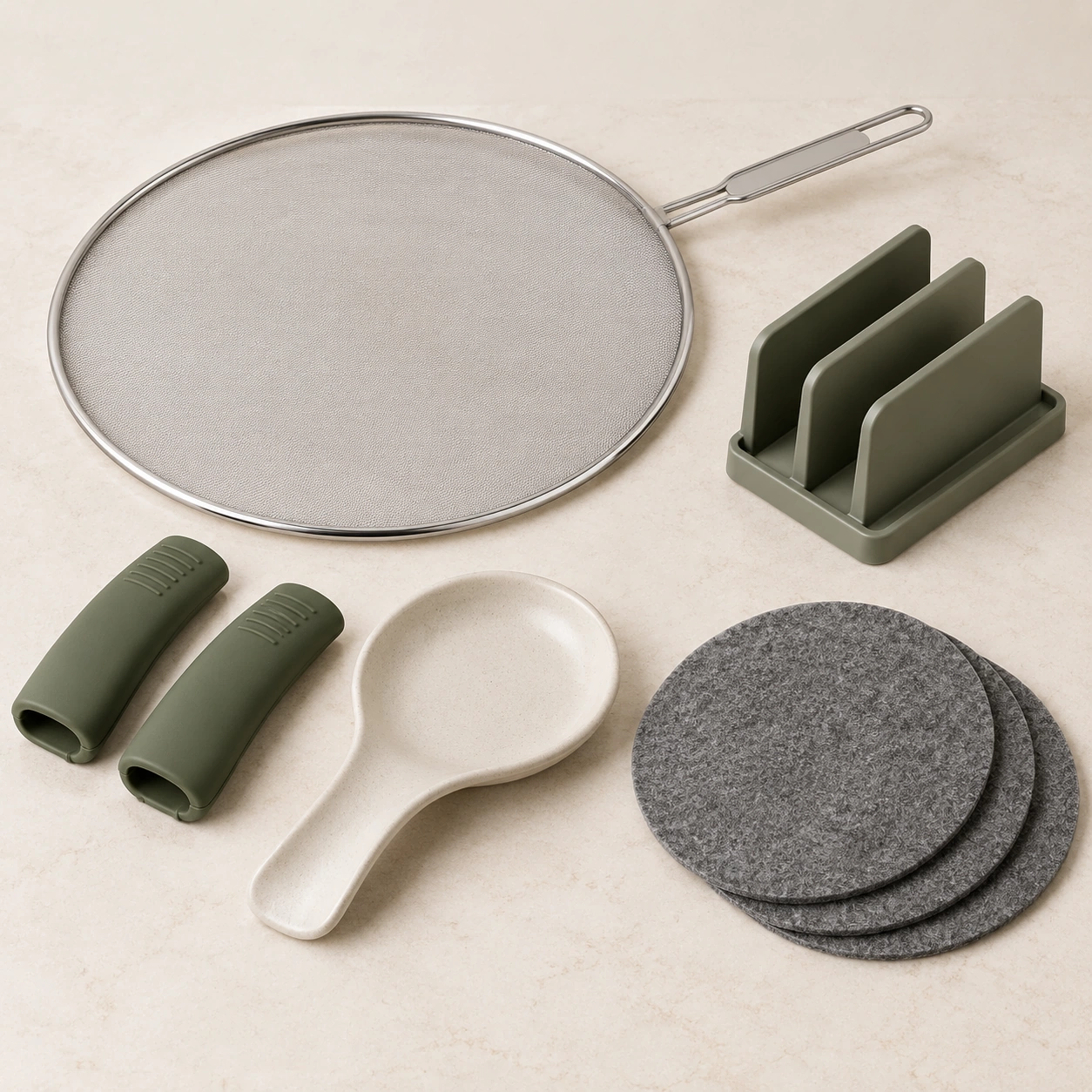
18. Cookware accessories: effective cross-sells when compatibility is explicit
Why it belongs on the list: Splatter guards, spoon rests, pan protectors, universal lids, trivets, and handle covers can complement cookware without requiring a full cookware launch. Compatibility is the core commercial question.
Product ideas: silicone pan-handle cover; lid organizer; splatter screen; felt pan-protector set.
Sourcing decision: Define compatible diameters or handle shapes, material, heat-use statement, edge finish, and package contents. Check fit, stability, cleaning, deformation, odor, and the conditions of any heat-use claim. Main risks are implied universal compatibility, insufficient protection, and customer safety issues where an accessory contacts a hot vessel.
Before you source it: Test with the pan/lid sizes the listing promises; write clear compatibility and use limitations; keep hot-use claims tied to documented conditions.
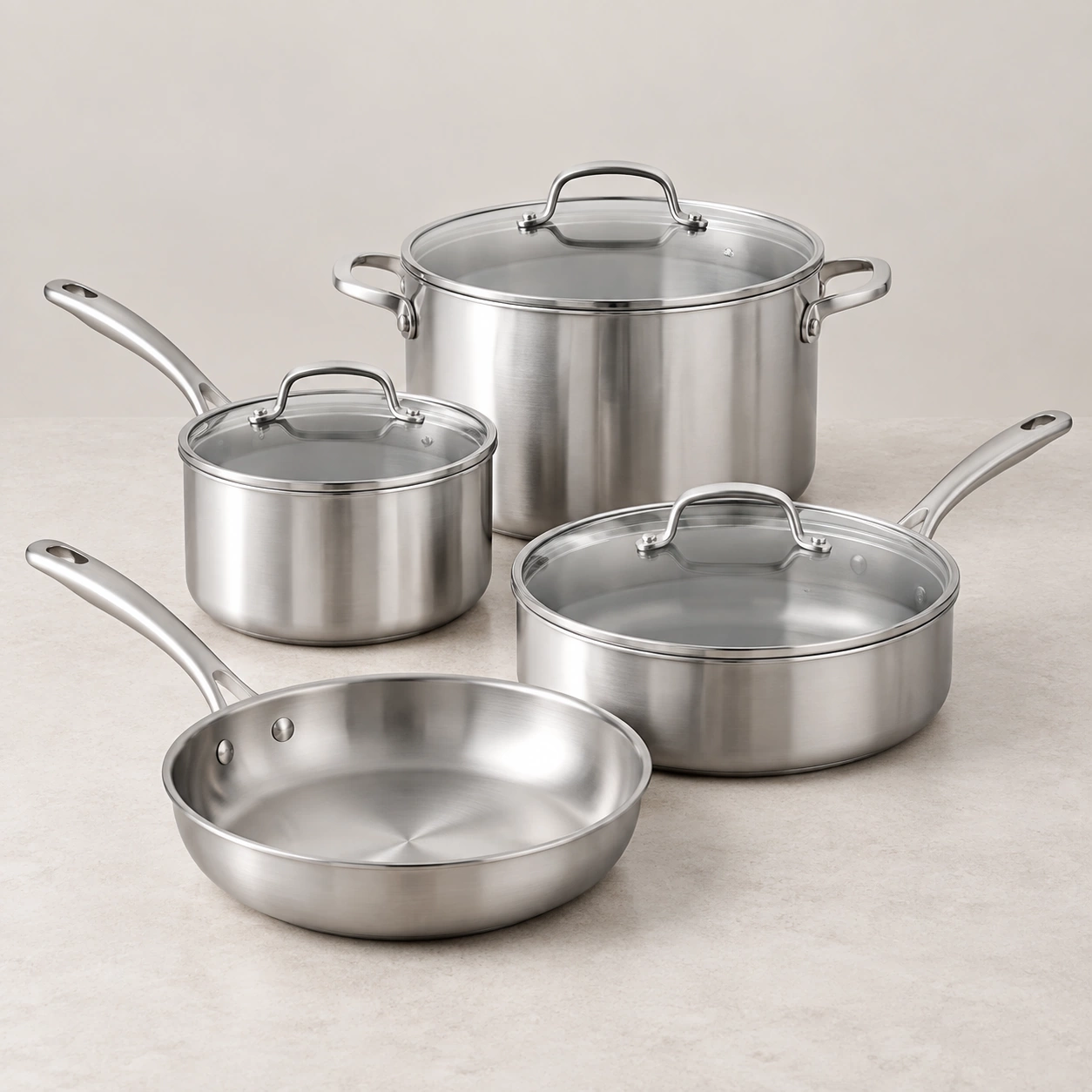
19. Cookware sets: appropriate only after you can control construction, claims, and returns
Why it belongs on the list: Frying pans, saucepans, stockpots, and sets can produce a high-value private-label offer, but they combine materials, coatings, handles, lids, packaging, and performance claims. They are a more demanding first import than simple utensils.
Product ideas: stainless cookware starter set; carbon-steel wok; cast-iron skillet; defined non-stick pan line.
Sourcing decision: State construction, alloy/material, thickness, base, coating where present, handle/lid construction, induction/oven/dishwasher claim, dimensions, packaging, and carton requirements. Inspect flatness, handle attachment, finish/coating, lid fit, stability, function, packaging, and final-SKU supporting evidence. Main risks are high return cost, coatings and heat claims, deformation, defects hidden until use, and fragile lid transit.
Before you source it: Use a product-specific test plan before tooling or bulk approval; retain an approved production-standard sample; use independent inspection and obtain SKU-matched documentation for the intended market.
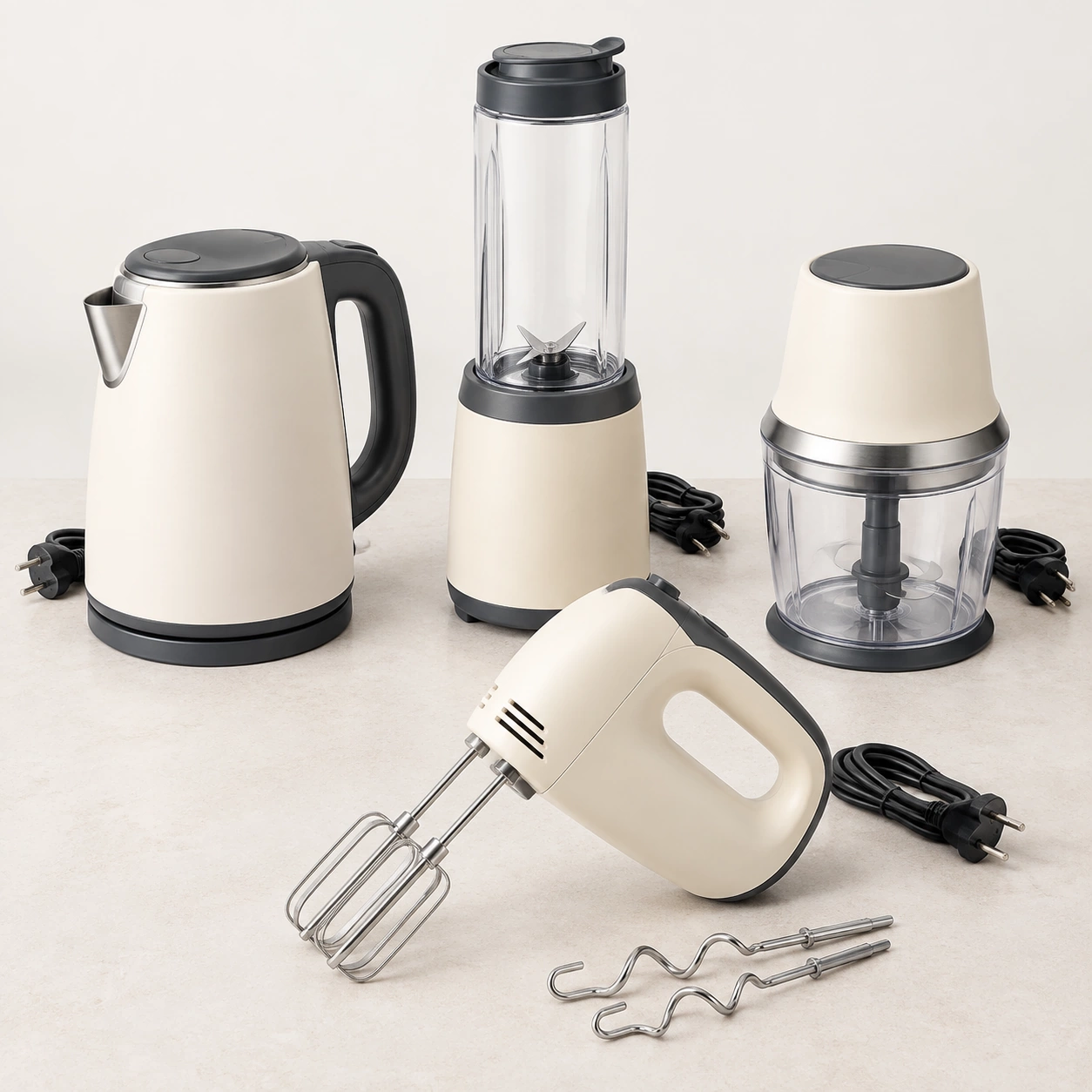
20. Small electric kitchen appliances: only for buyers prepared for market-specific electrical responsibility
Why it belongs on the list: Blenders, kettles, air fryers, mixers, rice cookers, and similar appliances can support strong product stories, but they add electrical, warranty, plug/voltage, spare-parts, and destination-market compliance complexity.
Product ideas: compact kettle; personal blender; hand mixer; electric food chopper.
Sourcing decision: Define voltage, plug, power, market, user instructions, materials, safety features, spare parts, warranty process, packaging, and applicable standards/evidence. Check function, overheating/safety mechanisms, plug and cord, markings, instruction language, production consistency, and final-market requirements. Main risks are regulatory nonconformity, injury, fire, warranty costs, and a product configured for the wrong voltage or plug.
Before you source it: Obtain specialist compliance advice for the exact destination and SKU before committing; validate the factory’s evidence against the production version; plan service, spare parts, and returns—not merely the factory quote.
Which kitchenware products should you wholesale from China first?
Choose a product route that fits your operating capacity.
| If you are… | Start with | Hold off on until you have stronger controls |
|---|---|---|
| Testing a new brand | One utensil, textile, organizer, measuring, or storage set with a clear written spec | Broad mixed-SKU collections and electrical appliances |
| Building a giftable collection | Coordinated silicone tools, towels/aprons, boards, coffee/tea accessories, or spice organizers | Bundles whose components come from many factories without a pack-out plan |
| Serving a repeat retail need | Stainless utensils, storage, dish-drying, prep tools, or lunch containers | Products with unverified “universal” fit or performance claims |
| Launching an established private label | A controlled cookware or bakeware range after samples and documented QC | Complex appliances without compliance, warranty, and service capacity |
Before selecting a factory, turn the product into a one-page RFQ: reference image; exact material and construction; dimensions/tolerance; color and finish; intended use; product claims; components; logo/artwork; packaging; carton marking; quantity tiers; destination; required evidence; and requested Incoterm. Send the same RFQ to every supplier so the quotes are comparable.
What quality, compliance, and inspection checks apply to kitchenware?
Start by identifying what the target market requires for the final SKU. In the European Union, the European Commission sets out the framework for food-contact materials, including Regulation (EC) No 1935/2004. Material-specific rules may also apply. These sources describe regulatory frameworks; they are not a universal finished-product certificate or legal advice.
Use the following checks as an order-control framework, then confirm the exact product and market requirements with the importer of record, qualified laboratory, or compliance adviser:
- Match evidence to the final SKU. Confirm model, material, components, color, coating, intended use, test method, laboratory, report date, and selling market.
- Approve a representative sample. Keep dated photos, dimensions, function results, packaging, artwork, and a version identifier; do not approve bulk production from a product photo alone.
- Write product-specific inspection points. Use the checks that matter: leaks and lids for containers; burrs and joins for metal tools; flatness and coating for pans; breaks/chips and carton protection for glass or ceramics; stitching for textiles; plug, voltage, and safety functions for appliances.
- Control claims. “Food grade,” “non-toxic,” “dishwasher-safe,” “oven-safe,” “heat resistant,” “induction compatible,” and similar claims need evidence tied to stated conditions and the final version.
- Check labels and pack-out. Confirm destination-market labeling, care/use instructions, warning language, barcode, country-of-origin marking where applicable, component count, carton marks, and shipping orientation.
For a new supplier, branded product, fragile product, or high-value order, build a written quality inspection service plan around the approved sample and measurable acceptance criteria.
FAQ
What kitchenware is easiest to wholesale from China for a first order?
There is no universally easiest product. A defined, non-electrical product with a clear material, use case, packaging plan, and inspection method is usually more controllable than a mixed collection or appliance. For example, a single utensil set, towel set, storage set, or organizer can be a more manageable test than a coated cookware line.
What is the MOQ for kitchenware from China?
MOQ varies by exact SKU, material, production process, color, packaging, logo, and customization. Ask every candidate supplier for quantity tiers using the identical written specification. Compare the unit price with tooling, packaging, inventory risk, inspection, freight, and the agreed Incoterm; the lowest MOQ alone is not a purchasing decision.
Do all kitchenware products need FDA, CE, or LFGB certification?
No. There is no universal certificate that applies to all kitchenware. Requirements depend on the final product, materials, intended food contact, claims, electrical status, and selling market. FDA-related food-contact questions, EU food-contact requirements, CE marking, and voluntary or market-specific tests should never be treated as interchangeable. Confirm the exact obligation before import.
How should I compare kitchenware supplier quotes?
Compare quotes only when the SKU, material, dimensions, components, packaging, quantity, destination, testing and inspection scope, and Incoterm match. Ask what each quote includes and excludes. Check tooling, logo work, unit boxes, export cartons, inland delivery, consolidation, inspection, freight, duties, and final delivery. The ICC Incoterms rules explain how responsibilities are allocated, but they do not replace a complete cost sheet. Use our Incoterms 2020 guide to compare the agreed term in a sourcing context.
Should I inspect kitchenware before shipment?
Independent pre-shipment inspection is particularly useful for a new supplier, branded product, fragile goods, food-contact items, or an order where a defect would materially affect customer safety or returns. Give the inspector the approved sample, written specification, packaging record, carton marks, and measurable acceptance criteria.
What sources and next steps should a buyer use?
This article is a curated planning list, not legal advice, a supplier directory, or a ranked sales dataset. Product-selection judgments are editorial. The regulatory sources below support only the framework statements made in this article; they do not verify an individual supplier or product. We did not use unverified supplier listings, claimed factory certifications, marketplace reviews, price ranges, sales volumes, or margin claims as evidence.
| Claim area | Primary source | Source type | Status |
|---|---|---|---|
| EU food-contact framework | European Commission, “Food Contact Materials” | EU regulator | Verified framework reference; material/product rules vary |
| EU framework regulation | EUR-Lex, “Regulation (EC) No 1935/2004” | Official legal text | Verified legal source; not a universal certificate |
| Incoterms responsibilities | International Chamber of Commerce, “Incoterms rules” | Rules publisher | Verified general reference; agreed term must be stated in the contract |
Need help turning a product idea into comparable factory quotes, samples, QC criteria, and a shipping plan? Contact Greentime for a kitchenware sourcing quote. If you publish this page, invite corrections with the evidence and date for the specific claim.

Gong Zheng is a blog editor for Greentime, focusing on global sourcing, wholesale market trends, and practical advice for international buyers. Drawing on extensive experience in digital marketing and cross-border trade, he shares expert insights to help small and medium-sized enterprises source products more efficiently and avoid common pitfalls. Passionate about connecting buyers with reliable suppliers, he writes in a clear, approachable style that makes complex topics easy to understand.