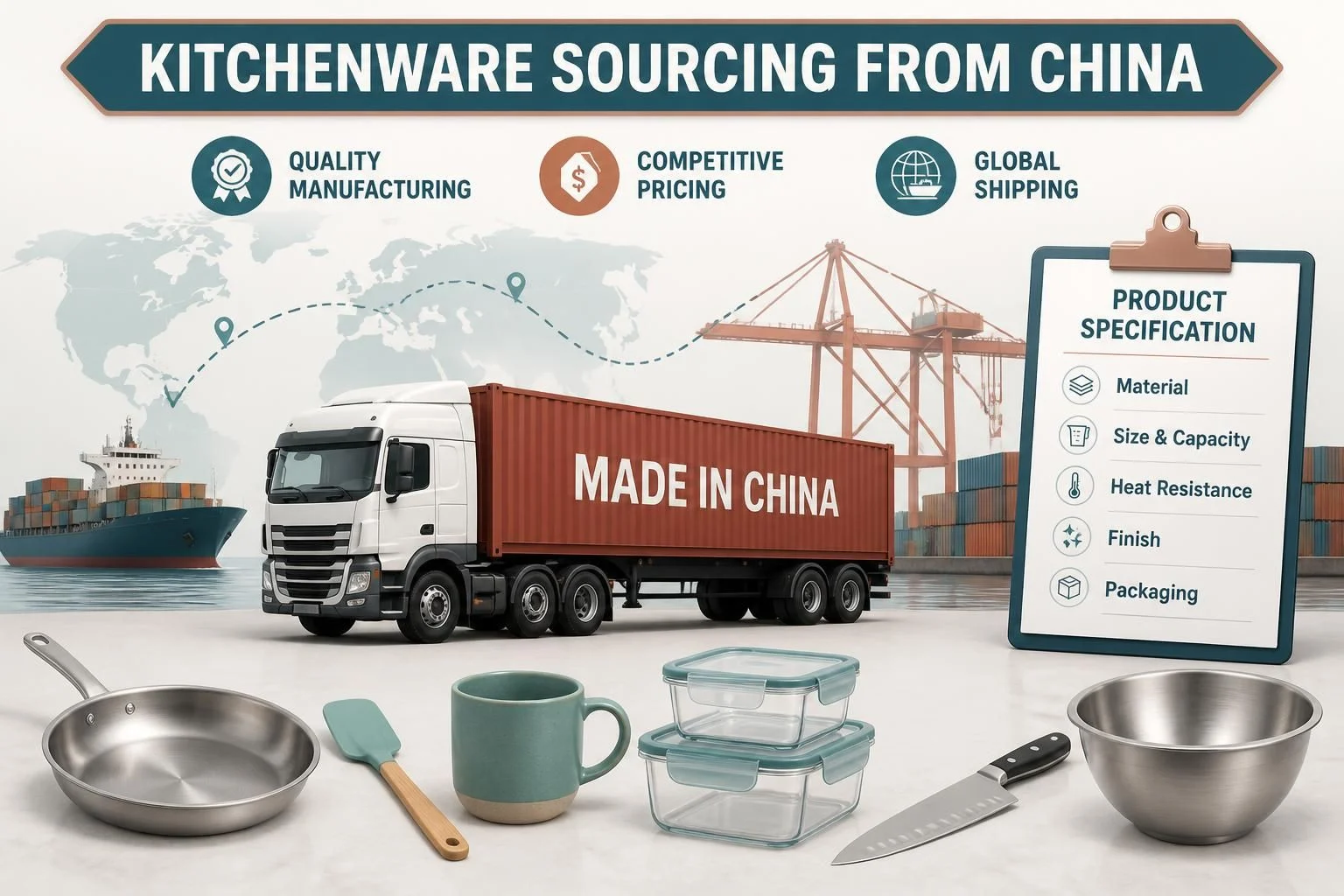
When you source products from China, quality is never something you leave to chance. Even with a reliable supplier, issues like inconsistent materials, wrong specifications, or packaging errors can still happen.
That’s why quality inspection in China is a critical step in the sourcing process. It helps you verify product quality before goods leave the factory and reduce the risk of costly defects, delays, or customer complaints.
In this guide, you’ll learn the main types of inspections used in China, how AQL standards work, what inspectors actually check, common quality problems, inspection costs, and how to choose the right inspection company. Whether you’re an Amazon seller, importer, or wholesale buyer, this will help you make safer sourcing decisions.
1. What Is Quality Inspection in China?
Quality inspection in China is the process of checking products during or after production to make sure they meet your quality standards before shipment. It helps you reduce defective products, avoid supplier mistakes, and lower the risk of costly import problems.
For B2B buyers, quality inspection is one of the most important parts of sourcing from China. Even if a factory provides samples that look good, mass production quality can still vary. A proper QC inspection helps you catch issues before goods leave the factory.
Most inspections happen at one of these stages:
- Before production starts
- During production
- After production but before shipment
- During container loading
Many importers also work with third-party inspection companies in China. These companies send inspectors to the factory to check product quality, packaging, labeling, quantity, workmanship, and product functionality based on your requirements.
For example, if you order 10,000 kitchen products, an inspector may randomly select samples using the AQL standard and check:
- Product dimensions
- Color consistency
- Logo printing
- Packaging quality
- Carton drop resistance
- Function tests
- Barcode accuracy
Without quality inspection, you may only discover problems after the products arrive in your country — when replacement costs, shipping delays, and customer complaints become much more expensive.
In simple terms, China quality inspection helps you make sure you get the products you paid for before they leave the factory.
2.Main Types of Inspection in China
Different types of inspections are used at different stages of production. Choosing the right inspection method helps you catch problems early, reduce supplier risk, and avoid expensive shipment issues.
Here are the main types of product inspection services used by importers in China.
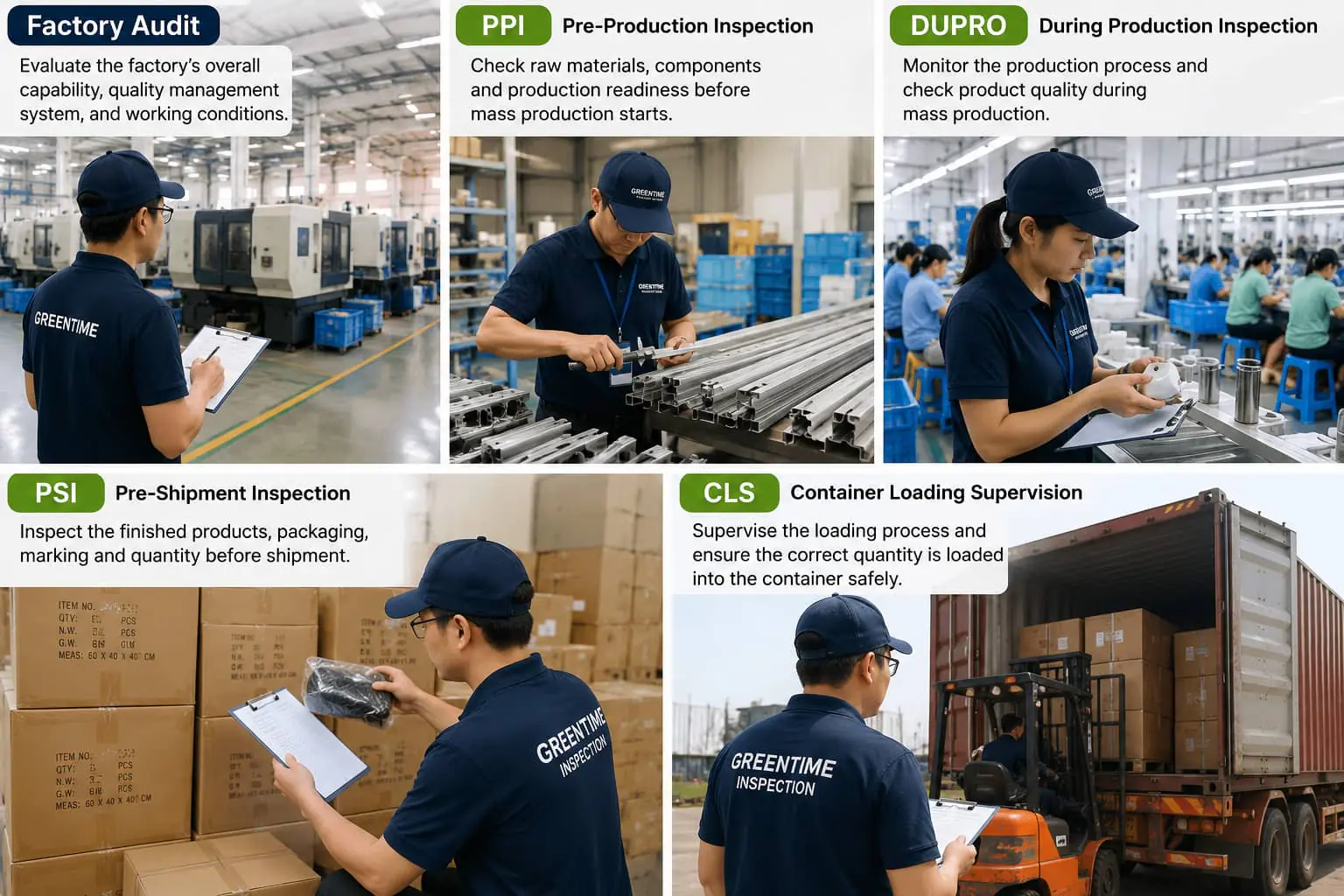
| Inspection Type | Best For | Inspection Stage | Main Benefit |
| Factory Audit | New suppliers | Before order | Verify supplier legitimacy |
| PPI | Custom products | Before production | Prevent material mistakes |
| DUPRO | Large orders | Mid-production | Detect recurring defects early |
| PSI | Most importers | Before shipment | Final quality verification |
| CLS | Full container shipments | During loading | Prevent loading and shipping issues |
2.1 Factory Audit
A factory audit is an on-site evaluation used to verify whether a Chinese supplier is legitimate and capable of handling your order.A factory audit helps you verify whether a supplier is legitimate and capable before you place a large order.
This is especially useful if:
- You found the supplier online
- It is your first order
- The order value is high
- You need private label production
- You want long-term cooperation
During a factory audit, inspectors usually check:
- Business licenses and company registration
- Factory size and production capacity
- Production equipment and machinery
- Worker conditions and workforce size
- Quality control procedures
- Export experience
- Certifications and compliance documents
A factory audit can also reveal whether the supplier is a real manufacturer or just a trading company.
For example, some suppliers claim they own factories but actually outsource production to smaller workshops with limited QC systems.
If you are asking, “How do I verify a Chinese factory?” a factory audit is one of the safest ways to reduce supplier risk before production starts.
2.2 Pre-Production Inspection (PPI)
A pre-production inspection happens before mass production begins.
The goal is to confirm that the factory understands your requirements and has the correct materials, components, and packaging ready before manufacturing starts.
Inspectors typically check:
- Raw materials
- Product components
- Packaging materials
- Color standards
- Product specifications
- Logo artwork
- Product dimensions
PPI inspections help you catch mistakes early before they affect the entire production batch.
For example, if the wrong plastic material or packaging design is used at the beginning of production, correcting it later may delay shipment and increase costs.
Pre-production inspection is especially useful for:
- Custom products
- Private label orders
- Products with strict color requirements
- Large production runs
2.3 During Production Inspection (DUPRO)
A during production inspection, also called DUPRO inspection, takes place when around 20% to 50% of production is completed.
This inspection helps identify recurring defects before the factory finishes the entire order.
Inspectors usually check:
- Product workmanship
- Production consistency
- Product functionality
- Packaging quality
- Semi-finished goods
- Production progress
If problems are found early, the factory still has time to correct them before completing the full order.
For example, inspectors may discover:
- Loose product assembly
- Incorrect logo printing
- Weak stitching
- Color inconsistency
- Missing accessories
Without a DUPRO inspection, factories may continue producing defective products across the entire batch.
This type of inspection is useful for:
- Large orders
- Time-sensitive production
- Products with multiple assembly steps
- Buyers working with new suppliers
If you are searching for “What is DUPRO inspection?” the short answer is simple: it is a mid-production quality check used to detect problems before mass production is finished.
2.4 Pre-Shipment Inspection (PSI)
Pre-shipment inspection is the most common type of product inspection in China.
It usually takes place when 80% to 100% of the goods are completed and packed for shipment.
The purpose is to verify that the final products meet your quality requirements before payment and shipping.
During a PSI inspection, inspectors typically check:
- Product quantity
- Product appearance
- Workmanship quality
- Product functionality
- Packaging condition
- Carton quality
- Shipping marks
- Barcode labels
- Product dimensions
- Accessories and manuals
Most pre-shipment inspections use AQL random sampling standards.
Instead of checking every product, inspectors randomly select samples from different cartons and inspect them based on accepted defect limits.
Defects are usually grouped into three categories:
- Critical defects
- Major defects
- Minor defects
If the number of defects exceeds the AQL limit, the inspection may fail.
A typical PSI inspection checklist includes:
- Quantity verification
- Visual inspection
- Function testing
- Barcode scanning
- Carton drop testing
- Packaging inspection
- Label verification
- Measurement checks
Pre-shipment inspection helps you avoid:
- Defective products
- Wrong product models
- Packaging errors
- Missing accessories
- Failed barcode labels
- Shipment disputes
If you only choose one inspection service in China, PSI is usually the most important.
2.5 Container Loading Supervision (CLS)
Container loading supervision takes place when goods are loaded into the shipping container.
The goal is to make sure the correct products and quantities are loaded safely before shipment.
Inspectors usually check:
- Container condition
- Carton quantity
- Product loading method
- Carton handling
- Container sealing
- Moisture or water damage risks
This inspection helps reduce shipping damage, missing cartons, and loading mistakes.
Common problems found during container loading include:
- Wet or damaged containers
- Incorrect carton counts
- Mixed products
- Damaged outer cartons
- Poor stacking methods
- Unsafe loading practices
For example, if heavy cartons are stacked incorrectly, products may arrive damaged even if production quality was acceptable.
Container loading supervision is especially useful for:
- Full container load (FCL) shipments
- Fragile products
- Large wholesale orders
- Mixed product shipments
- High-value cargo
A final loading check gives you extra protection before the goods leave the factory.
3.Understanding AQL Standards
If you work with product inspections in China, you will almost always hear the term AQL.
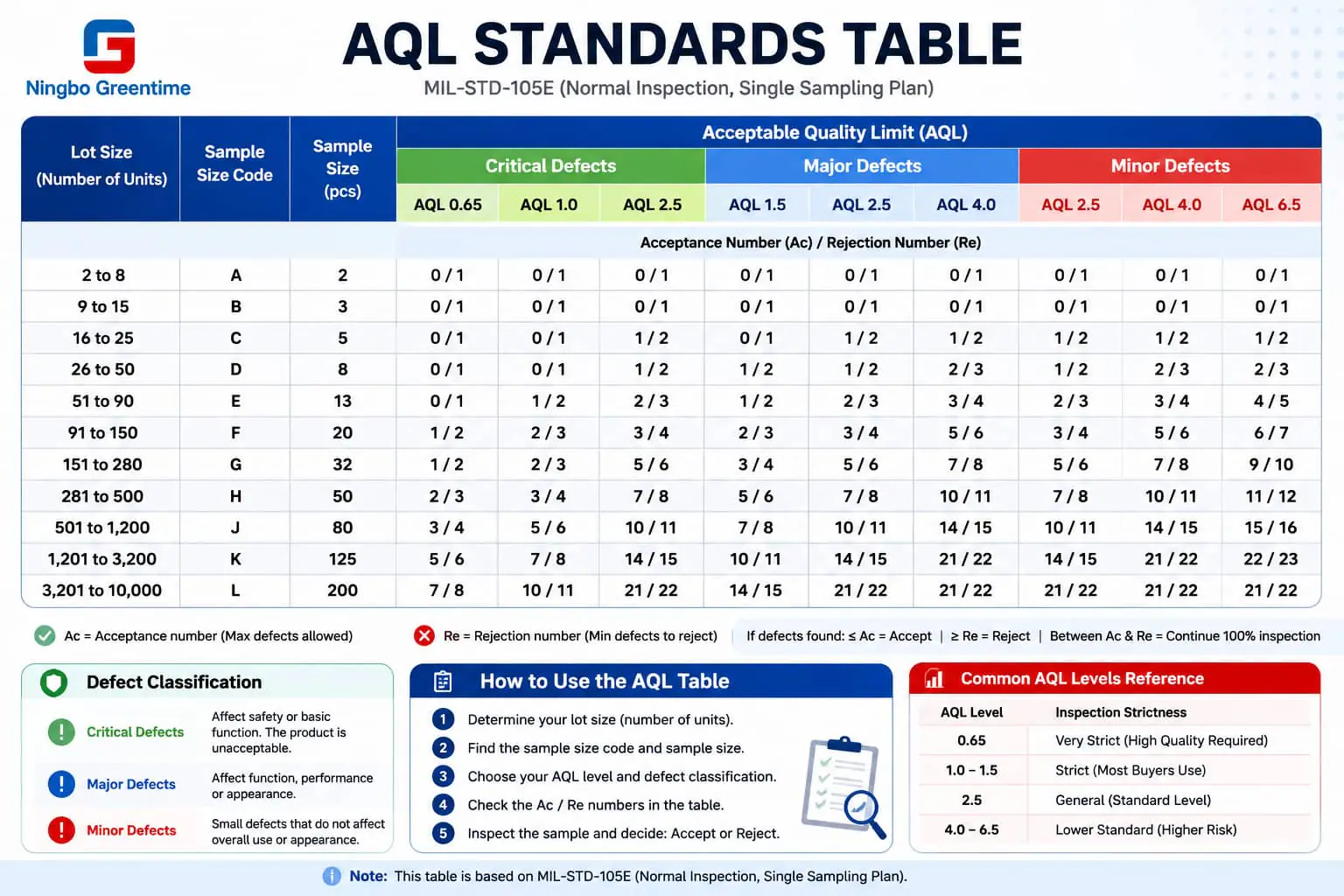
AQL stands for Acceptable Quality Limit. It is a sampling method used during product inspections to determine how many defective units are acceptable in a production batch.
Instead of checking every single product, inspectors randomly select samples from the shipment and inspect them based on international AQL standards.
This method helps buyers balance inspection cost, inspection speed, and acceptable product quality.
How AQL Inspection Works
Here is a simple example.
If you order 10,000 units, the inspector does not inspect all 10,000 pieces one by one. Instead, they select a sample size based on standard AQL sampling tables.
The inspector then checks those samples for defects.
If the number of defects stays within the allowed limit, the shipment passes inspection. If the defect count exceeds the limit, the shipment fails.
This system is widely used in:
- Pre-shipment inspections
- During production inspections
- Amazon FBA quality checks
- Consumer goods inspections
- Retail product sourcing
Types of Product Defects
During an AQL inspection, defects are usually divided into three categories.
| Defect Type | Meaning | Example |
| Critical Defect | Unsafe or dangerous problem | Sharp edge, exposed wiring, safety risk |
| Major Defect | Product may not work properly or may cause customer complaints | Broken function, wrong logo, damaged product |
| Minor Defect | Small issue that does not affect normal use | Small scratch, light color variation |
Critical defects normally have a zero-tolerance standard. Even one critical defect may cause the inspection to fail.
Common AQL Levels
Most importers use these standard AQL levels:
| Defect Type | Common AQL Level |
| Critical Defects | 0 |
| Major Defects | 2.5 |
| Minor Defects | 4.0 |
In practical terms, this means major defects are controlled more strictly than minor cosmetic issues.
For example:
- A broken kitchen tool would usually count as a major defect
- Slight packaging wrinkles may count as a minor defect
- A product with an electrical safety issue may count as a critical defect
Simple AQL Sampling Example
Here is a simplified example of how sampling works.
| Order Quantity | Sample Size | Max Major Defects Allowed (AQL 2.5) |
| 500 units | 50 samples | 3 major defects |
| 1,200 units | 80 samples | 5 major defects |
| 3,200 units | 125 samples | 7 major defects |
The larger the order quantity, the larger the inspection sample size.
How Inspection Pass or Fail Decisions Are Made
Inspectors compare the number of defects found against the allowed AQL limit.
Example:
- 125 products inspected
- 5 major defects found
- Allowed major defect limit = 7
Result: Inspection passes.
But if the inspector finds 8 major defects instead of 7, the inspection fails.
When a shipment fails inspection, buyers usually ask the factory to:
- Rework defective products
- Replace damaged units
- Improve packaging
- Re-inspect the goods before shipment
Why AQL Matters for Importers
AQL inspection standards help you make quality decisions using a clear and widely accepted system.
Without AQL standards, quality inspections become subjective. One buyer may think a shipment is acceptable, while another may reject the same products.
Using AQL gives both buyers and suppliers a shared quality standard before production and shipment.
For most importers sourcing from China, AQL inspection is one of the most practical ways to reduce risk without inspecting every single product.
4.What Inspectors Actually Check
Many first-time importers think product inspection is just checking whether the product “looks good.”
In reality, inspectors follow detailed QC checklists to verify product quality, functionality, packaging, quantity, and compliance before shipment.
The exact inspection process depends on the product category, but most inspections in China include the following checks.
4.1 Product Appearance Inspection
This is the most basic part of quality control, but also one of the most important.
Inspectors visually check products for cosmetic defects and workmanship issues that customers may notice immediately after opening the package.
Common appearance checks include:
- Scratches and surface damage
- Dirt, stains, or glue marks
- Cracks or dents
- Poor finishing
- Uneven gaps
- Sharp edges
- Incorrect colors
- Logo printing issues
- Misaligned parts
For example, with private label products, inspectors often find:
- Wrong logo placement
- Crooked printing
- Inconsistent colors between production batches
- Cheap-looking finishing compared to approved samples
These issues may seem small inside the factory, but they can easily trigger customer complaints or bad reviews.
4.2 Function Testing
A product that looks fine may still fail during actual use.
That is why inspectors perform basic function tests on sampled units during inspection.
Depending on the product, this may include:
- Power-on testing
- Switch and button testing
- Battery operation checks
- Charging tests
- Waterproof tests
- Stability tests
- Assembly checks
- Drop tests
- Load-bearing tests
For electronics, inspectors often test:
- USB ports
- LED lights
- Bluetooth connection
- Charging performance
- Battery safety
For household products, inspectors may check:
- Lid fitting
- Moving parts
- Handle strength
- Leakage problems
It is common for factories to send good-looking products that still have unstable functions or weak assembly quality.
4.3 Packaging Inspection
Packaging problems are one of the biggest causes of shipping damage and Amazon warehouse rejection.
Inspectors check both retail packaging and export cartons to make sure products can survive international shipping.
Typical packaging checks include:
- Carton strength
- Drop resistance
- Barcode label accuracy
- Shipping marks
- Polybag warning labels
- Instruction manuals
- Inner packaging protection
- FNSKU labels for Amazon FBA
- Carton dimensions and weight
One common issue in China sourcing is mixed carton labeling.
For example:
- Wrong carton numbers
- Missing shipping marks
- Incorrect SKU labels
- Unscannable barcodes
These problems can create major delays once goods arrive at Amazon warehouses or fulfillment centers.
4.4 Quantity Verification
Factories occasionally ship incorrect quantities — especially during large production runs.
Inspectors verify:
- Total carton count
- Product quantities per carton
- SKU breakdown
- Assorted color ratios
- Packaging quantities
This is particularly important for:
- Multi-SKU shipments
- Promotional bundles
- Seasonal orders
- Retail packaging sets
For example, a supplier may accidentally pack:
- 48 pieces instead of 50
- Wrong color combinations
- Missing accessories inside cartons
Without inspection, these mistakes are often discovered only after inventory reaches your warehouse.
4.5 Safety and Compliance Checks
For regulated products, inspectors also verify safety and compliance requirements.
This may include checking:
- CE labels
- FCC markings
- CPSIA requirements
- Food-grade materials
- Warning labels
- Suffocation warnings
- Packaging compliance
- Product certifications
Inspectors may also confirm whether testing reports match the actual production batch.
This is important because some factories provide old certificates that do not apply to the current product version.
For children’s products, electronics, and kitchenware, compliance problems can create customs delays, marketplace suspension, or legal risk.
4.6 Random Sampling Across the Shipment
A professional inspection is not based on checking only the top cartons.
Inspectors use AQL sampling methods to select products randomly from different cartons throughout the shipment.
This helps uncover:
- Batch inconsistency
- Hidden defects
- Packaging variation
- Production quality differences between cartons
In many factories, the products packed on top are often the best-quality units, while defects may appear deeper in the shipment.
Random inspection helps buyers get a more realistic picture of actual production quality.
At the end of the inspection, the buyer normally receives a detailed QC report with:
- Product photos
- Defect photos
- Pass/fail results
- Carton information
- Quantity verification
- Inspector comments
- Recommended corrective actions
A good inspection report does not just say whether products passed or failed. It helps buyers understand the real production quality before shipment.
5. Common Quality Problems Found in China Inspections
When you’ve done thousands of inspections, you start to see patterns.
Most factory issues in China are not “rare defects.” They are repeat problems that show up again and again — especially when buyers don’t set clear QC standards or skip pre-shipment inspection.
Below are the issues we see most often in real factory inspections.
Common Defects in Real Orders
①Wrong materials used
This is one of the most common issues in bulk production.
Factories sometimes switch materials without telling you:
- ABS replaced with lower-grade recycled plastic
- Stainless steel downgraded to 201 instead of 304
- Fabric thickness reduced to cut cost
It usually happens when raw material prices rise or supplier pressure increases.
②Poor stitching / assembly problems
Very common in textiles, bags, and soft goods.
Typical issues include:
- Uneven stitching lines
- Loose threads not trimmed
- Misaligned parts
- Weak seam strength under tension
These don’t always show up in photos — they show up in use.
③Broken or non-functional products
We often see this in electronics, toys, and kitchen gadgets.
Examples:
- Switches not working
- Batteries not connected properly
- Moving parts stuck or jammed
- Items damaged during assembly, not shipping
This is why function testing matters more than visual inspection alone.
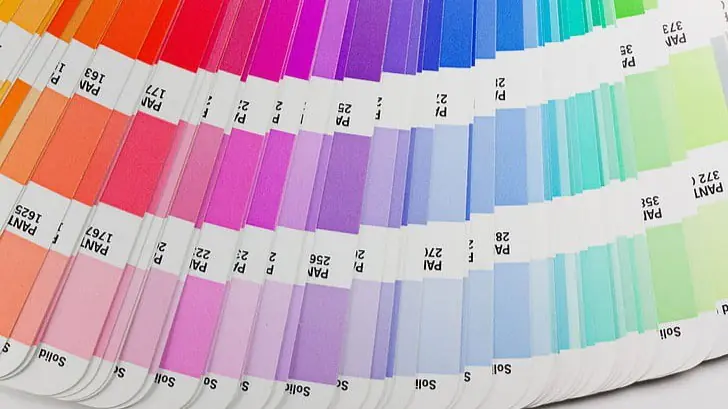
④Color inconsistency (very common in mass production)
Color variation is one of the most frequent complaints from buyers.
You’ll see:
- Different shades between batches
- Color mismatch vs approved sample
- Inconsistent coating finish across cartons
This usually comes from poor batch control or multiple production lines.
⑤Sharp edges or safety risks
Especially in metal, plastic, and toys.
Typical problems:
- Burrs not polished
- Sharp cut edges on stamped parts
- Loose components that can detach
This is not just a quality issue — it’s a compliance risk.
⑥Missing manuals or accessories
Small issue, big impact on customer experience.
Common cases:
- No instruction manual in carton
- Missing screws or spare parts
- Power cables not included
- Labels not attached
Factories often assume “bulk buyers won’t notice.” They’re wrong.
⑦Incorrect logos or branding errors
Very common in OEM / private label orders.
You may find:
- Wrong logo placement
- Incorrect Pantone color
- Misprinted packaging artwork
- Spelling errors in brand name
Once printed in bulk, this becomes expensive to fix.
⑧Weak packaging
Packaging is often downgraded without notice.
We frequently see:
- Thin carton walls
- Weak tape sealing
- No drop test protection
- Missing polybag warnings (Amazon compliance issue)
Packaging problems usually show up only during shipping damage claims.
Industry-Specific Examples
Toys Category ——High-risk inspection area
We often find:
- Small parts that fail safety standards
- Choking hazard warnings missing
- Loose magnets or detachable pieces
- Age labeling errors
Even one issue can block Amazon or customs clearance.
Kitchenware Typical problems:
- Rust spots on stainless steel
- Poor coating adhesion (peeling after use)
- Sharp edges on cutlery or lids
- Leakage in sealed containers
These defects usually appear after basic function testing.
6. How Much Does Inspection in China Cost?
Inspection cost in China is simple on the surface — but the real pricing depends on time, complexity, and risk level.
Most buyers only look at the daily rate. Experienced importers look at what that day actually covers.
Typical Inspection Cost Range
In most factories across China, standard QC inspection costs:
- $150 – $400 per day (per inspector)
This is the most common pricing structure for third-party inspection services.
But this number alone is misleading if you don’t understand what affects it.
What Actually Affects Inspection Cost:
①Product complexity
Simple products cost less to inspect.
- Simple items (plastics, textiles): lower cost
- Technical products (electronics, machinery): higher cost
More testing = more time per unit.
②Factory location
China is not a single-cost region.
- Yiwu / Ningbo: usually lower travel cost
- Shenzhen / Guangzhou: higher logistics cost
- Remote factories: extra transport + accommodation
Location often adds hidden cost buyers ignore.
③Inspection type
Different inspections mean different workloads:
- Pre-Production Inspection (PPI): checks raw materials
- During Production Inspection (DPI): checks mass production early
- Pre-Shipment Inspection (PSI): full finished product check
- Loading inspection: container loading supervision
PSI is most common — and usually priced at full day rate.
④Number of SKUs
More SKUs = more inspection time.
- 1 SKU: fast inspection
- 5–10 SKUs: requires sampling plan
- 20+ SKUs: may require multiple man-days
Each SKU adds sampling and verification work.
⑤Man-days required
This is the real cost driver.
Inspection time depends on:
- Units per order
- Defect rate risk
- Testing requirements
- Packaging verification level
A large order may require 2–3 inspectors or multiple days.
Sample Pricing Table (Real Market Reference)
| Order Type | Product Type | Typical Cost |
| Small order (1 SKU, 300–800 pcs) | Simple consumer goods | $150–$200/day |
| Medium order (1–3 SKUs, 1,000–5,000 pcs) | Standard products | $180–$300/day |
| Large order (5+ SKUs, mixed batch) | Mixed categories | $250–$350/day |
| Complex order (electronics, compliance testing) | High-risk products | $300–$400/day |
7. How to Choose a Reliable Inspection Company in China
A good inspection company saves you from the most expensive problem in sourcing — discovering defects after shipment. In practice, most import losses don’t come from factories. They come from weak or inconsistent QC.
Here’s how experienced buyers actually evaluate a QC partner in China.
a. Check real inspection experience (not just company age)
Experience matters, but only if it is relevant to your product type.
A strong inspection company should be able to show:
- Product categories they inspect regularly (toys, electronics, textiles, etc.)
- Real inspection cases, not stock photos
- Familiarity with your target market standards (EU, US, Amazon FBA)
If they cannot show category-specific experience, you are taking a risk — even if they’ve been around for years.
b. Verify inspection coverage across China
China sourcing is not centralized. Your suppliers may be in:
- Yiwu
- Shenzhen
- Ningbo
- Guangzhou
- Foshan
A reliable QC company should have inspectors or partners in multiple regions, not just one city.
Red flag: “We can arrange inspection anywhere” but no clear local presence or team structure.
c. Ask for full sample inspection reports
This is one of the fastest filters.
A real report should include:
- Actual product photos (not catalog images)
- Defect classification (critical / major / minor)
- Quantity check results
- AQL sampling standard used
- Packaging & label verification
- Clear pass/fail judgment
If the report looks generic or copy-pasted, the inspection process usually is too.
d. Confirm response time and booking speed
Good inspection companies operate like logistics — speed matters.
Standard expectations:
- Booking confirmation: within 24 hours
- Inspection scheduling: 2–5 days in most cities
- Report delivery: same day or within 24 hours after inspection
If everything takes “a few days to confirm,” it usually means weak local coordination.
e. Check certifications (ISO 9001 is baseline, not a guarantee)
ISO 9001 shows process control, but it does not guarantee inspection quality.
More important than certificates:
- Inspector training system
- Internal audit process
- Report standardization
- Client feedback loop
Certifications are support signals — not decision criteria.
f. Review communication quality (this reveals everything)
Pay attention to how they communicate before you place an order.
Strong QC teams:
- Ask clarifying questions about your product specs
- Confirm AQL level and inspection scope
- Respond clearly within hours, not days
- Weak providers:
- Give vague answers
- Avoid technical detail
- Overpromise without structure
In QC work, communication quality often reflects inspection quality.
g. Avoid ultra-cheap inspection pricing
Inspection is labor-based. If pricing is far below market, something is missing:
- Time spent per inspection is reduced
- Sampling becomes shallow
- Photos and reporting are rushed
- Some checks are skipped entirely
A low price usually means low coverage — not efficiency.
8.FAQ – Quality Inspection in China
Q1.What is the best inspection method in China?
The best inspection method in China is a pre-shipment inspection (PSI) combined with AQL quality control standards. It is widely used in China sourcing to ensure product quality, reduce manufacturing defects, and verify compliance before international shipping.
Q2.How long does a China inspection take?
A standard China quality inspection usually takes 1 working day, depending on product type and order size. Larger or multi-SKU orders may require 2–3 days for full inspection coverage.
Q3.Can I inspect goods before shipping?
Yes, buyers can conduct a pre-shipment inspection in China before goods leave the factory. This process checks product quality, packaging, labeling, and quantity to reduce import risks and ensure shipment accuracy.
Q4.What is AQL in quality control?
AQL (Acceptable Quality Limit) is an international inspection standard used in China quality control inspections. It defines the maximum number of acceptable defects in a product batch during sampling inspection.
Q5.How much does pre-shipment inspection cost?
The cost of pre-shipment inspection in China varies based on product category, factory location, and order volume. However, it is generally a low-cost risk control service compared to losses caused by defective shipments or product returns.
Q6.Should Amazon sellers use inspection services?
Yes, Amazon FBA sellers should use third-party inspection services in China to reduce product defects, avoid negative reviews, and ensure compliance with Amazon packaging and labeling requirements.
Q7.Can inspectors visit Alibaba suppliers?
Yes, professional China inspection companies can visit both verified and unverified Alibaba suppliers to perform factory audits, product inspections, and quality control checks before shipment.
Q8.What happens if inspection fails?
If a China quality inspection fails, buyers can request product rework, negotiate price reductions, or reject the shipment. The decision depends on defect severity and contract terms with the supplier.
Q9.How quickly can inspections be arranged?
In major manufacturing hubs such as Guangzhou, Shenzhen, and Yiwu, inspection services can usually be arranged within 24–48 hours, making it suitable for fast-moving supply chains.
Conclusion
Quality inspection is not just a final checkpoint—it’s a control system that protects your entire sourcing process in China. From factory audits to container loading supervision, each inspection stage helps you reduce risk and confirm that production matches your requirements.
Most import issues don’t start at shipping—they start at production. A proper inspection process gives you visibility before problems become expensive.
If you are sourcing from China regularly, building a clear inspection strategy is one of the most effective ways to protect your margins and avoid unnecessary returns, delays, and disputes.
Next step: choose the right inspection type based on your order stage, and make sure your QC process is aligned with your product risk level before your next shipment.

Tennie Chen is responsible for sourcing and supplier evaluation, with a focus on balancing product quality, cost efficiency, and supply chain reliability. My role involves identifying trustworthy manufacturers, comparing quotations, analyzing total landed costs, and ensuring compliance with international standards. I always prioritize long-term partnerships over one-time deals, aiming to work with suppliers who can provide consistent quality, competitive pricing, and flexible solutions. When making purchasing decisions, I evaluate not only the product itself but also the supplier’s production capacity, lead time, and after-sales support, ensuring that every cooperation contributes to sustainable business growth.