Key Takeaways
- The global licensed sports merchandise market is worth roughly $42 billion in 2026, growing at 5.8% a year (Fortune Business Insights, 2026).
- FIFA projects the 2026 FIFA World Cup will reach a 6 billion-person global audience — the biggest in the tournament’s history.
- Contact China factories at least 6 months before your delivery date. Nine to twelve months is better for wholesale importers.
- Standard fan goods return 20–40% wholesale margins. Custom-branded items reach 45–60%.
- Yiwu, Ningbo, and Shantou are China’s main wholesale sourcing hubs for 2026 FIFA World Cup fan merchandise.
The 2026 FIFA World Cup runs across the United States, Canada, and Mexico — 48 teams, 104 matches, and a projected global audience of 6 billion people. That’s a lot of fans who need jerseys, flags, and something to wave at a watch party.
For wholesale importers and retail buyers, that demand is a real window. But it has a close date. China factories that supply major retailers book production capacity months in advance. This guide covers what you need to source the right 2026 FIFA World Cup merchandise, from verified China factories, at the right wholesale price — before factory capacity fills up.
When Should Wholesale Importers Start Sourcing 2026 FIFA World Cup Merchandise?
Start at least 6 months before your target delivery date. For wholesale importers aiming at peak 2026 FIFA World Cup demand — June and July 2026 — that means sourcing conversations needed to begin by late 2025. Capacity is tighter now, but it is still available.
In Greentime’s experience working with international importers and retail buyers, those who contact us 9–12 months before their delivery date get better unit pricing, more China factory options, and time for multiple sample rounds. Importers who come to Greentime in the 4–6 month window still get their orders completed — but they pay more and have fewer factory choices. That’s how wholesale production scheduling works.
Here’s what the 2026 FIFA World Cup sourcing timeline looks like in practice:
- 9–12 months out: Best wholesale pricing, widest China factory selection, time for 2–3 sample rounds
- 6–9 months out: Good options, slight premium on unit price
- 3–6 months out: Limited factory availability, rush production fees apply
- Under 3 months: Air freight becomes unavoidable for most shipments, cutting into wholesale margins
What to do right now: lock in your product list, set a delivery deadline, and contact a China sourcing agent or China factories directly. The 2026 FIFA World Cup is a once-every-four-years wholesale opportunity.
What Are the Best-Selling World Cup Products for Wholesalers?
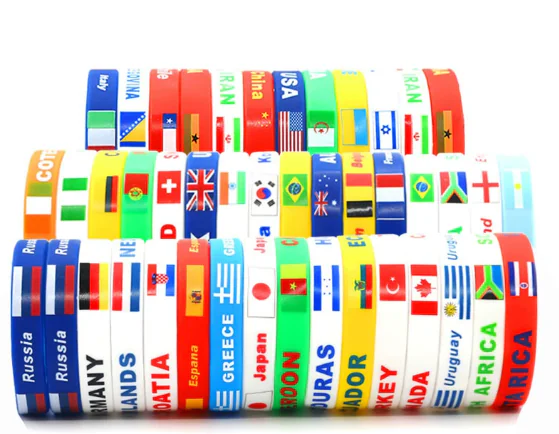
Flags, jerseys, and scarves move the most volume at every World Cup. They’re low-cost to produce, easy to ship, and every fan wants at least one. Beyond those staples, 2026 has a few category trends worth your attention.
| Product Type | Typical MOQ | Wholesale Margin | Lead Time |
|---|---|---|---|
| Flags & banners | 500–1,000 pcs | 20–30% | 15–25 days |
| Fan jerseys (standard) | 200–500 pcs | 25–35% | 20–35 days |
| Scarves & hats | 300–500 pcs | 25–40% | 15–25 days |
| Party supplies | 1,000+ pcs | 15–25% | 10–20 days |
| Custom-branded souvenirs | 100–300 pcs | 45–60% | 25–40 days |
| Eco-friendly fan accessories | 300–500 pcs | 30–50% | 20–30 days |
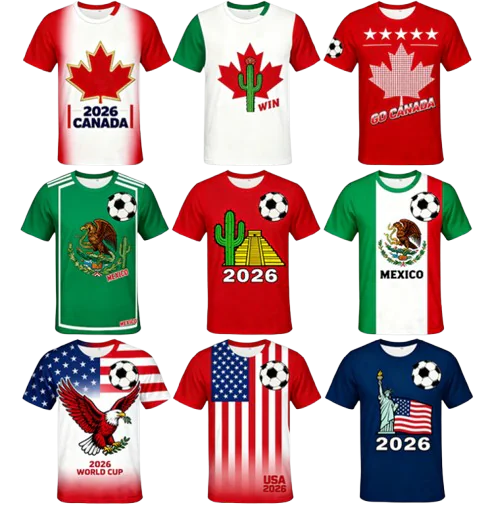
Two trends specific to 2026: first, multi-country supporter packs will sell better than at previous tournaments. With three host nations and 48 competing teams, buyers who stock cross-country fan assortments have an edge — no need to guess which team advances. Second, eco-friendly merchandise (bamboo accessories, recycled polyester flags, paper-based packaging) is seeing real demand from buyers in Europe and North America whose retail customers ask about it.
Yiwu, in Zhejiang Province, is the main sourcing hub for most of these products. The Yiwu International Trade Market has over 70,000 booths covering nearly every fan merchandise category. Prices are competitive and the factories have export experience.
How Do You Verify a World Cup Merchandise Supplier?
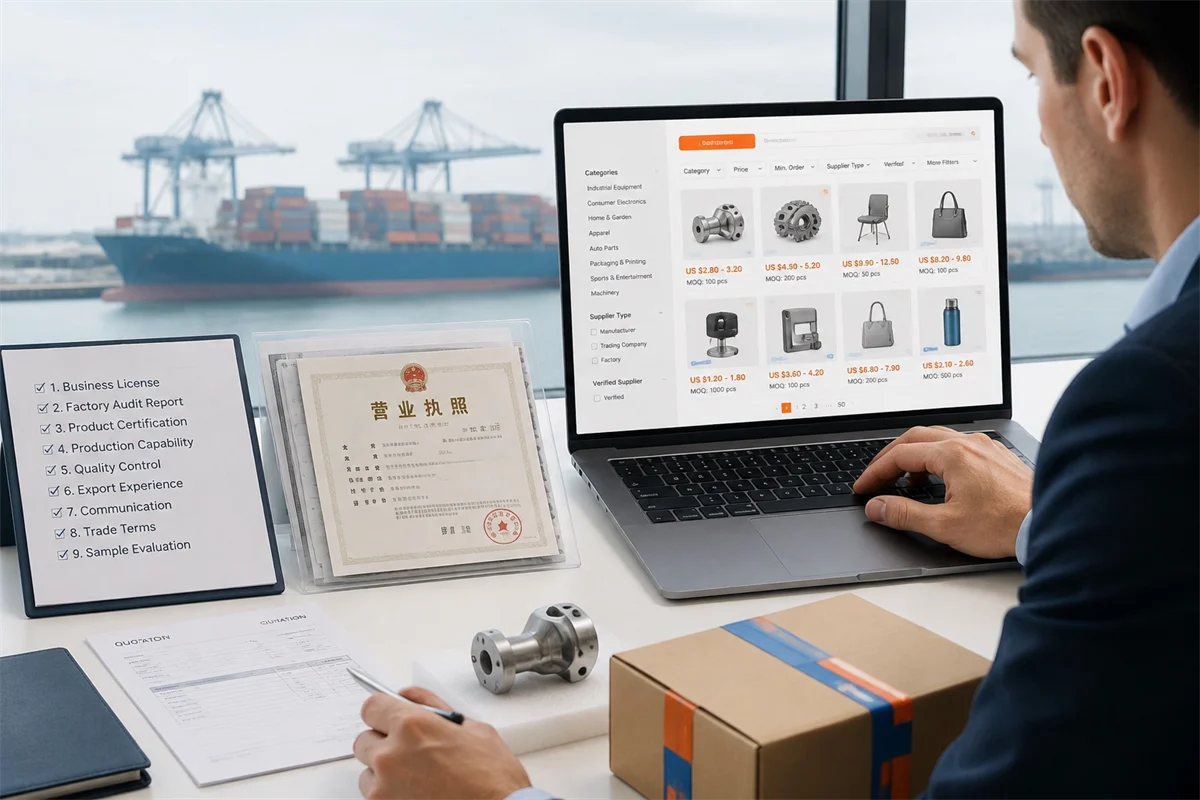
A reliable supplier will send you documentation without being asked twice. Here’s what to check before placing any bulk order.
- Export license — Ask for a copy and verify it. Every legitimate Chinese exporter has one.
- Product certifications — For goods sold in Europe, look for CE marking. For the US market, check CPSIA compliance on any items intended for children. ISO certification is a positive signal for quality systems.
- Third-party audit report — BSCI and SMETA are the most common. If a supplier can’t provide a recent audit, ask why.
- Factory video walkthrough — Ask for a current tour of the production floor. A legitimate factory sends one within 24–48 hours.
- Buyer references — Ask for contacts at two or three buyers in your market who have actually received orders. Call them.
- Sample order — Never skip samples. Order one of every SKU before committing to bulk. Check stitching, print quality, material weight, and labeling accuracy.
At Greentime, we audit every factory before we recommend them to a buyer. That means visiting the facility, checking compliance documents, and reviewing recent production runs. We work with a quality inspection network across Ningbo, Yiwu, and Shantou — so when we say a factory is ready, it’s because someone from our team has been there.
What Wholesale Profit Margins Can Importers Expect on 2026 FIFA World Cup Merchandise?
Standard 2026 FIFA World Cup fan goods — flags, scarves, and jerseys — typically yield 20–40% wholesale margins when imported from China factories and sold at retail or to distributors. Custom-branded items (your logo, your design) reach 45–60%, because no direct price comparison is available to your customers online.
Wholesale importers who mix standard fan goods with custom-branded items tend to achieve blended margins of 35–45%. The key variables: how early you placed your China factory order (earlier equals lower unit cost), your total volume (higher volume, lower unit cost), and how precisely your inventory matches actual retail demand.
The global licensed sports merchandise market is projected to reach approximately $42 billion in 2026, growing at a CAGR of 5.8% through 2036 (Fortune Business Insights, 2026). For wholesale importers sourcing ahead of the 2026 FIFA World Cup, retail demand is predictable — but the China factory sourcing window is fixed. Importers who lock in factory capacity 9–12 months ahead consistently get better unit pricing than those who source within 3–6 months of the event.
Three rules that protect your wholesale margin:
- Order from China factories early and in volume for the best unit price
- Add custom branding to standard products — it increases perceived value without much extra factory cost
- Don’t over-stock — 2026 FIFA World Cup demand peaks in the 6–8 weeks around the tournament and drops sharply after the final
How Do Wholesale Importers Handle Shipping for 2026 FIFA World Cup Merchandise?
Your shipping choice comes down to two factors: how much you’re importing, and when you need it. Sea freight is almost always the right choice for wholesale orders from China. Air freight is faster but costs 4–6x more per kilogram — and it kills wholesale margins on low-cost fan merchandise.
| Sea Freight | Air Freight | |
|---|---|---|
| Cost | Low — best for volume | 4–6x more per kg than sea |
| Transit time | 18–35 days (port to port) | 3–7 days |
| Best for | Large, non-urgent orders | Small or time-sensitive orders |
| Common Incoterms | FOB, CIF, CFR | DAP, DDP |
| Min. shipment | CBM-based (LCL available) | No minimum |
For most wholesale importers, the right plan is sea freight for your main stock order and a small air freight top-up placed close to the tournament if retail demand runs ahead of forecast. Plan for sea transit from China ports (Ningbo, Shanghai, Guangzhou) to North America: 18–28 days. To Europe: 25–35 days. Add 3–7 days for customs clearance on arrival.
On Incoterms: FOB means the wholesale importer takes responsibility once goods are loaded — you arrange your own freight forwarder. CIF means the China supplier handles shipping and insurance to your destination port. DDP covers everything including customs clearance and last-mile delivery. It’s the right choice for importers who don’t have an established import setup, though the price reflects the added service.
One detail that affects every wholesale import of fan merchandise: customs documentation. If you’re importing unlicensed fan goods (the majority of the wholesale market), make sure product descriptions on your commercial invoice do not claim official FIFA affiliation. Customs holds triggered by documentation errors take days to resolve. Review your commercial invoice with the China supplier before the shipment leaves, and use a freight forwarder who knows your destination country’s import requirements.
Frequently Asked Questions
When should wholesale importers start sourcing 2026 FIFA World Cup merchandise?
The ideal window for wholesale importers is 9–12 months before your target delivery date. For the 2026 FIFA World Cup (June–July 2026), that window has partially closed — but China factories in Yiwu, Ningbo, and Shantou are still accepting orders. Production capacity at top facilities is tightening, so the time to act is now.
Here’s what the wholesale sourcing timeline looks like. At 9–12 months out, you get the best factory pricing, the most China factory options, and time for multiple sample rounds. At 6–9 months, you can still negotiate well but with fewer choices. At 3–6 months, rush production fees apply. Under 3 months, air freight becomes unavoidable for most wholesale shipments, which cuts into margins.
If you’re sourcing now and the 2026 FIFA World Cup is under 6 months away, focus on 2026 FIFA World Cup products with short China factory lead times. Flags, scarves, and printed accessories typically take 15–25 days to produce — workable if you move quickly. Avoid complex custom items that need 40+ days of factory production unless you have a confirmed retail buyer already committed to the goods.
What are the best-selling 2026 FIFA World Cup products for wholesale importers?
Flags and scarves are the highest-volume items at every FIFA World Cup — low unit cost from China factories, fast production lead times, and strong retail demand from fans, bars, and event organizers. Fan jerseys are the highest-margin standard wholesale product. Party supplies move well for restaurants and event planners running 2026 FIFA World Cup watch parties.
For 2026 FIFA World Cup specifically, multi-country supporter packs are a stronger wholesale opportunity than at previous tournaments. With the US, Canada, and Mexico all hosting, retail importers serving North American markets can carry product for all three host countries without guessing which team advances deep into the tournament. Eco-friendly fan accessories — bamboo cups, recycled polyester scarves, paper packaging — are also seeing measurable demand from wholesale importers whose retail customers ask about sustainability.
A practical first wholesale import order for a buyer new to 2026 FIFA World Cup merchandise: a mix of country flags in high volume, scarves for two or three key teams, and a small run of custom-branded items for your best retail account to test the margin difference. That spread gives you fast-moving volume product alongside a higher-margin custom wholesale line.
How can wholesale importers verify a 2026 FIFA World Cup merchandise supplier in China?
Ask for three things before placing any wholesale import order: a recent China factory audit report (BSCI or SMETA is the standard), copies of relevant product certifications (CE marking for imports into Europe, CPSIA compliance for children’s products in the US), and references from wholesale importers in your market who have received completed orders from this factory.
A verified China supplier provides all three without hesitation. If a supplier pushes back on any of these requests, that is your answer.
Beyond documents, use video. Ask for a current China factory walkthrough — most verified factories will send one within 48 hours. If you want someone physically on the ground, hire a third-party inspection service to visit before you pay a deposit. A China factory visit typically costs $200–400 USD — a small number compared to what a failed wholesale import order costs.
One more check: search the China factory’s name on the National Enterprise Credit Information Publicity System (NECIPS). It’s free, publicly available, and shows whether the company is in good standing with Chinese authorities. Most wholesale importers skip this step. It takes five minutes and is worth doing.
What wholesale profit margins can importers expect on 2026 FIFA World Cup merchandise?
Standard 2026 FIFA World Cup fan goods — flags, scarves, hats, printed T-shirts — typically yield 20–40% wholesale margins when imported from China factories and sold at retail or to distributors. Custom-branded items, where you add your own logo or design, typically yield 45–60% because there’s no direct price comparison available to your customers online.
Your actual wholesale margin depends on four factors: how early you placed your China factory order (earlier equals lower unit cost), your total import volume (larger wholesale orders get better factory pricing), how well your inventory matches actual retail demand (over-stocking kills margins after the final whistle), and your target market’s price sensitivity.
One rule worth following: don’t over-order. 2026 FIFA World Cup retail demand peaks in the 6–8 weeks around the tournament and drops sharply after the final. Wholesale importers who order enough to cover peak demand plus a small buffer consistently do better than those who over-stock and spend the following quarter discounting leftover inventory below cost.
How do wholesale importers handle international shipping for 2026 FIFA World Cup merchandise?
Use sea freight for your main wholesale import order and air freight for any top-up shipment placed close to the tournament. Sea freight from major China ports (Ningbo, Shanghai, Guangzhou) to North America takes 18–28 days; to Europe, 25–35 days. Add 3–7 days for customs clearance on arrival and plan your delivery deadline accordingly.
On Incoterms for wholesale merchandise imports: FOB is the most common choice for experienced importers — you take responsibility from the vessel and handle your own freight forwarding. CIF includes shipping and insurance to your destination port and works well if you want the China supplier to manage the ocean leg. DDP covers everything including customs clearance and delivery to your door — the simplest option for importers without an established import setup, though the price reflects the added service.
One detail most wholesale importers overlook: customs documentation for 2026 FIFA World Cup fan merchandise. If you’re importing unlicensed fan goods (the majority of the wholesale market), make sure your commercial invoice describes the products accurately and does not claim any official FIFA affiliation. Customs holds triggered by documentation errors take days to resolve and can be expensive. Ask your China supplier to review the invoice before the shipment leaves, and use a freight forwarder who knows your destination country’s import requirements well.
Ready to Source for 2026? Greentime Can Help.
Greentime is a China-based sourcing agent with offices in Ningbo, Yiwu, and Shantou. We’ve been sourcing for international buyers for 20+ years — kitchenware, party supplies, fan merchandise, promotional products, and more. Tell us what you need: product type, quantity, delivery date. We’ll send you factory options and pricing within 24 hours.
Request a quote from Greentime →

Tennie Chen is responsible for sourcing and supplier evaluation, with a focus on balancing product quality, cost efficiency, and supply chain reliability. My role involves identifying trustworthy manufacturers, comparing quotations, analyzing total landed costs, and ensuring compliance with international standards. I always prioritize long-term partnerships over one-time deals, aiming to work with suppliers who can provide consistent quality, competitive pricing, and flexible solutions. When making purchasing decisions, I evaluate not only the product itself but also the supplier’s production capacity, lead time, and after-sales support, ensuring that every cooperation contributes to sustainable business growth.